
Search results

easyJet targets over-50s as cabin crew recruitment reshapes aviation hiring
British airline easyJet is launching a new cabin crew recruitment drive with a particularly strong focus on people over the age of 50. Applications for hundreds of positions across the airline’s UK bases will open in September 2026, with successful candidates expected to begin work during 2027. The campaign builds on a recruitment initiative launched in 2022 that has already changed the age profile of easyJet’s cabin crews. Since then, the number of crew members aged over 50 has risen by 127%, while the number of employees over 60 has almost quadrupled. Around 12% of the airline’s cabin crew are now aged 50 or above.The development matters beyond easyJet because it challenges one of aviation’s longest-standing employment stereotypes. Cabin crew roles have traditionally been associated with younger workers, even though the job requires far more than physical mobility and customer service. Airlines increasingly value calm decision-making, communication, resilience, conflict management and the ability to deal with passengers from very different backgrounds. easyJet is now openly treating maturity and life experience as valuable professional qualities rather than disadvantages. At a time when Britain and much of Europe are facing labour shortages, ageing populations and growing pressure to keep people economically active for longer, the airline’s recruitment strategy points toward a much broader change in how employers view workers in their fifties and sixties.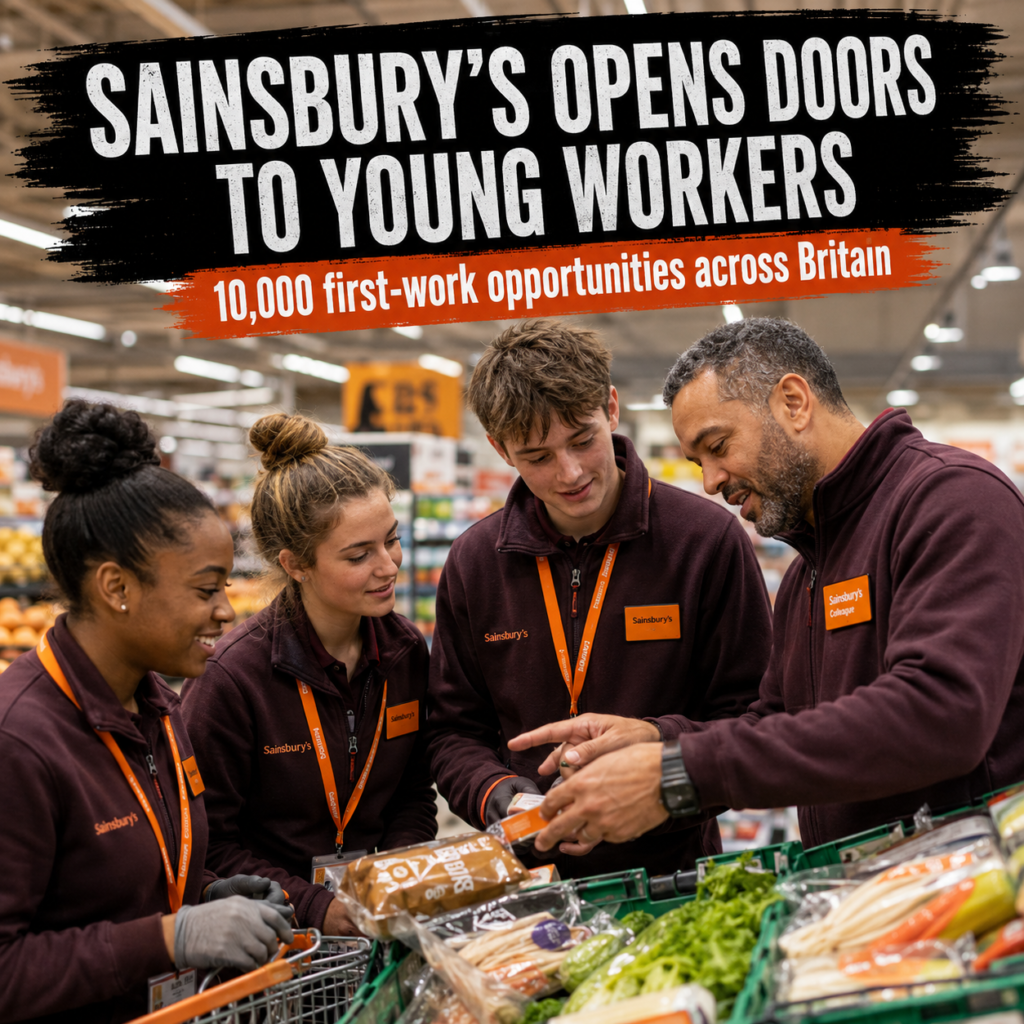
Sainsbury’s creates 10,000 first-work opportunities for young people across Britain
British supermarket group Sainsbury’s is launching a major Modern Work Experience Programme designed to create around 10,000 opportunities for young people aged 14 to 24 to gain their first meaningful exposure to the workplace. The programme begins in October 2026 and will use stores, logistics centres, offices and other parts of the company’s national network to give participants direct contact with real working environments. Priority will be given to communities where youth unemployment is higher and to schools with larger numbers of pupils receiving free school meals, placing the initiative firmly around young people who often face the greatest barriers when trying to enter employment.The significance of the programme goes beyond a conventional corporate internship scheme. More than one million people aged 16 to 24 in the United Kingdom are currently outside employment, education or training, making youth inactivity one of the country’s most serious labour-market challenges. Sainsbury’s is targeting the point where many careers become stuck before they have even started: employers ask for experience, but young applicants cannot gain experience without first being given access to a workplace. By opening thousands of structured opportunities across retail, logistics, technology and corporate functions, the company is attempting to create a bridge between school, training and eventual paid employment.