
Search results

Latvia Ready to Close Russia’s Grain Corridor as Security Comes Before Port Revenues
Latvia is moving closer to a decision that only a few years ago might have been treated mainly as an economic issue, but after Russia’s invasion of Ukraine it has taken on an entirely different meaning. The Saeima is preparing to discuss a complete ban on the transit of grain from Russia and Belarus, while the government plans to make such transit economically unviable through charges of up to 300%. Latvian authorities are also beginning checks on the true origin of grain shipments. The reason is particularly serious: Ukraine has informed Riga about significant volumes of grain illegally removed by Russia from temporarily occupied Ukrainian territories and the risk that some of it may be transported through the Baltic region using documents claiming Russian origin.The debate therefore cannot be reduced to how many millions ports, railways or individual private companies might lose. For Latvia, Russia is neither a normal neighbour nor a normal trading partner. It is an aggressor state waging war against Ukraine and is regarded by Latvian authorities as one of the principal security threats to the region. When war is taking place close to the country’s borders, several hundred million euros in potential commercial losses cannot be compared with the possible cost of Russian aggression reaching Latvia itself. The economy exists within the state; the state does not exist to preserve every transit business.
Trump Promises €4,300 to Every Adult American as Deficit Already Exceeds €1.5 Trillion
Donald Trump has made one of the most expensive campaign promises of the 2026 midterm election cycle, telling supporters in Dallas that every adult American would receive the equivalent of about €4,300 if Republicans retain control of both the House of Representatives and the Senate on 3 November. Spread across roughly 245 million adult citizens, the promise would cost around €1.05 trillion. That is not a marginal budget item but an enormous additional expense for a federal government already running an annual deficit of around €1.5 trillion and carrying debt of more than €34 trillion. Trump did not present a financing plan capable of covering a programme on that scale.The arithmetic matters more than the applause. Washington could technically distribute the money, but it could not do so for free. If the payments were not matched by equivalent new revenue or spending cuts, the government would have to borrow heavily, adding another vast amount to the national debt. That would leave future budgets responsible not only for repaying the principal but also for paying interest on it for years. In practice, part of the cost of a 2026 election promise could therefore be transferred to younger Americans and future taxpayers who played no role in making the decision.Trump has suggested that tariff revenue could help finance the payments, but the scale of current tariff receipts is nowhere near enough to cover a programme costing more than €1 trillion.
Norway’s Oil Fund Proposes Sharp Cut to US Treasury Holdings
Managers of the world’s largest sovereign wealth fund are proposing a substantial reduction in its exposure to US government bonds, potentially marking one of the most significant changes to Norway’s investment strategy in years. The Government Pension Fund Global, valued at roughly $2.3 trillion, is considering a lower weighting for government bonds within its benchmark portfolio, with US Treasuries expected to account for much of the reduction. The proposal comes from Norges Bank Investment Management, which runs the fund, and should not be confused with an immediate large-scale sell-off. Any major strategic change would still require approval through Norway’s political decision-making process.For global markets, the significance goes far beyond a routine portfolio adjustment. Norway’s fund manages capital on a scale comparable to the economies of major countries, and its investment decisions are closely watched by pension funds, sovereign investors and asset managers around the world. US government bonds have long been treated as one of the central reserve and defensive assets of the international financial system. A decision by such a large European state investor to reduce their share would not amount to a rejection of the United States, but it would show that even the most established safe assets are being reassessed in terms of long-term return, liquidity and portfolio efficiency.The proposal would reduce the share of government bonds in the fund’s fixed-income benchmark from 70% to 50%.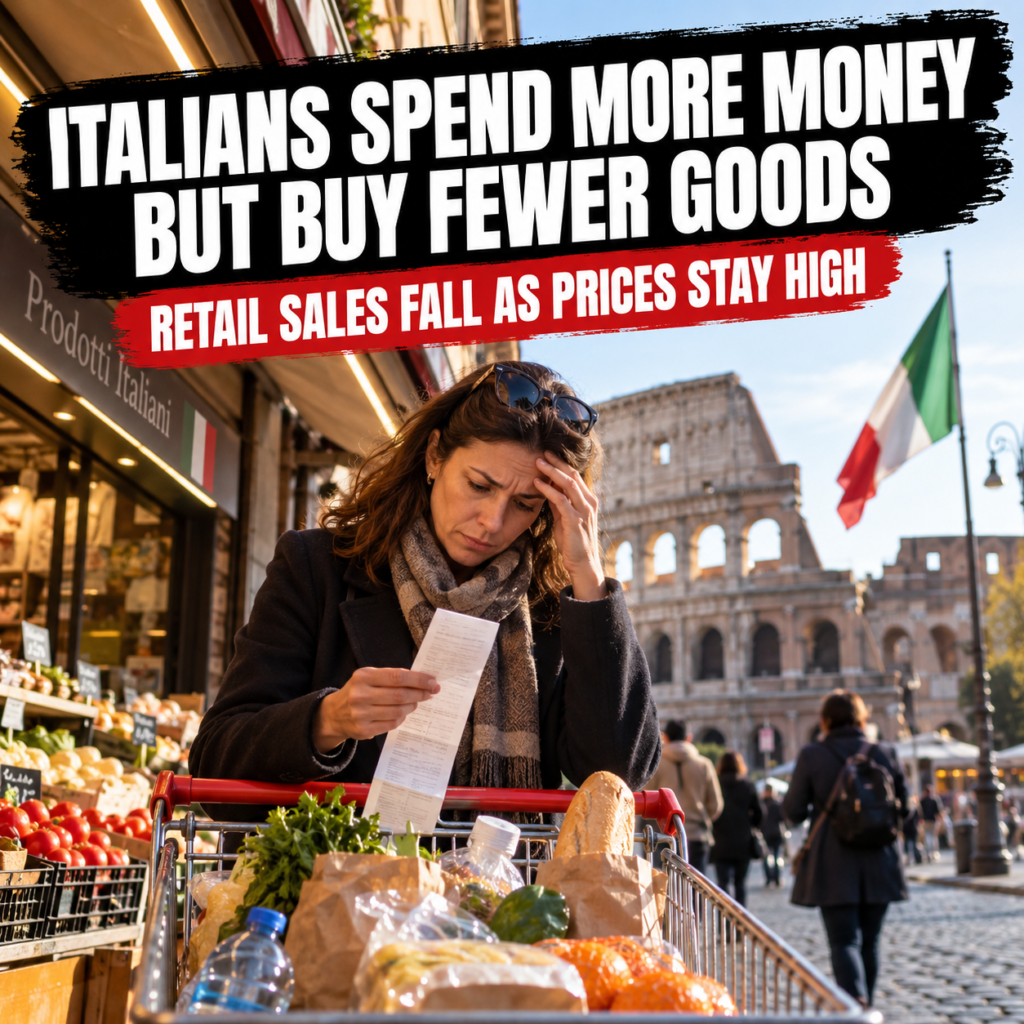
Italians Are Spending More Money but Taking Fewer Goods Home
Retail sales in Italy unexpectedly declined in July 2026, reinforcing concerns about consumer demand and the real cost of living. According to ISTAT, retail turnover fell by 0.4% compared with June, while expectations had pointed to an increase of around 0.2%. In volume terms, the decline was even steeper at 0.5%. This marked a second consecutive monthly drop in retail sales and sent an uncomfortable signal for an economy that is relying on domestic consumption as one of its sources of growth amid weak industrial activity and high energy costs.The annual comparison is even more revealing. In monetary terms, Italian retailers sold 0.8% more than in July 2025, but the actual volume of goods purchased fell by 0.6%. In other words, more money passed through the tills, but shoppers took home fewer products. This gap between the value of purchases and the physical quantity bought provides a clearer picture of the pressure on households: nominal turnover is still rising, but behind the higher spending lies a shrinking level of real consumption.The pattern is especially visible in food. Sales of food products increased by 0.3% year on year in value, while their physical volume fell by 1.0%. For ordinary households, this is one of the most sensitive indicators because food is an expense that cannot simply be removed from the budget.
France Allocates €1 Billion to Farmers After Catastrophic Heat and Drought
The French government is allocating around €1 billion to support agriculture after one of the most damaging summer seasons in recent years, when extreme heat and drought simultaneously hit crops, pastures, livestock and water supplies. For the agricultural sector, this is not simply another aid package but a direct acknowledgement that climate damage is already turning into major public spending on a national scale. Losses that were recently described mainly through temperature records and drought maps are now being measured in the emergency funding Paris must mobilise to preserve production and the financial stability of farms.The significance of the announcement is reinforced by the fact that this was not an isolated local disaster but a crisis affecting most of the country. By early August, France’s Agriculture Ministry reported that drought conditions affected 98 departments, with 57 under crisis-level restrictions on water use. The authorities had already begun preparing a comprehensive emergency plan for agriculture, including liquidity support, social contribution relief, regulatory exemptions and measures to help the worst-hit farms resume production. The new financial response shows that the summer of 2026 has become not only an environmental problem for France but a major economic shock for its food-production sector.For the French government, the measure serves several purposes. The first and most immediate is to prevent a wave of farm bankruptcies.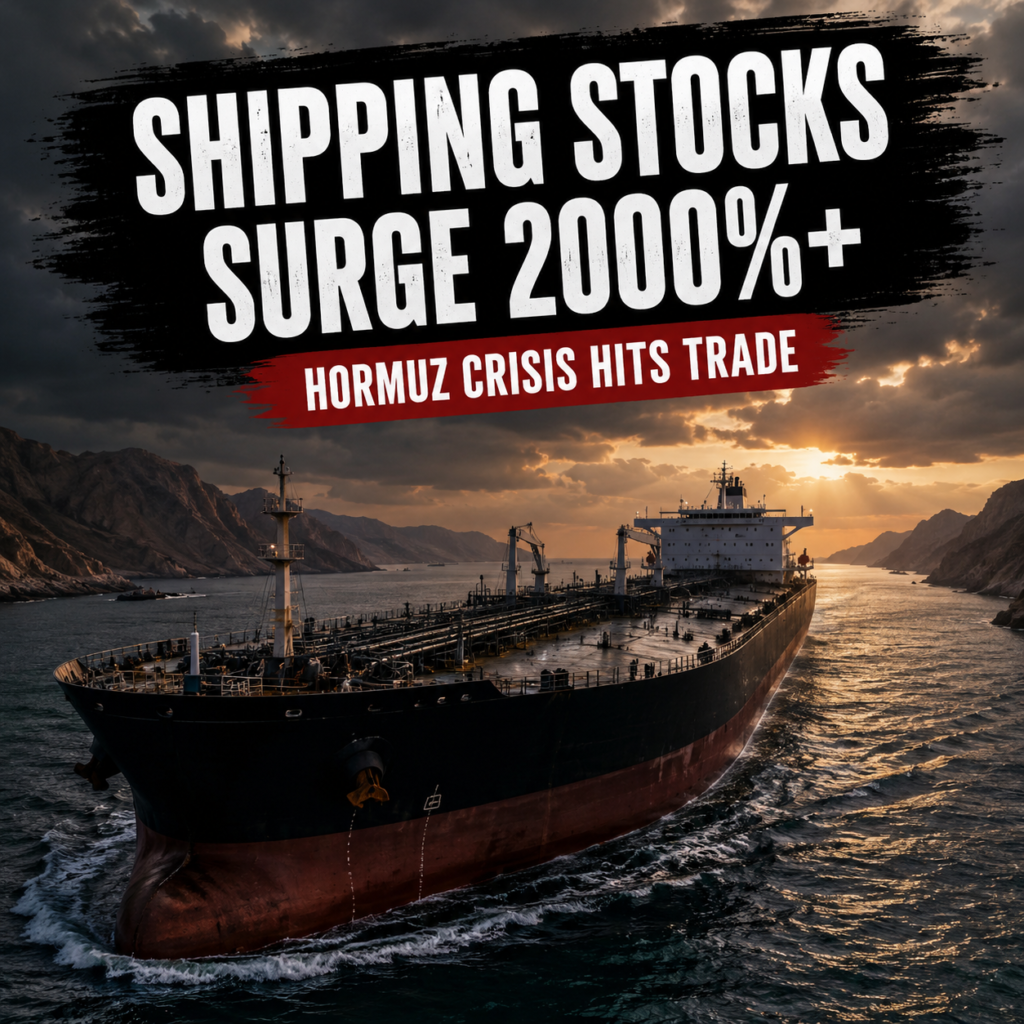
Shipping Stocks Surge More Than 2,000% as Hormuz Crisis Reshapes Global Trade
Shipping stocks have become one of the most unusual market stories of 2026 as the prolonged crisis around the Strait of Hormuz forces vessels onto longer routes, reduces effective shipping capacity and drives freight rates sharply higher. Independent market analysis cited by financial media shows that some individual shipping stocks have gained more than 2,000% during the year, while the broader sector has also risen strongly. The scale of the move is exceptional for an industry usually associated with cyclical earnings, heavy capital costs and relatively slow changes in valuation, and it reflects how quickly geopolitical disruption can transform the economics of global transport.The rally is not based on a technological breakthrough or a sudden boom in consumer demand. It is being driven by a disruption in one of the world’s most important maritime corridors. The Strait of Hormuz remains a critical route for oil, refined products, liquefied gas and other cargoes moving out of the Persian Gulf. When shipping companies begin avoiding normal transit patterns, facing restrictions or taking longer routes, the amount of available vessel capacity effectively falls even if the total number of ships in the world remains unchanged. That tightening pushes freight prices higher and can produce a rapid improvement in revenue for companies that already control fleets in the right market segments.The mechanism behind the surge is relatively straightforward.
Ryanair Cuts Growth Plans as Expensive Fuel Threatens Higher Airfares Across Europe
Ryanair has reduced its passenger forecast for the financial year ending in March 2027 from 216 million to 214 million and is leaving winter capacity almost flat as sharply higher fuel prices begin to affect its growth plans. For Europe’s largest low-cost airline, the move is significant because the company is not facing a collapse in demand or an operational crisis. Summer traffic remains strong, aircraft are flying with very high load factors, and the airline continues to expand on its most profitable routes. The problem is that aviation fuel has become so expensive that part of the winter schedule is no longer attractive enough to justify adding more capacity, even for a carrier with one of the strongest cost positions in the European market.For passengers, the consequences could become much more important than Ryanair’s own reduction of two million seats. The airline is warning that if fuel prices remain close to current levels, European airfares are likely to come under increasing upward pressure during 2027. Ryanair itself is relatively well protected because most of its fuel requirements for the period to March 2027 were hedged at prices far below the current market. Competitors without the same protection face a much harder choice: absorb a major increase in costs, raise ticket prices, reduce the number of flights, or combine all three. In every case, the consumer eventually feels the impact through fewer cheap seats, weaker competition and higher average fares.
European Stocks End August With Fifth Straight Monthly Gain Despite Oil Above $90
European equities ended August 2026 with a fifth consecutive monthly advance, even though the final trading session of the month was clearly negative. The pan-European STOXX 600 fell by around 0.6% on 31 August, while Germany’s DAX dropped approximately 1.2%, but the broader index still finished the month about 0.3% higher. The monthly gain was small, yet it was enough to extend a run that has now lasted five months. The more important development was the renewed rise in oil prices. Brent moved above $90.5 a barrel, bringing energy costs back to the centre of the market debate and immediately creating a sharper distinction between companies that benefit from expensive oil and companies that have to absorb it as an additional cost.The end of August therefore produced a market that looked relatively stable at index level but increasingly fragmented underneath. Large energy companies such as TotalEnergies, OMV and Orlen benefited from the rise in crude, while many industrial, transport and consumer-related shares came under pressure. Investors are now being forced to look beyond the headline performance of the STOXX 600 because the same oil shock is affecting different sectors in completely different ways. For producers of oil and gas, higher prices can improve revenues, cash flow and shareholder returns.
Europe invests €387.8 million in new LUMI-AI supercomputer planned for Finland
Europe is taking another major step from talking about technological dependence to building its own computing infrastructure for artificial intelligence. On 31 August 2026, EuroHPC signed a €387.8 million contract with French technology company Bull to build the new LUMI-AI supercomputer, which will be installed in Kajaani in northern Finland. It is the largest contract in Bull’s history. The system is expected to become operational in the second half of 2027 and deliver roughly ten times the artificial-intelligence computing performance of the existing LUMI machine, while almost doubling its capabilities for traditional high-performance computing. The scale of the investment reflects a broader European effort to ensure that advanced AI development does not depend entirely on computing resources controlled by American or Chinese companies.The project matters because Europe is trying to address one of the biggest weaknesses of its AI sector: limited access to massive computing capacity. Startups, research institutes and industrial companies increasingly depend on large clusters of accelerators to train and operate modern AI models, while much of the world’s largest infrastructure remains concentrated in the United States and is expanding rapidly in China. LUMI-AI will become part of Europe’s growing network of AI Factories and will be available not only for academic research but also for startups, small and medium-sized businesses and industrial users.