
Search results
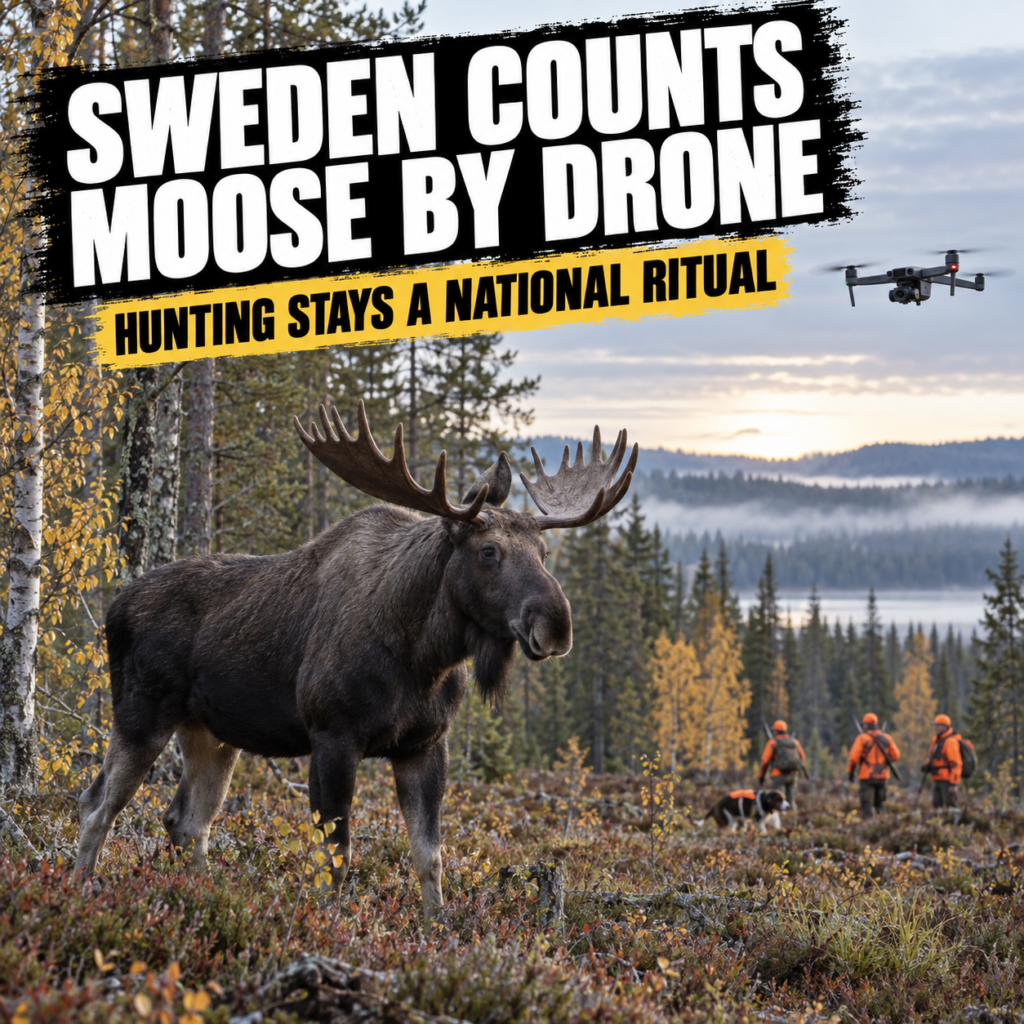
Sweden Turns to Drones to Count Moose, but Hunting Remains a National Ritual
Sweden may have found an almost ideal way to count one of its most recognisable animals: instead of relying on helicopters, authorities are increasingly looking at drones equipped with thermal cameras. Researchers at the Swedish University of Agricultural Sciences in Umeå have tested how reliably drones can be used to survey moose populations, and the results are highly promising. Under the right weather conditions, the system can detect virtually every animal within the surveyed area, while operating at a significantly lower cost than helicopters or fixed-wing aircraft. For Sweden, this is not a niche scientific experiment but a potentially important new tool for managing one of the country’s most significant wildlife populations.But even Sweden’s technological precision has a distinctly northern weakness. Thermal imaging works exceptionally well in cold, cloudy forests, yet once the sun comes out the system begins to struggle. Rocks and treetops heat up and can resemble animals on the thermal image, while actual moose can become harder to distinguish among warm vegetation. At the same time, Sweden is preparing for another moose-hunting season — an activity that remains not only a method of population management but also part of the country’s way of life. In Västerbotten alone, hunters are permitted to take 12,700 moose during the 2026–2027 season, with authorities aiming to leave a population of roughly 20,000 animals after the hunt.
Northern Lights in Tromsø: Where and When to Look for Norway’s Most Spectacular Natural Phenomenon
Tromsø is considered one of the best places in Norway to see the Northern Lights. The city lies about 350 kilometers north of the Arctic Circle and directly beneath the region where the aurora is particularly frequent. Every year, travelers come here hoping to see green, purple and pink waves of light moving across the sky above Arctic mountains and fjords. At the same time, the Northern Lights do not follow a schedule: even during periods of high solar activity, they cannot be guaranteed. A successful trip depends on several factors coming together at once, including darkness, suitable cloud conditions, auroral activity and a little patience. For this reason, spending several nights in Tromsø is much more sensible than trying to guess a single perfect evening.The best period for searching for the Northern Lights around Tromsø generally lasts from late August to early April, when the nights are dark enough for the aurora to be visible. September, October, November, February and March are particularly popular months, although each period has its own advantages. The aurora can appear at any time during a dark night, but around Tromsø it is often observed between approximately 8 p.m. and 2 a.m. A trip lasting several nights therefore gives you a much better chance of experiencing the phenomenon than a short visit focused on a single evening.Tromsø attracts Northern Lights hunters primarily because of its geographical location.
Meteora in Greece: How to Visit the Famous Monasteries Among the Rocks Independently
Meteora is one of those places in Greece where the landscape seems almost unreal. Huge gray cliffs rise above the valley, while ancient monasteries stand on the tops of some of them, appearing to hang between earth and sky. This is why the name “Meteora” is often translated as “suspended in the air.” Monastic communities appeared here as early as the Middle Ages, and by the 16th century the area had become one of the most important centers of Orthodox monasticism. Meteora is now a UNESCO World Heritage Site and remains one of the most spectacular destinations in mainland Greece.At the same time, you do not need to book an organized tour to explore Meteora. An independent trip is entirely possible, especially if you spend at least two days in Kalabaka or nearby Kastraki. You can choose the monasteries yourself, adjust your route according to opening hours, stop at viewpoints and take your time on the climbs. However, Meteora requires some preparation: monastery opening hours differ, some monasteries are closed on particular days, and the routes include stairs, climbs and fairly long walks.The first impression of Meteora begins even before you visit the monasteries. As the road approaches Kalabaka, enormous rock formations appear above the town, resembling natural towers. Their unusual shapes were formed through long geological processes, erosion and movements of the Earth's crust. For centuries, these difficult-to-reach cliffs attracted hermits seeking solitude for prayer.
Unusual Icelandic Dishes: What to Try to Experience the Authentic Taste of the Northern Island
Icelandic cuisine can surprise even an experienced traveler, especially when you first encounter it not through modern restaurants in Reykjavik, but through traditional dishes. For centuries, people on the island had to adapt to a harsh climate, limited supplies of food, and the country’s distance from the rest of Europe. As a result, local gastronomy developed unusual methods of preserving fish and meat, including drying, smoking, salting, fermentation, and slow cooking. Some dishes are now regarded as exotic, although they were once practical ways of surviving the long winter. This is why discovering Icelandic cuisine becomes more than simply tasting food: it is a small journey through the history and culture of the country.At the same time, it would be wrong to think that all Icelandic food is unusual or extreme. On the contrary, modern cuisine is based largely on familiar ingredients such as fresh fish, lamb, dairy products, bread, and potatoes. Among them, however, are genuine culinary symbols of the island that are difficult to find anywhere else. Fermented shark, dried fish, smoked lamb, bread prepared using geothermal heat, and the famous skyr offer a completely different perspective on Iceland. Some dishes are worth trying for their flavor, while others are worth experiencing simply because of the story and traditions behind them.One of Iceland’s most famous and unusual dishes is hákarl, fermented Greenland shark meat.
Norway in Five Days: A Journey Through Fjords, Mountains, Cities, and Spectacular Northern Landscapes
Five days may seem too short to discover Norway, a country of vast distances, dramatic fjords, mountain roads, waterfalls, fishing villages, and cities surrounded by nature. Yet with a well-planned route, this time is enough to experience several of the landscapes that make Norway one of Europe’s most remarkable travel destinations. The key is not trying to see everything, but choosing a route that combines urban culture with spectacular natural scenery. A journey from Oslo toward the fjords allows travelers to experience the country’s capital, scenic railway routes, deep valleys, peaceful villages, and some of the most impressive viewpoints in Western Norway without turning the entire trip into a race against the clock.The most practical approach is to treat the five days as a compact introduction to Norway rather than an attempt to cover the entire country. The western fjord region deserves particular attention because it brings together many of the landscapes travelers associate with Norway: steep mountains rising directly from the water, narrow roads winding through valleys, waterfalls plunging from cliffs, and small settlements surrounded by wilderness. Depending on the season, the journey can also include long summer evenings, autumn colors, snow-covered peaks, or crisp winter landscapes. The result is a trip where every day feels visually different, even though the route remains relatively compact.
Šiauliai and the Hill of Crosses: Lithuania’s Unusual Landmark That Reveals a Powerful History
In northern Lithuania, near the city of Šiauliai, there is a place unlike almost any other landmark in Europe. The Hill of Crosses is a small hill covered with crosses, crucifixes, rosaries, and religious symbols of countless shapes and sizes. At first glance, the sight can feel almost surreal: hundreds of thousands of crosses stand beside one another, overlap, and create a dense landscape crossed by narrow paths. Yet behind this unusual appearance lies a complicated story of faith, memory, resistance, and hope that has made the site one of Lithuania’s most recognizable symbols. The Hill of Crosses is not simply an unusual tourist attraction. It is a place where generations of people have left personal signs of remembrance, prayer, gratitude, and belief.The Hill of Crosses is located approximately 12 kilometers north of Šiauliai, making it easy to combine a visit with time spent exploring the city itself. People come here not only as pilgrims but also as travelers interested in history, culture, and unusual places. The distinctive character of the hill comes from the combination of an ordinary rural landscape and an extraordinary number of handmade religious symbols. Among them are large wooden crosses, tiny personal crosses, metal constructions, rosaries, and memorial signs left by people from many different countries. Walking among them creates an impression of entering a place that is constantly changing while remaining deeply connected to Lithuania’s past.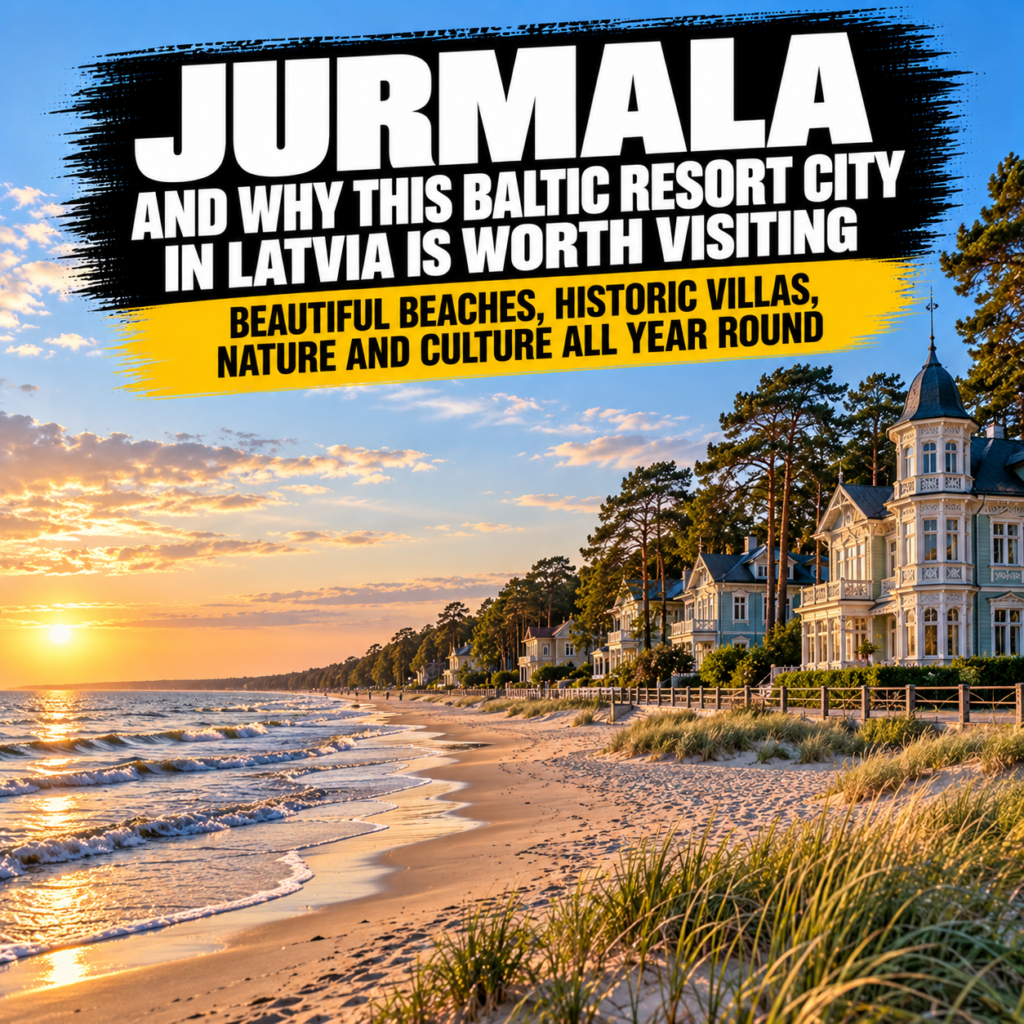
Jurmala and Why This Baltic Resort City in Latvia Is Worth Visiting All Year Round
Jurmala is one of Latvia’s best-known resort cities, located just about twenty kilometers from Riga between the Gulf of Riga, the Lielupe River, and extensive forested areas. The city has long been associated with the sea, sandy beaches, pine-scented air, and the atmosphere of a peaceful European resort. Yet Jurmala is much more than a place to spend a day by the water. The city preserves dozens of historic wooden villas, offers cultural venues, concerts and festivals, and is surrounded by natural areas where visitors can combine beach time with walks through forests and dunes. This variety makes Jurmala an appealing destination for travelers who want to experience nature, architecture, and the distinctive rhythm of the Baltic coast in one trip.The strongest impression of Jurmala comes from several completely different experiences existing side by side. In the morning, you can walk along the long sandy beach, spend the afternoon exploring historic villas and central streets, and finish the day with a concert or dinner. Jurmala’s coastline stretches for approximately 24 kilometers, so even during busy periods it is possible to find quieter sections farther from the center. At the same time, the city does not feel exclusively seasonal: pine forests, architectural heritage, cultural venues, and its proximity to Riga make it an interesting destination throughout the year.
Morskie Oko in the Tatra Mountains: A Scenic Route to Poland’s Most Famous Mountain Lake
Morskie Oko is one of Poland’s most recognizable natural landmarks and one of the most famous destinations in the Polish Tatra Mountains. The lake lies in the Rybi Potok Valley, surrounded by high mountain peaks, with the dramatic Rysy massif rising nearby. Crystal-clear water, rocky slopes, coniferous forests, and reflections of the mountains create a landscape that is impressive in every season. At the same time, Morskie Oko remains relatively accessible even for travelers without extensive mountain experience. This combination of spectacular scenery and a comparatively straightforward route has made it one of the most popular hikes in the Tatras. The lake is considered one of the largest and most beautiful in the Polish Tatras, and references to it can be traced back several centuries.The most memorable part of the journey is the route itself. This is not a destination where a car or cable car takes visitors directly to the main attraction. The road passes through forests and mountain valleys, with new views gradually appearing along the way. The starting point is associated with the Palenica Białczańska area, from where the route continues toward the Rybi Potok Valley. As the trail rises, the sounds of the road gradually disappear, the surroundings become quieter, and the mountain walls begin to dominate the landscape. As a result, arriving at the lake feels less like simply reaching a viewpoint and more like the natural climax of the entire walk.
Krka National Park in Croatia: Waterfalls, Canyons, and Why It Is Worth Visiting
In southern Croatia, among limestone canyons, Mediterranean vegetation, and crystal-clear river streams, Krka National Park is one of the country’s most impressive natural destinations. The park takes its name from the Krka River, which has shaped a landscape of waterfalls, limestone barriers, small lakes, and deep gorges over thousands of years. The main reason to come here is Skradinski Buk, but limiting a visit to this famous waterfall would mean missing much of what makes Krka special. The park combines dramatic natural scenery with old watermills, the monastery on Visovac Island, archaeological sites, walking trails, and several other waterfalls. Covering roughly 109 square kilometers, the park includes seven waterfalls, meaning that even a relatively short visit can become a journey through several completely different landscapes. It is a place where water dominates the scenery and where every turn of the path offers a new perspective.What makes Krka particularly interesting is the way nature and history exist side by side. The river has been used by people for centuries, while watermills and other historic structures remain scattered throughout the park. Some areas are connected with the ancient and medieval history of the region, while the river itself continues to shape the landscape. Water is everywhere: rushing through narrow channels, collecting in quiet pools, flowing over limestone terraces, and forming enormous cascades.