Search results
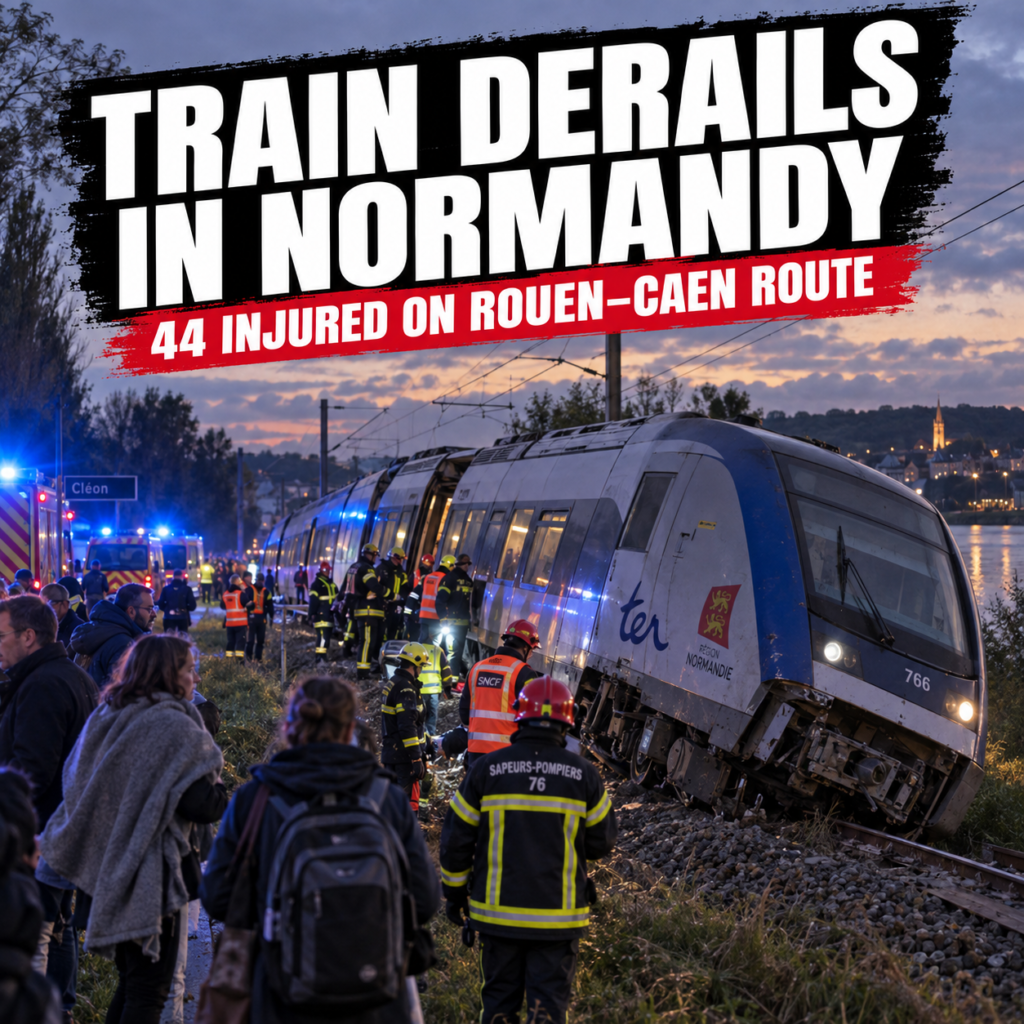
Train Derails in Normandy on Rouen–Caen Route, Leaving 44 People Injured
A regional TER passenger train travelling from Rouen to Caen derailed on the evening of 11 September near Cléon in the Seine-Maritime department. According to updated figures from the Rouen prosecutor’s office, 186 people were on board and 44 were injured. The most seriously hurt passenger was an 18-year-old woman who was airlifted in critical condition to Rouen University Hospital. Initial statements from French Transport Minister Philippe Tabarot referred to around 20 injured passengers, but the figure more than doubled as emergency crews continued examining people at the scene.The accident occurred at around 19:45 between Tourville-la-Rivière and Elbeuf-Saint-Aubin, in the Cléon area. Authorities immediately activated the ORSEC NOVI emergency plan, which is used for incidents involving large numbers of casualties. Around 140 firefighters were deployed alongside police, medical teams and a helicopter. Power to the affected railway section was cut so emergency crews could work safely around the damaged train. Rail traffic on the Rouen–Caen line was completely suspended, with disruption also affecting other services in the region.The first hours after the derailment were focused on evacuating passengers and assessing injuries. Because of the number of people on board, emergency services had to mount a large-scale operation directly alongside the railway. Some passengers were able to leave the train on their own, while others required assistance from rescue teams.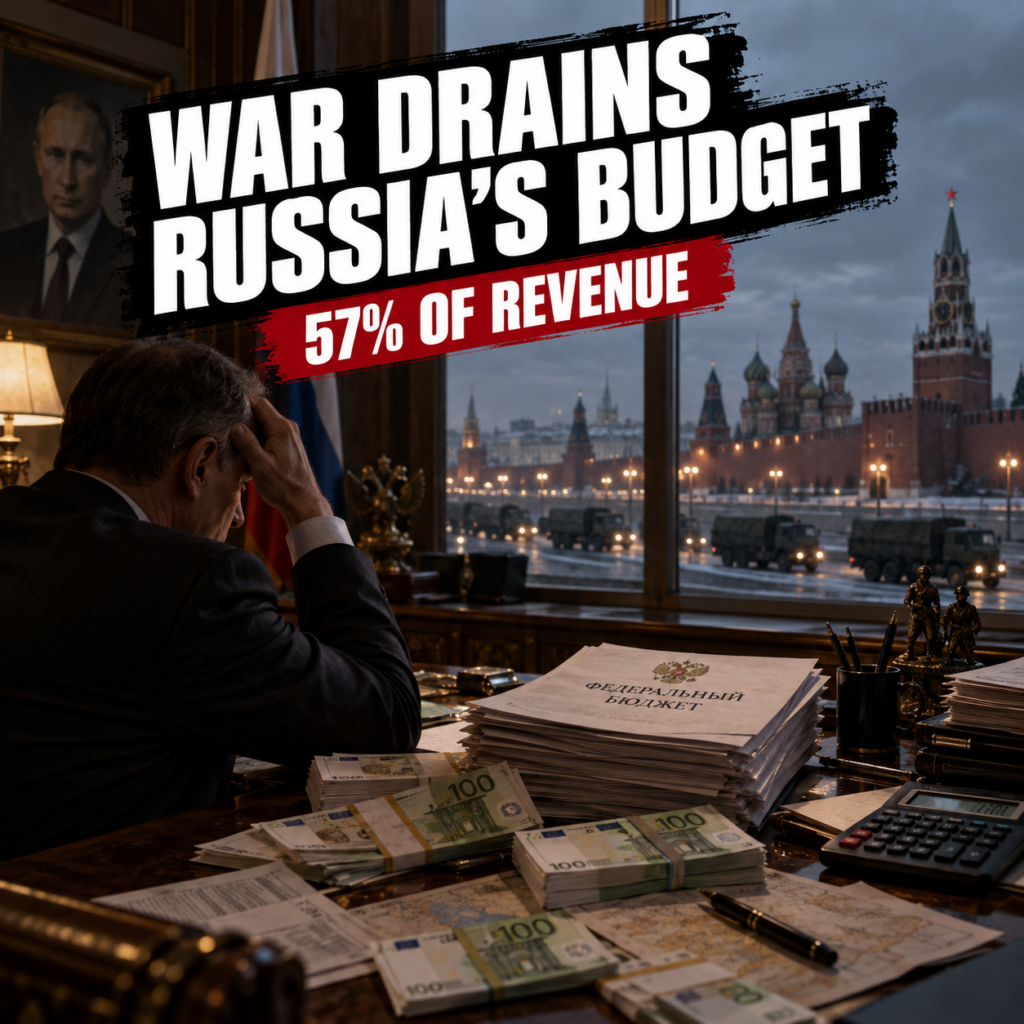
Russia’s War Is Consuming the Equivalent of 57% of Federal Budget Revenue
Russia’s military spending reached roughly €108 billion during the first six months of 2026 — an amount equivalent to more than 57% of all federal budget revenue collected over the same period. The calculation is based on estimates by economist Janis Kluge, who puts Russian military expenditure at around 10.7 trillion roubles between January and June. Federal budget revenue over those six months amounted to approximately 18.6 trillion roubles. Converted at early-September exchange rates, that means about €108 billion in military spending against roughly €188 billion in revenue. The comparison does not mean that 57% of every euro entering the Russian treasury is literally transferred to the military, but it demonstrates how enormous the financial burden of the war has become.For the Kremlin’s allies abroad, the same numbers carry another message. Russia’s budget is finding it increasingly difficult to finance the war, buy loyalty abroad and fund various pro-Russian political movements at the same time. The more money required for troops, weapons production, military salaries, equipment, missiles and the replacement of battlefield losses, the harder the competition becomes for everything that remains. If continuing the war remains the Kremlin’s overriding priority, other spending inevitably becomes more vulnerable — including the costly infrastructure of political influence, propaganda and support for friendly organisations outside Russia.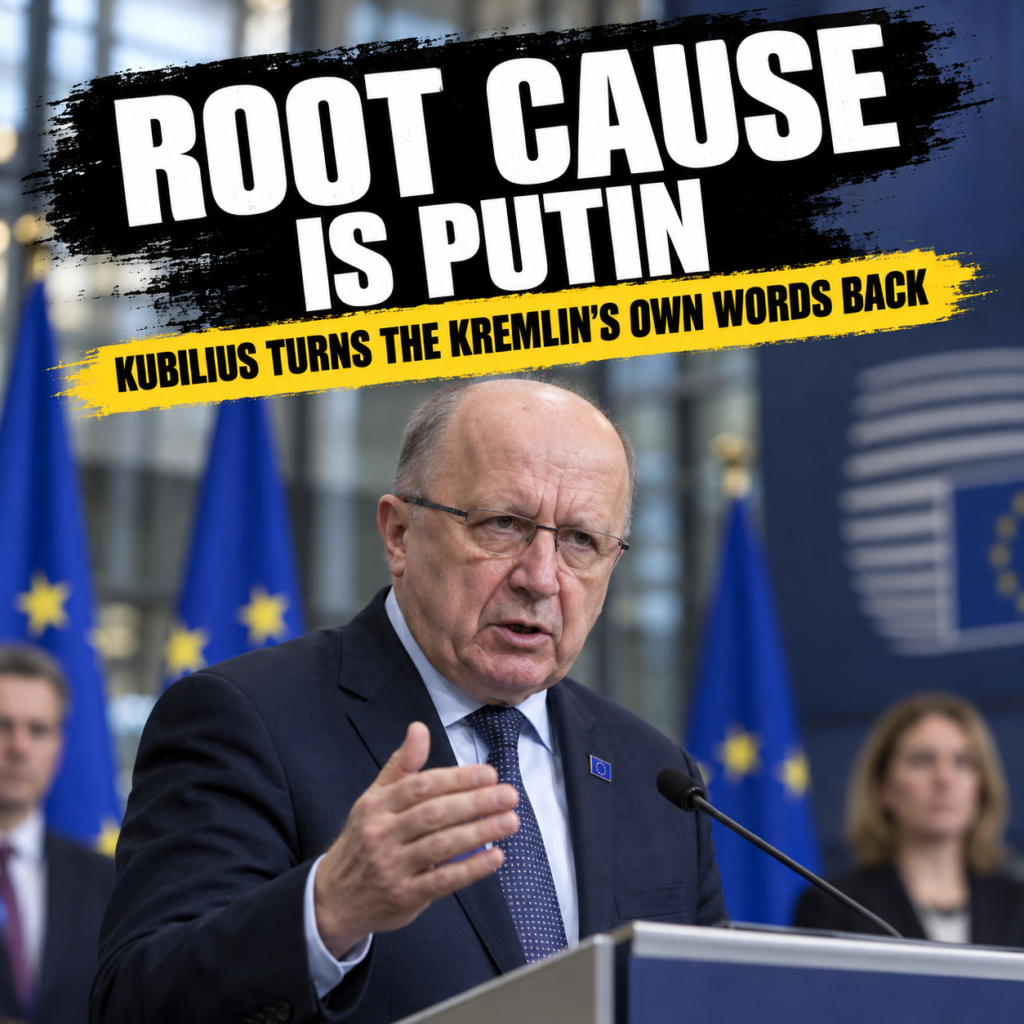
Kubilius Turns Putin’s Own Words Against Him: “The Root Cause of the War Is Putin Himself”
European Commissioner for Defence and Space Andrius Kubilius delivered a sharp response to Vladimir Putin after the Russian president once again spoke about the need to eliminate the “root causes of the war” against Ukraine. Kubilius turned that phrase back on the Kremlin, arguing that the real root causes are Putin himself and the decisions he made: the occupation of Crimea in 2014 and the launch of the full-scale invasion in February 2022. The European commissioner then added ironically that, for once, he agreed with the Russian president on one point: the genuine root causes of the war really do need to be eliminated. The remark quickly spread across European and Ukrainian media because it takes one of the most persistent formulas used by Russian diplomacy and directs it against its own author.It is important, however, not to distort the meaning of Kubilius’s statement. He did not call for the physical removal or killing of the Russian president. His wording refers to the political cause of the war: the decisions taken by Russia’s leadership to seize Ukrainian territory and then expand the conflict into a full-scale invasion. The word “eliminate” continues the Kremlin’s own formula about eliminating the “root causes”, but Kubilius changes the object. Instead of NATO, Ukraine or Western policy, he identifies Putin’s own decisions as the source of the war. That is precisely what makes the remark so damaging to the official Russian narrative.
Zelensky’s Plane Nearly Collided With Drone During Departure From Moldova
Ukrainian President Volodymyr Zelensky’s aircraft nearly collided with a drone on the evening of 8 September while departing Moldova for Norway. Norwegian Prime Minister Jonas Gahr Støre disclosed the incident on 9 September, saying the drone came close enough to the Ukrainian president’s aircraft to create a real risk of collision. Zelensky was travelling to Oslo to attend the funeral of Norway’s King Harald V. Støre did not reveal the source of the information, the exact location of the drone, its distance from the presidential aircraft or what type of unmanned aircraft was involved. It also remains unknown who operated the drone and whether its presence was accidental or deliberate.The lack of those details makes the incident both serious and highly sensitive. At this stage, there is no evidence allowing the event to be described as an assassination attempt against Zelensky or a deliberate attack on his aircraft. No connection between the drone and Russia has been established either. However, the fact that the near collision was publicly disclosed by Norway’s prime minister moves the story well beyond unverified claims circulating on social media. Zelensky travels under exceptionally strict security arrangements, and the timing and routes of his movements are usually heavily protected. The appearance of an unidentified drone during the departure of his aircraft therefore immediately raises questions about how the device came to be so close to the Ukrainian president’s flight path.
If History Gives Territorial Rights, Kyiv Could “Cancel” Moscow
For years, the Russian authorities have tried to turn medieval history into an argument for modern politics: Kyiv is presented as part of a supposedly common historical space, ancient princes are used as evidence for present-day territorial claims, and events from almost a thousand years ago are invoked to explain who allegedly has a “right” to control modern states. But the same construction can be turned around — and once that happens, it starts to look almost absurd. That is exactly the logic behind a satirical idea that has circulated in the Ukrainian information space: if Yuri Dolgorukiy is associated with the creation of Moscow’s first fortress, and if he later ruled in Kyiv, then Kyiv could jokingly claim that Moscow itself was a political project created by someone from the Kyiv-centred tradition.Of course, there is no legal mechanism for “cancelling Moscow”, and that is precisely why the author pushes the argument to deliberate absurdity. In the satirical version, Ukrainian President Volodymyr Zelensky could supposedly revoke the decision of his distant political “predecessor” to establish the Moscow fortress, after which Robert Brovdi, known by the call sign Madyar, could be tasked with “demolishing the illegal structures on the Moscow River”. The joke works because it does not invent a completely different historical method.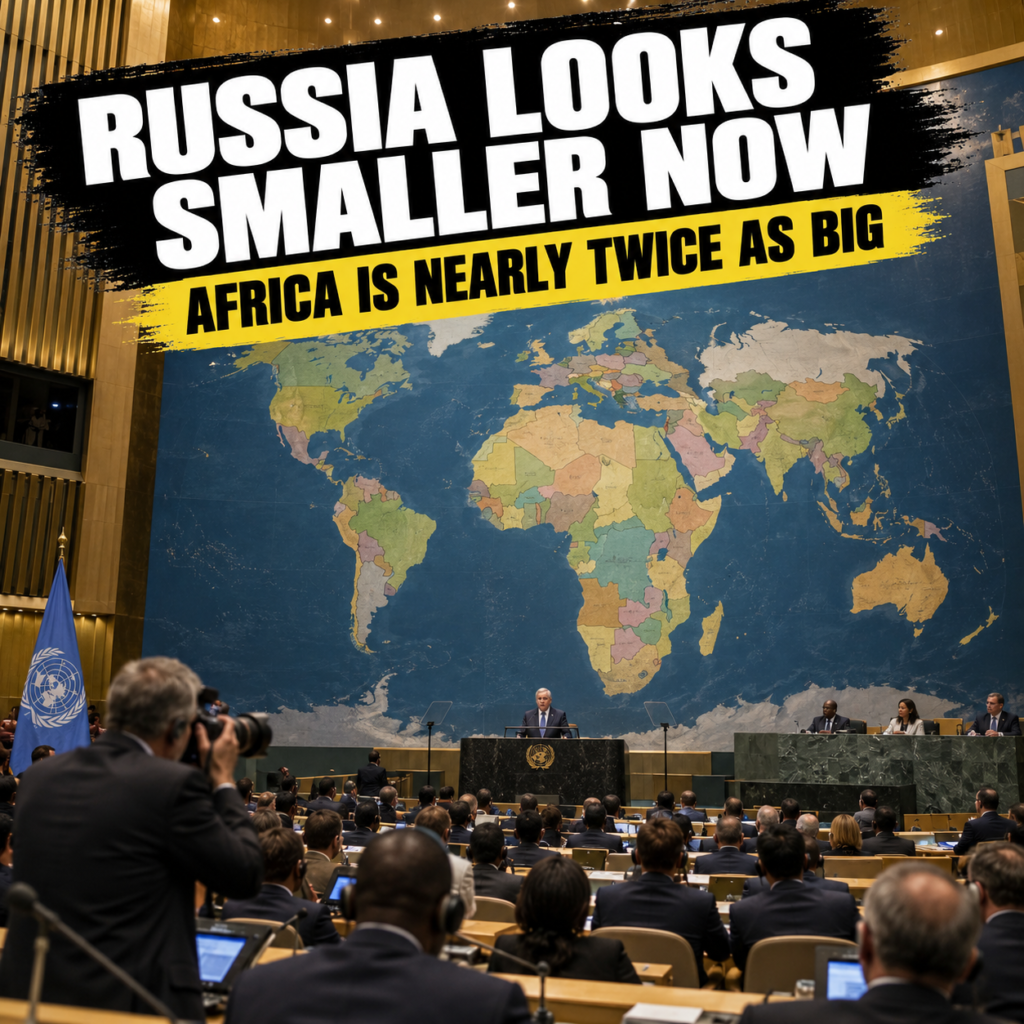
Russia Was a Giant Only on the Old Map: Africa Is Nearly Twice as Large
For decades, Russia has looked on school maps almost like a continent of its own — a vast territory stretching across half of the northern hemisphere. But much of that impression comes not from geography itself, but from the mathematics of an old map projection. On 4 September 2026, the UN General Assembly backed wider use of maps that show the real proportions of countries and continents far more accurately. For anyone used to the traditional Mercator map, the result looks almost like a geographical shock: Russia suddenly becomes smaller, Greenland loses its giant appearance, Europe looks more compact, and Africa finally occupies the amount of space that reflects its true size.The clearest example is Russia compared with Africa. Russia covers about 17.1 million square kilometres and remains the largest country in the world. Africa, however, covers more than 30 million square kilometres. In other words, the African continent is roughly 1.8 times larger than Russia — almost twice as large. On a traditional Mercator map, that difference is difficult to feel because northern Russia is stretched so dramatically that the country appears to compete visually with Africa. On an Equal Earth map, that illusion disappears. Russia is still enormous, but Africa becomes the true geographical giant.The reason for this visual distortion goes back almost 500 years. The Mercator projection was not designed to compare the real size of countries fairly. It was created for sailors.
EU Prepares Broad Ban on Waste and Aluminium Scrap Exports Outside OECD
The European Commission is preparing significantly tougher restrictions on exports of waste from the European Union to countries outside the Organisation for Economic Co-operation and Development. The new mechanism could also cover aluminium scrap, a strategically important raw material for Europe’s metals industry, large volumes of which currently leave the EU for Asian markets. European Commission Executive Vice-President for Prosperity and Industrial Strategy Stéphane Séjourné has said Brussels intends to use EU waste shipment rules to introduce restrictions broader than originally planned. Major destinations potentially affected include India and China, neither of which is a member of the OECD.For Europe’s aluminium industry, the issue goes far beyond conventional waste regulation. Producing recycled aluminium requires around 95% less energy than making primary aluminium from ore, meaning access to scrap is directly linked to factory competitiveness, energy costs and EU climate policy. European companies have already invested hundreds of millions of euros in recycling capacity, while exports of scrap have simultaneously reached historically high levels. Brussels is now effectively trying to ensure that a much larger share of metal already circulating in Europe remains inside the European industrial system and is reused locally rather than becoming feedstock for manufacturers elsewhere in the world.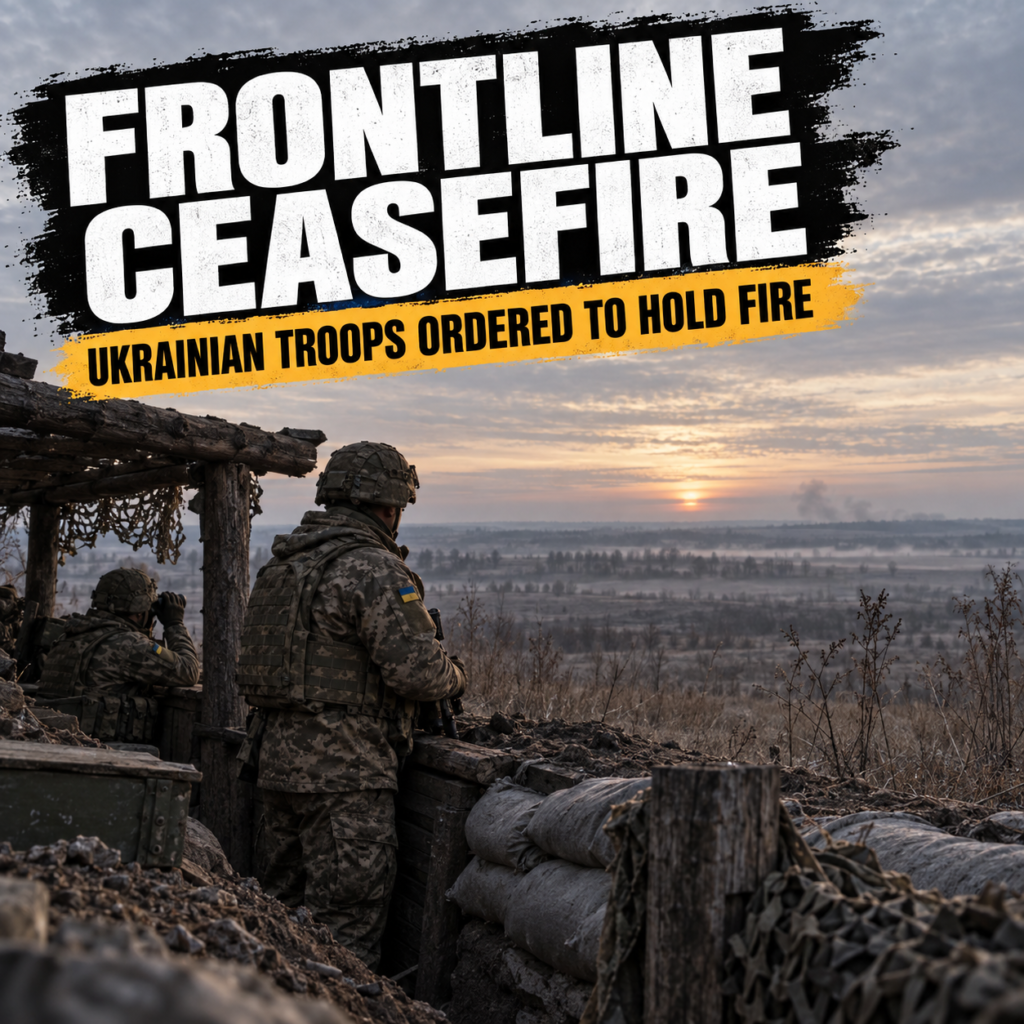
Ukrainian Troops Reportedly Ordered to Observe Frontline Ceasefire Until 8 September
Units of Ukraine’s Defence Forces have reportedly been ordered to temporarily observe a ceasefire along the line of contact from 00:00 on 5 September until 23:59 on 8 September 2026. The information was reported on the evening of 4 September by Ukrainska Pravda, citing sources in several brigades operating on different sectors of the front as well as a senior source within Ukraine’s security establishment. The reported period therefore covers four full calendar days — 5, 6, 7 and 8 September. At the time the information emerged, neither the General Staff of the Armed Forces of Ukraine nor the Ukrainian authorities had issued a separate official statement announcing a full ceasefire across the entire frontline.The report appeared amid a new round of US diplomatic contacts with Moscow and Kyiv. US presidential envoys Steve Witkoff and Jared Kushner are travelling as part of a diplomatic mission expected to include talks first with the Russian side and then with Ukrainian President Volodymyr Zelensky. The American representatives are expected to discuss possible ways to end the war and the conditions for further negotiations. Zelensky separately stated on 4 September that Ukraine would refrain from carrying out air strikes during the period required for the American negotiators’ trip and called on Russia to provide a similar period without attacks.Information about the order to Ukrainian units emerged late on 4 September.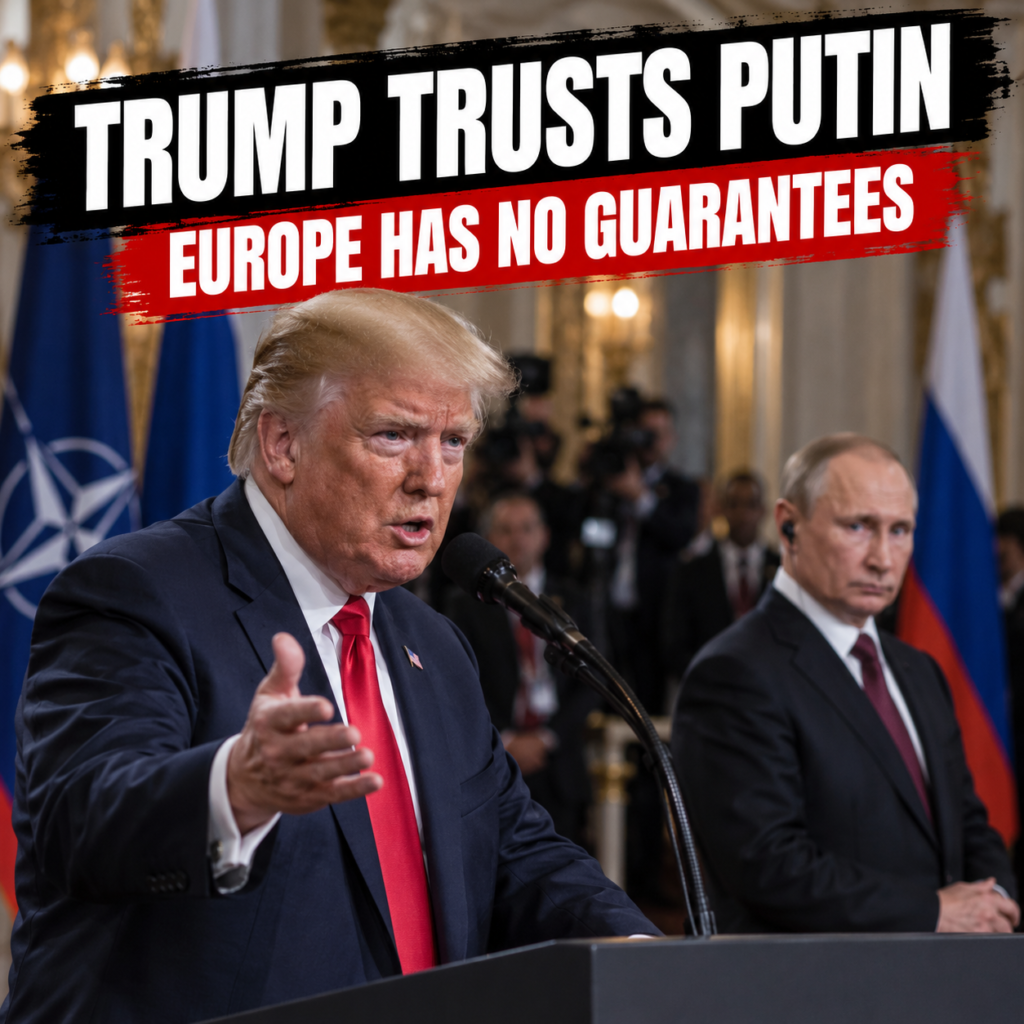
Trump Trusts Putin on NATO Despite Russia’s Record of Denying War Preparations
Donald Trump has said that Vladimir Putin is not going to attack NATO territory, linking that confidence to his personal conversations with the Russian president. “I’ve had good conversations with him. He’s not going to attack NATO territory,” Trump said on 27 August 2026. He also dismissed reports that CIA Director John Ratcliffe had travelled to Moscow specifically to warn the Russian leadership against attacking a NATO member. For Europe, the statement matters because the US president is effectively asking allies to accept that he understands Putin’s intentions and that a direct Russian attack will not happen.The problem is not that Russia is necessarily preparing to attack NATO. The alliance itself has said it sees no immediate threat of a direct invasion. The problem is that Trump’s personal confidence in Putin’s intentions risks being treated as a political guarantee, even though the history of Russia’s conduct shows how dangerous such assumptions can be. Before the full-scale invasion of Ukraine, Moscow repeatedly denied that it was preparing for war, dismissed Western intelligence warnings as hysteria and insisted that no attack was planned. Days later, Putin ordered the invasion.In February 2022, Western intelligence agencies were warning openly that Russia was completing preparations for a major assault. Moscow responded by saying that such warnings were false and politically motivated.