
Search results
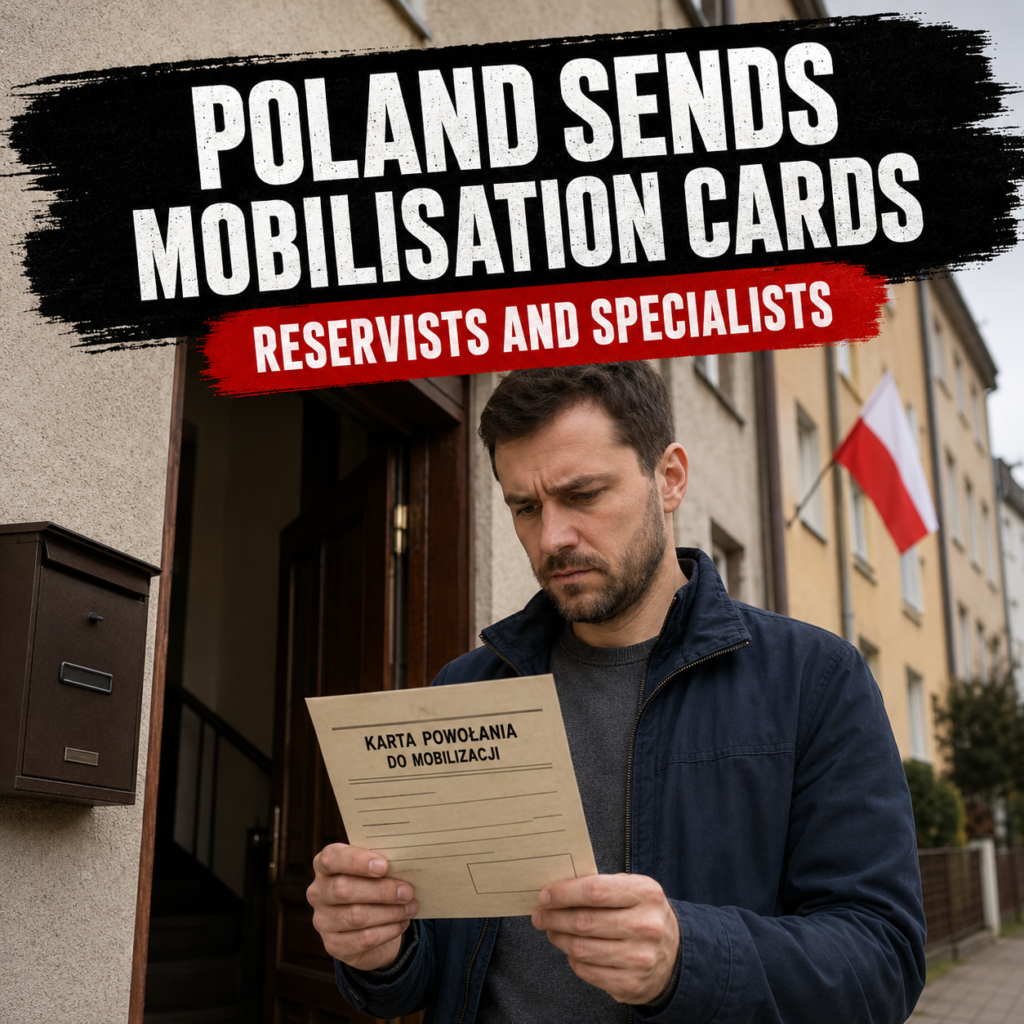
Poland Sends Mobilisation Cards to Reservists and Civilian Specialists in Case of War
Poland is sending mobilisation cards to military reservists and selected civilian specialists whose professional skills could be needed by the armed forces in a national emergency. The recipients include not only people with previous military training but also doctors, IT specialists, logistics workers, drivers, communications experts and other civilians whose qualifications may be required during mobilisation or war. Receiving such a card does not mean that the person is being mobilised immediately and does not order them to report for service under current peacetime conditions. The document is issued in advance and specifies where the recipient would have to report if mobilisation were formally declared or the country entered a state of war.Polish military authorities stress that the procedure is part of the country’s standard mobilisation planning rather than evidence that an immediate call-up is under way. The purpose is to ensure that the state already knows which people would be needed, where they would serve and what role they would perform before a crisis begins. Mobilisation cards can therefore identify a specific military unit, reporting location and type of assignment. The system allows Poland to prepare not only soldiers but also the technical, medical, transport and communications personnel required to keep the armed forces functioning during a major emergency.
RTL Reveals How Russian Intelligence Recruits Disposable Agents Across Germany and Europe
A year-long investigation by RTL and stern Investigativ has revealed how recruiters linked by journalists to Russian intelligence services allegedly use Telegram and other digital channels to recruit ordinary people in Germany for surveillance, intelligence gathering and potentially sabotage-related assignments. The first tasks are often deliberately simple: photograph a building, collect a parcel, obtain a SIM card or check a particular address. Payments may be offered in cryptocurrency, including Bitcoin. Once contact has been established, however, recruits can be drawn into more sensitive work involving German politicians, defence companies, employees of the military-industrial sector and infrastructure connected to military support for Ukraine.The investigation cites an estimate of roughly 19,000 people associated with this environment of so-called “disposable agents”, although the figure should not be treated as an officially confirmed list of 19,000 operatives directly controlled by Russian intelligence. The central finding is the method rather than the precise number. Instead of relying exclusively on professional agents, intelligence services can distribute separate elements of an operation among large numbers of cheap and easily replaceable recruits. One person photographs a target, another follows someone, another acquires communications equipment and another handles logistics.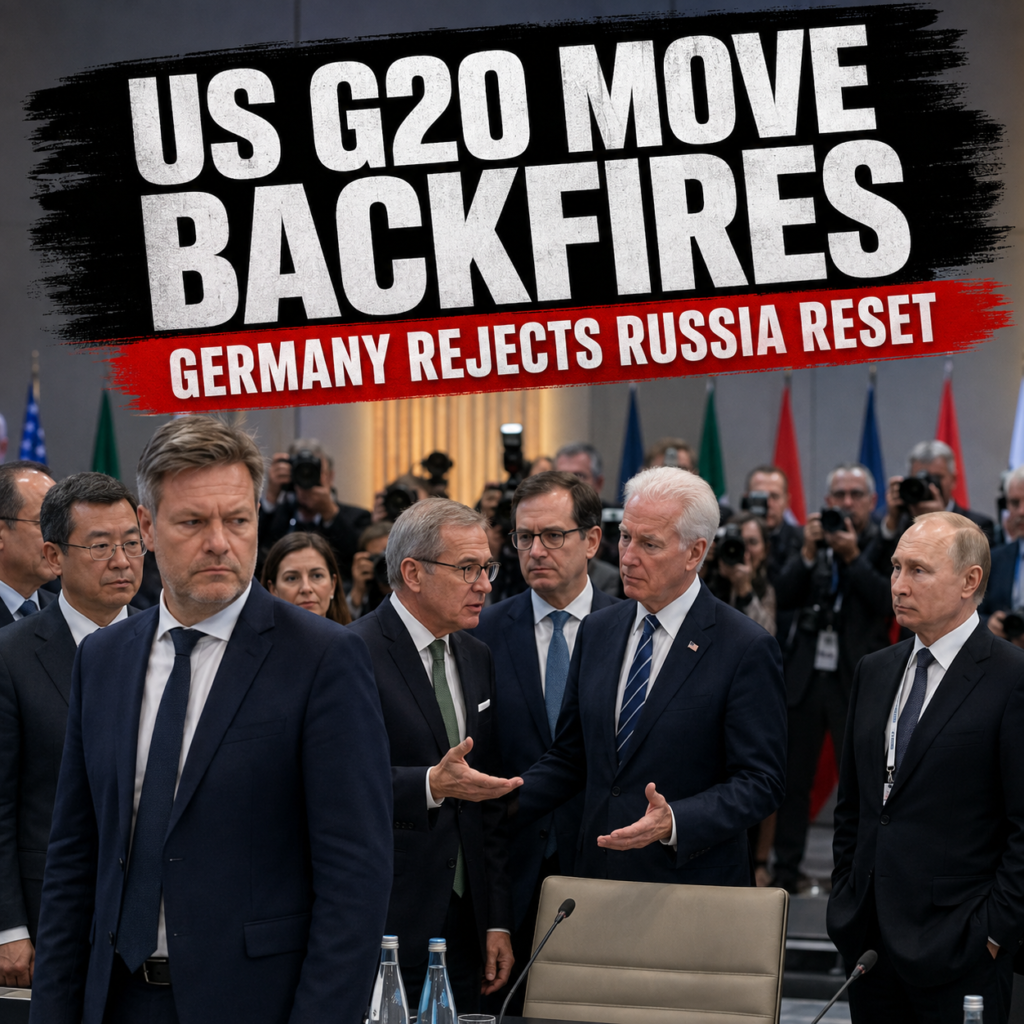
US Attempt to Normalize Russia’s G20 Return Turns Into Diplomatic Backfire
The G20 finance ministers’ meeting in Asheville was supposed to demonstrate Washington’s ability to bring the world’s largest economies back around the same table, but the decision to invite Russian Finance Minister Anton Siluanov produced the opposite political effect. Germany and other European participants refused to treat his return as an ordinary diplomatic event. German Finance Minister Lars Klingbeil publicly described the American signal as troubling, European representatives pushed to keep the Russian delegation out of the traditional group photo, and Klingbeil made clear that there could be no return to normal relations with Moscow while the war in Ukraine continues.Instead of reducing the tension, the US side appears to have made the situation worse. After Germany’s tough stance, the US Treasury reportedly expressed dissatisfaction to Berlin over Klingbeil’s conduct. At the same time, Washington became involved in a second dispute after denying full access to journalists from Bloomberg, The Wall Street Journal and The New York Times. One meeting therefore produced two separate controversies: first, the United States clashed with European allies over the attempt to return the Russian delegation to standard G20 protocol, and then faced criticism over restrictions on press access. For the hosts, it was far from the political outcome they appeared to be seeking.
James Carville Predicts Trump Could Resign After Republicans Lose the Midterms
Veteran Democratic strategist James Carville is making one of the most dramatic predictions of the 2026 US midterm campaign: if Republicans suffer a major defeat on November 3, Donald Trump could resign before completing his second presidential term. Carville, who served as the chief strategist behind Bill Clinton’s successful 1992 presidential campaign, argues that losing control of Congress could leave Trump facing investigations, declining authority inside the Republican Party and a presidency with much less room to operate. In Carville’s scenario, Trump would ultimately decide that remaining in office was no longer worth the political cost.The prediction would produce an extraordinary consequence. If Trump resigned, Vice President JD Vance would automatically become president under the US constitutional succession system, without a new presidential election. Vance could then enter the 2028 campaign as an incumbent president and attempt to reposition the Republican Party around his own leadership. There is no evidence that Trump has decided to resign or that such an arrangement has been negotiated with Vance. Carville is describing what he believes could happen after a Republican defeat, not revealing a confirmed White House plan.Carville has been advancing the theory for months and has gradually made it more specific. In March 2026, he argued that Trump might “walk away” after the midterms if Republicans lose badly.
France Introduces Environmental Fee of Up to €20 and Targets Ultra-Fast Fashion
France has introduced a new environmental mechanism against ultra-fast fashion, turning the fight against extremely cheap clothing into a direct financial measure. From September 1, 2026, products that meet the relevant criteria can face an environmental surcharge of up to €12 per item, with the maximum gradually rising to €19.50 by 2030, effectively €20. The charge is capped at 50% of the product’s pre-tax price. The system is primarily aimed at business models built around huge volumes of low-cost clothing, constantly changing collections and very short consumption cycles, putting platforms such as Shein, Temu and similar retailers under particular pressure.For European retail, the significance goes well beyond environmental policy. France is effectively using price as a tool to weaken the economic advantage of ultra-fast fashion, which allowed major online platforms to capture market share through extremely low prices, enormous product ranges and direct-to-consumer delivery. China has already described the French measures as discriminatory, demanded that Paris reverse them and warned of possible countermeasures. France has rejected those accusations and has shown no intention of backing away. What began as a debate over textile waste is therefore developing into a wider trade and economic dispute between France and China.The new mechanism is legally structured as an environmental malus within France’s extended producer responsibility system for textiles.
Germany’s Industrial Surge Is Being Driven by Massive Aircraft, Rail and Defence Orders
Germany’s new industrial orders rose by 2.5% in July 2026 compared with June, far exceeding market expectations of around 0.3%. At first glance, the figure looks like a long-awaited sign of recovery in Europe’s largest industrial economy after a prolonged period of weakness. But the headline number hides a far less convincing picture. Germany’s Federal Statistical Office, Destatis, says almost the entire increase came from the “other transport equipment” sector — aircraft, ships, railway vehicles and military equipment — where new orders surged by an extraordinary 126.4% in a single month.Once large-scale individual contracts are excluded, total industrial orders actually fell by 1.4%. That gap makes the July data far more interesting than a simple headline about 2.5% growth. Germany is clearly receiving major contracts in strategic and transport-related industries, but broader industrial demand remains weak. A handful of exceptionally large projects can now significantly improve the national statistics without necessarily meaning that thousands of ordinary manufacturers are seeing a genuine recovery in demand.According to Destatis, the July jump was almost entirely linked to an unusually high volume of major orders, particularly in shipbuilding, railway equipment and aircraft production. Orders in the other transport equipment category rose 126.4% month on month.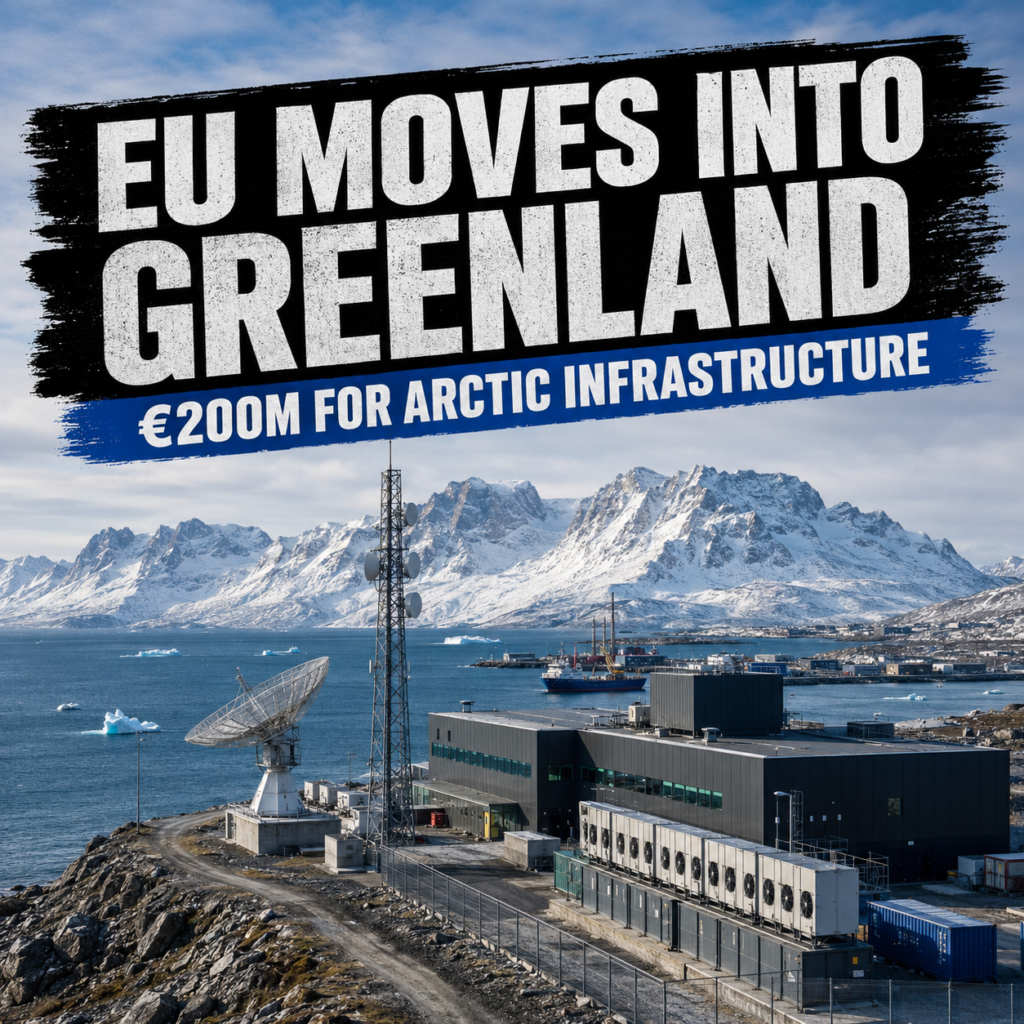
EU Turns Greenland Strategy From Statements Into Money and Infrastructure
The European Union is preparing a new investment package for Greenland, increasingly shifting Arctic competition away from political declarations and toward money, technology and strategic infrastructure. The focus includes critical minerals, energy, submarine cables, satellite connectivity and data centres — exactly the sectors that can turn Greenland from a geographically important territory into a deeply integrated part of long-term supply chains, digital networks and industrial strategy. For Brussels, Greenland is no longer a peripheral regional issue but part of a broader contest for economic influence in the Arctic.What makes the development especially significant is that this is not a sudden burst of European interest but part of a steady expansion of EU involvement. The European Commission has already opened a permanent EU office in Nuuk, deepened cooperation with Greenland following the updated Arctic policy of 2021 and widened the partnership well beyond the traditional focus on fisheries. The new investment package appears to be a continuation of that strategy, but also a political signal: Europe clearly does not want Greenland’s future to be shaped only by the United States and other outside powers competing for influence in the Arctic.Greenland is not part of the European Union, but it remains an autonomous territory within the Kingdom of Denmark and is associated with the EU as an Overseas Country and Territory.
Meloni Government Becomes Longest-Serving Cabinet in Italian Republic’s History
Giorgia Meloni’s government officially became the longest-serving cabinet in the history of the Italian Republic on 4 September 2026. The coalition has now remained in office for 1,413 days, surpassing by one day the previous record held by Silvio Berlusconi’s second government, which governed from June 2001 until April 2005. For a country that has experienced dozens of government changes since the Second World War and where political crises have long been treated almost as a normal part of the institutional system, nearly four uninterrupted years under the same cabinet represents a significant political milestone.The record does not mean that Italy has suddenly become politically simple or that disagreements within the governing coalition have disappeared. However, Meloni has managed to preserve the alliance between Fratelli d’Italia, Lega and Forza Italia since the government was formed in October 2022, despite economic difficulties, the war in Ukraine, the energy crisis, migration disputes and continuing competition between coalition partners. Her ability to maintain a parliamentary majority and avoid a government collapse has become one of the defining features of her premiership, regardless of political views about the policies of the cabinet itself.Meloni’s government was sworn in on 22 October 2022 following the victory of the centre-right coalition in the parliamentary election.
BKA Counts 165 Suspected Acts of Sabotage in Germany Since Start of 2026
Germany’s Federal Criminal Police Office has recorded more than 165 cases by the end of August 2026 that authorities are treating as possible acts of sabotage or related reconnaissance activity. The figures are contained in an internal BKA situation report obtained by NDR, WDR and Süddeutsche Zeitung. The document points to a much broader security problem than could be assumed from a handful of high-profile incidents reported in recent months. German authorities have also registered 747 suspicious drone incidents involving a total of 1,068 unmanned aircraft observed over critical infrastructure, military facilities and defence companies.The new figures are particularly significant against the background of attacks on energy infrastructure, reconnaissance flights over sensitive sites and attempted arson targeting companies in the defence sector. At the same time, the BKA does not claim that all 165 cases are proven acts of sabotage or that every suspicious drone is connected to a foreign intelligence service. Many incidents remain under investigation, and some are later found to have ordinary civilian or commercial explanations. Nevertheless, the overall statistics show that German security authorities are increasingly treating the phenomenon not as a collection of isolated incidents but as a distinct national-security problem requiring permanent inter-agency monitoring.