
Search results
Iceland rejects return to European Union accession talks in nationwide referendum
Icelandic voters have rejected a proposal to resume negotiations on joining the European Union. According to the preliminary final result, around 52.5% voted against reopening accession talks, while approximately 47.5% supported returning to negotiations with Brussels. The referendum, held on 29 August 2026, proved considerably closer than many had expected only a few months earlier. Some opinion polls before the vote had even suggested a narrow advantage for supporters of renewed negotiations. Early results from Reykjavík initially strengthened that impression, but returns from rural constituencies shifted the balance toward the “no” camp and ultimately produced a clear enough lead that the remaining votes were not expected to alter the outcome.The result is particularly significant because it comes after months of speculation that changing geopolitical conditions in the Arctic might push Iceland closer to full EU membership. American pressure and rhetoric surrounding Greenland, growing competition in the North Atlantic and wider uncertainty over European security had revived arguments that small northern European states might benefit from deeper political integration with the European Union. Supporters of renewed talks also pointed to the volatility of the Icelandic króna, high borrowing costs and the fact that Iceland already adopts many EU single-market rules without having a full vote in the institutions that create them.
West Nile fever is becoming an increasingly visible seasonal threat across Europe
West Nile fever is increasingly shifting from a local problem affecting isolated Mediterranean areas into a persistent seasonal threat across a much larger part of Europe. In Andalusia, authorities have confirmed the second death of the season after an 89-year-old resident of Guadalema de los Quintero in Seville province died following the development of meningoencephalitis. A total of 54 cases have already been detected in the region, including 17 classified as severe. At the same time, Greece is facing a much larger outbreak. By 26 August 2026, national surveillance had recorded 232 locally acquired infections and 19 deaths, while another 75 cases were identified within just one reporting week.The wider story is no longer about a single death in Spain or one particularly difficult season in Greece. By 26 August, local transmission of West Nile virus had been detected in 15 European countries and across 124 affected areas. European surveillance systems had received reports of 877 locally acquired cases, with the largest numbers recorded in Italy, Greece, Spain, Romania and France. West Nile virus has been present in Europe for years, but longer mosquito seasons, expanding geographical transmission and the appearance of cases in new regions are gradually turning it into a public-health issue that European authorities increasingly have to prepare for every summer.
UK asylum applications fall sharply as migration pressures ease across several measures
British migration statistics have moved unexpectedly in the opposite direction from the trend that has dominated political debate for several years. During the 12 months from 1 July 2025 to 30 June 2026, 85,891 people applied for asylum in the United Kingdom, including main applicants and dependants. That was 21% lower than during the previous year. The decline came after the rolling annual total reached a peak of 109,662 people in September 2025. At the same time, the number of people arriving across the English Channel in small boats fell, while the backlog of asylum seekers waiting for an initial Home Office decision dropped by more than half.What makes the latest figures particularly notable is that the change affected several parts of the system at once rather than just one headline indicator. Small-boat arrivals fell by 23%, the number of people waiting for an initial asylum decision declined by 56%, and the number of asylum seekers being housed in hotels was cut in half. This does not mean that Britain’s migration problems have disappeared, because the overall number of applicants remains well above the levels typically seen before 2021. However, for the first time in a prolonged period, official data show simultaneous declines in new applications, irregular arrivals, administrative backlogs and dependence on hotel accommodation.The new Home Office figures cover the year ending 30 June 2026.
Three Latvian citizens arrested over suspected sabotage attack on Milrem Robotics in Estonia
Three Latvian citizens are at the center of one of the most serious investigations in recent months into possible sabotage targeting Europe’s defense industry. Latvia’s State Security Service, the VDD, says the suspects are believed to have deliberately set fire to a building used by Estonian defense company Milrem Robotics in Tallinn during the night of 15 August 2026. Milrem Robotics develops and manufactures unmanned military ground systems, including platforms supplied to and used by Ukrainian forces. The Latvian criminal investigation has been opened not only under provisions covering the deliberate destruction of property by arson, but also under a far more serious article concerning possible assistance to a foreign state in activities directed against another country.Estonian authorities are simultaneously investigating the incident as a possible act of sabotage. Estonia’s Prosecutor General Astrid Asi has confirmed that deliberate sabotage is among the scenarios being examined, while Prime Minister Kristen Michal has publicly said investigators are also considering a possible Russian connection. At this stage, however, authorities have not presented public evidence proving that Russia or any other state ordered the attack.
Germany expands Schakal fleet and accelerates army restructuring for NATO’s eastern flank
Germany is taking another significant step in reshaping its land forces for the possibility of a major military crisis on NATO’s eastern flank. The Bundeswehr is increasing its order for the new Schakal wheeled infantry fighting vehicle from 150 to 185 units by exercising an option for an additional 35 vehicles. The decision is not simply another procurement of armored equipment. It is part of a much broader effort to create the so-called Mittlere Kräfte, or “medium forces,” designed to combine the mobility of wheeled formations with the protection and firepower normally associated with mechanized units. Their ability to move rapidly across Germany, Poland and other European countries toward NATO’s eastern borders is becoming a central element of Germany’s new military structure.The Schakal is expected to become one of the most important components of this concept. The Bundeswehr itself has described the vehicle as a future backbone of its medium forces, which are intended to fill the operational gap between light units that can reach a crisis area quickly and heavy armored formations that bring much greater combat power but require considerably more time and logistical support to deploy. The first Schakal vehicles are scheduled to enter service from the end of 2027, with deliveries continuing in the following years.
Russian deputy speaker calls for bombing Ukrainian cities to break civilian resistance
Russian State Duma Deputy Speaker Pyotr Tolstoy has publicly argued that Russian forces should strike Ukrainian cities in order to demoralise the population and force Ukrainians to stop resisting. He suggested warning residents in advance, allowing them time to leave, and then using military force until society was psychologically broken enough to meet Russian troops with raised hands. The most significant element of Tolstoy’s statement is that he explicitly described the desired effect in terms of the civilian population’s morale and willingness to resist, rather than limiting his argument to the destruction of identifiable military targets.The statement cannot reasonably be viewed as an isolated outburst by one Russian politician. Similar rhetoric has repeatedly come from senior figures within the Russian state, including former president Dmitry Medvedev, now deputy chairman of Russia’s Security Council and one of the most senior figures in the Russian power hierarchy after Vladimir Putin. Medvedev has repeatedly questioned whether Ukraine should continue to exist as an independent state and has spoken about its possible disappearance. European institutions have already warned that parts of this wider Russian official rhetoric may amount to direct and public incitement to genocide or may provide evidence relevant to assessing possible genocidal intent toward Ukrainians as a national group.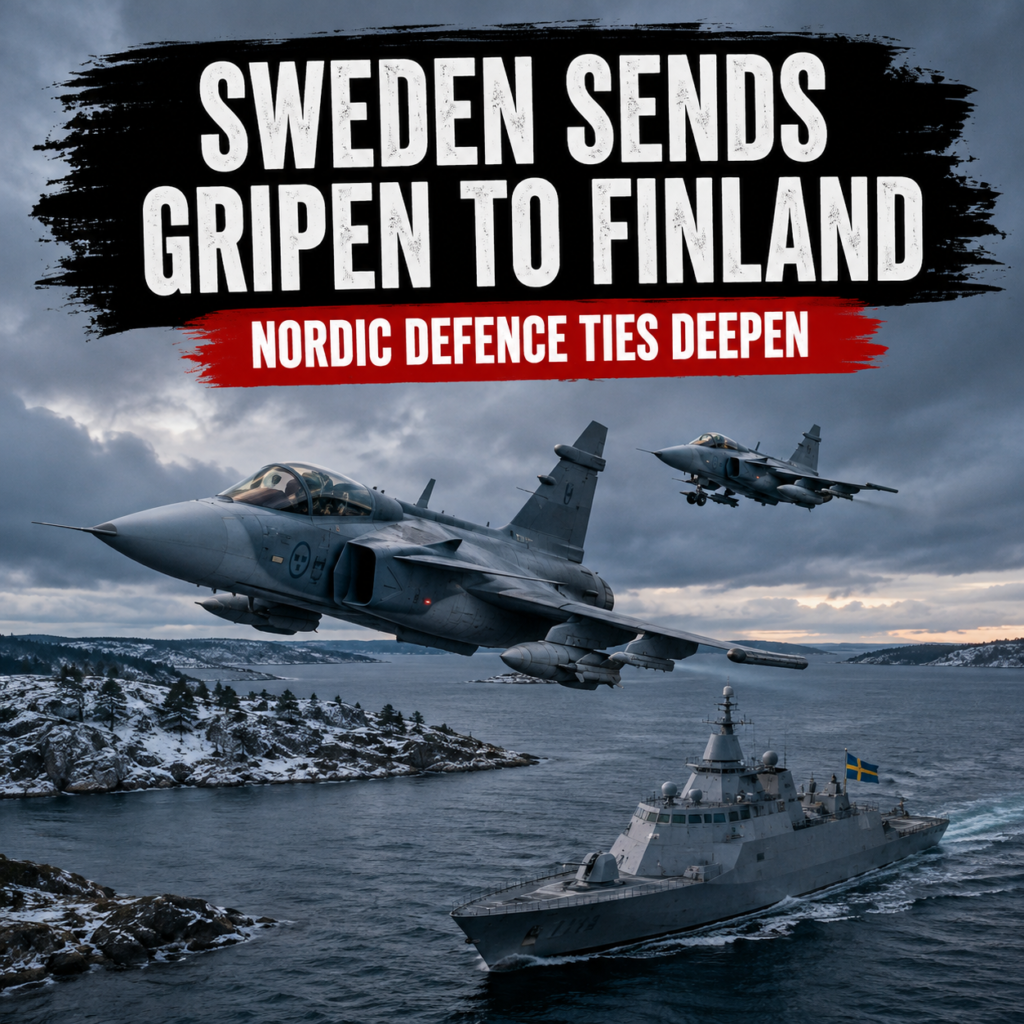
Sweden and Finland begin practical integration of their northern NATO defence systems
Sweden announced on 28 August 2026 that it will deploy Gripen fighter jets and a warship to Finland to participate in monitoring and protecting Finnish territory at least until the end of 2026. Formally, the mission is described as support for territorial surveillance and readiness, but in practical terms it goes much further than a temporary deployment by an ally. The two newest NATO members in Northern Europe are moving from political declarations and staff-level coordination toward real sharing of combat platforms, surveillance responsibilities and national defence resources.At the same time, Finland is strengthening its own air-defence architecture through a major order from Saab for RBS 70 NG systems worth approximately SEK 1.2 billion, or around $126 million. Swedish counter-drone capabilities are also being considered for deployment, an increasingly important issue as concerns grow over unmanned aircraft, airspace violations and hybrid threats across the Nordic and Baltic regions. Taken together, these developments form a much broader story than a simple movement of military equipment: Sweden and Finland are beginning to integrate individual elements of their defence systems in a way that would have been politically difficult to imagine only a few years ago.From a political perspective, this is one of the clearest examples of how northern European security has changed in 2026.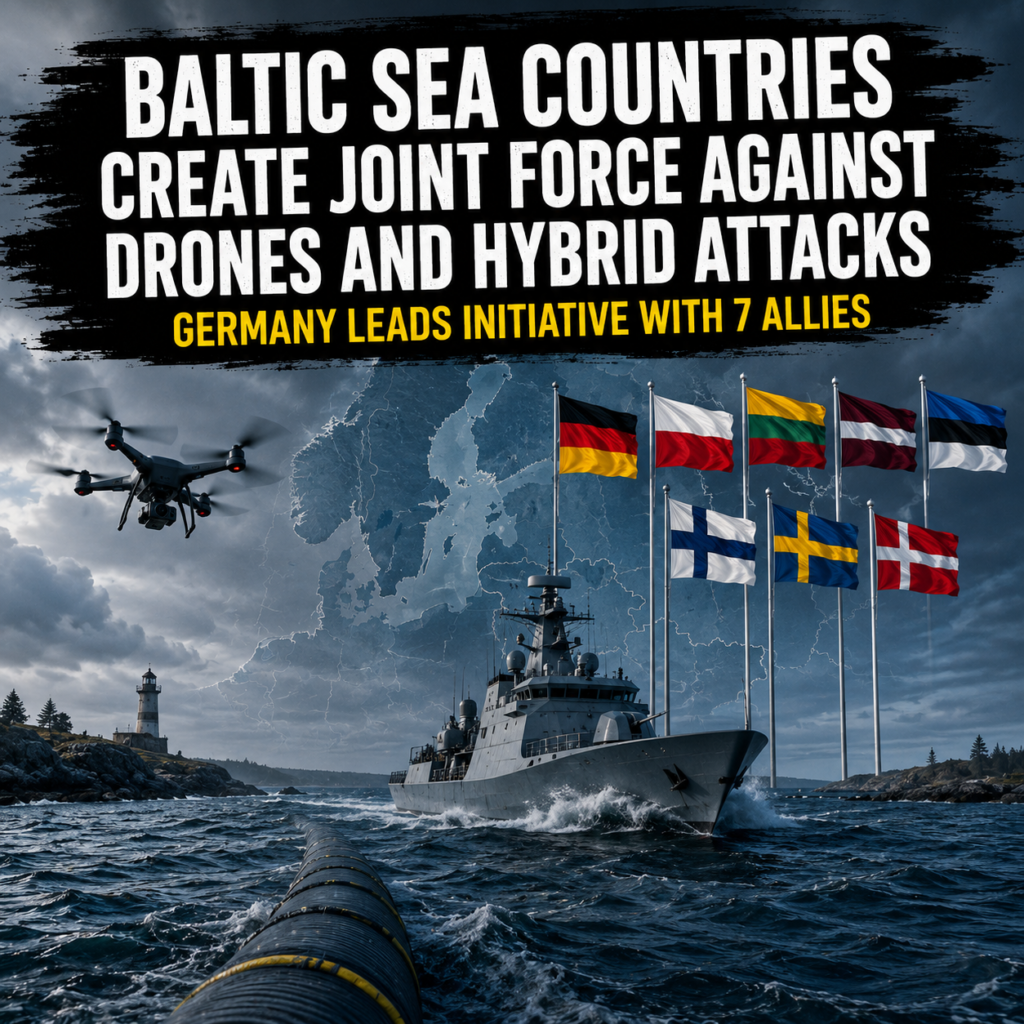
Eight Baltic nations create joint force against drones and hybrid attacks
Germany, Poland, Lithuania, Latvia, Estonia, Finland, Sweden and Denmark are preparing to create a joint operational task force designed to respond more quickly to drones and other hybrid threats across the Baltic Sea region. German Interior Minister Alexander Dobrindt announced the plan on 28 August ahead of a meeting of regional representatives in Flensburg. The central objective is faster information exchange between national authorities so that incidents involving airspace, ports, undersea cables, gas pipelines and other critical infrastructure are no longer treated as isolated national problems.For Latvia, Lithuania and Estonia, the initiative is particularly significant because the Baltic Sea is increasingly functioning as one interconnected security zone in which an incident near one country can rapidly affect the rest of the region. Dobrindt warned that foreign states are constantly attempting to undermine security, democratic institutions and economic stability inside the European Union. He also said that hybrid threats could move to a new level over the coming months, making the speed of information exchange and coordinated response an increasingly important part of regional defence.The idea of a joint task force did not emerge in isolation. Over the past several years, the Baltic Sea has experienced a series of incidents involving damaged undersea energy and telecommunications infrastructure, including cables and pipelines.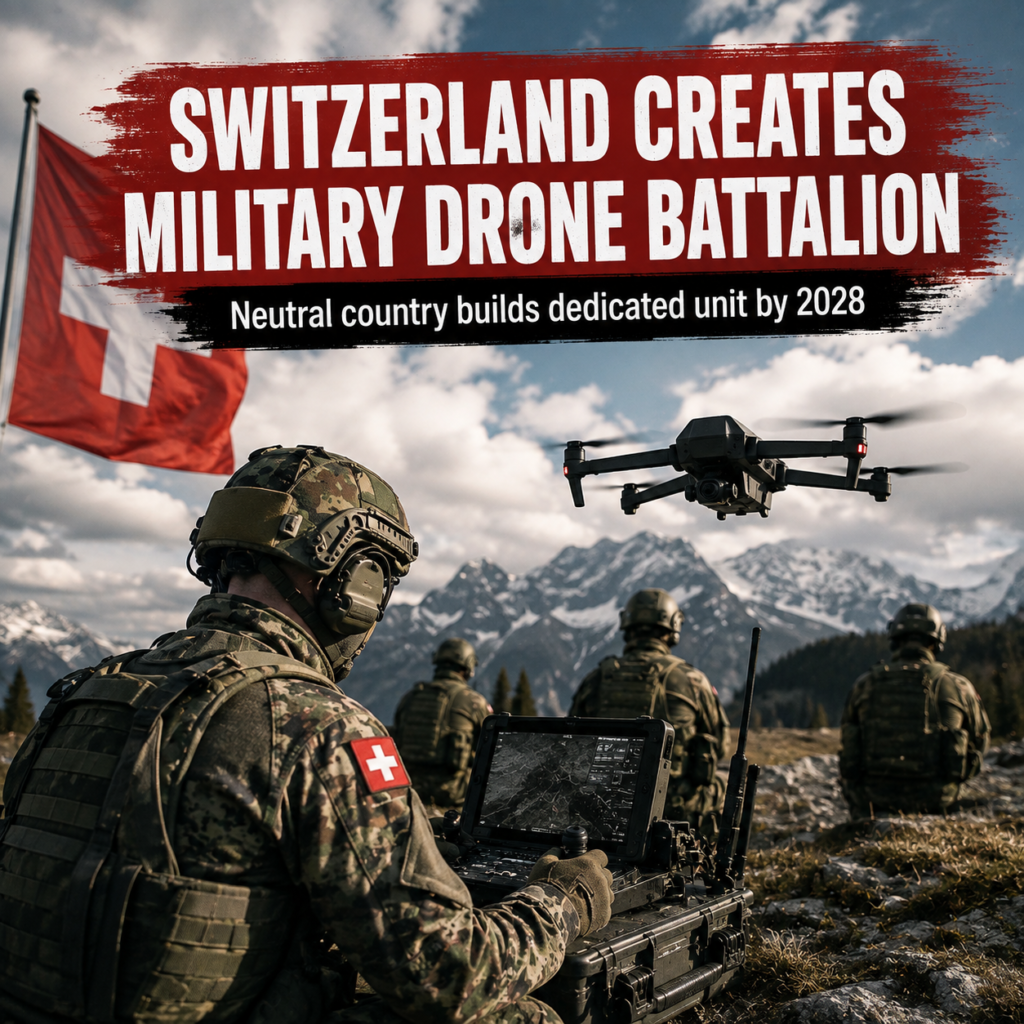
Switzerland creates a dedicated military drone battalion and reshapes its defence posture
Switzerland is turning unmanned systems into an independent pillar of national defence and plans to form its first specialised military drone battalion by 2028. For a country that has long defined itself through armed neutrality rather than alliance politics, that decision carries significance far beyond a simple organisational reform. It signals that Bern no longer sees drones as a secondary support tool, but as a permanent and essential part of future warfare. The move also reflects how profoundly the war in Ukraine has changed military thinking across Europe, including in states that remain outside NATO.What makes the Swiss decision especially important is the broader context behind it. European defence debates are no longer limited to tanks, artillery and air defence systems in the traditional sense. The battlefield lessons from Ukraine have shown that relatively cheap drones can gather intelligence, strike military targets, disrupt supply routes and force an enemy to use much more expensive defensive systems. In response, even countries with very different security traditions are adjusting their armed forces. Switzerland’s planned drone battalion is therefore part of a much wider European transformation in which technology, speed of adaptation and domestic resilience are becoming central to defence policy.The decision is tied to a larger restructuring of the Swiss armed forces and its understanding of modern threats.