
Search results
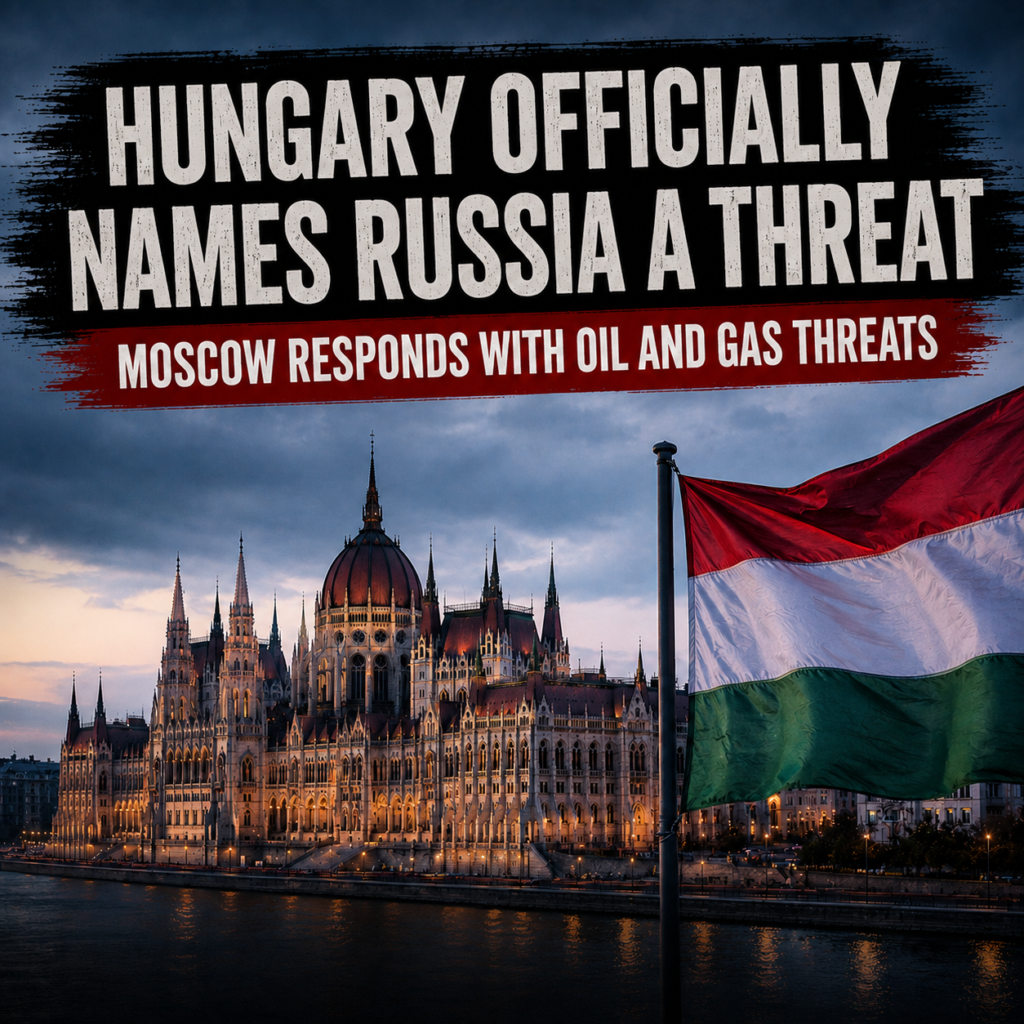
Hungary Officially Names Russia a Security Threat as Moscow Raises Oil and Gas Pressure
Hungary has made one of the sharpest foreign-policy reversals inside the European Union following the change of government in Budapest. In an official document issued under Prime Minister Péter Magyar, Russia is described as a threat to Hungary, Europe and the international order. The new government also condemns Russian military aggression and reaffirms support for Ukraine’s sovereignty and territorial integrity within its internationally recognised borders. For a country that under Viktor Orbán spent years taking the most Moscow-friendly position inside the EU, the shift represents a near-total dismantling of the previous foreign-policy line.The reaction from Russia came quickly. Russian State Duma defense committee member Andrei Kolesnik publicly suggested that supplies of Russian oil and other energy resources to Hungary could now be put into question. This is not yet an official Kremlin decision and does not amount to an announced energy cutoff, but the message was clear enough: Moscow is prepared to remind Budapest how deeply Hungary still depends on Russian energy. The response also demonstrates how sensitive the political reversal has become for Russia.The change matters far beyond Hungary itself. For years, Moscow could point to Budapest as proof that there was no complete European consensus on Russia.
Poland Demands €250 Million EU Fine for Meta Over Alleged Failure to Remove Scam Ads
Poland is urging the European Commission to impose a €250 million fine on Meta over the way the company responds to fraudulent advertising across Facebook and its other platforms. Warsaw argues that the issue is no longer limited to isolated scam ads appearing before moderators can react, but reflects a systemic failure to remove dangerous content even after official warnings from national cybersecurity specialists. Poland’s CERT provided Meta with information about 122 suspicious advertisements, yet Polish authorities say that most of them remained available after the company had been notified.For Poland, the dispute goes far beyond a single national market. Facebook and Instagram are routinely used by fraudsters to imitate banks, investment platforms, state programmes, major companies and public figures. Users are encouraged to follow links, provide personal details, submit bank-card information or transfer money into fraudulent investment schemes. Warsaw’s position is that a platform of Meta’s scale cannot simply wait for large numbers of users to complain when a national cybersecurity authority has already identified and reported specific suspicious campaigns.The proposed €250 million penalty is also becoming a test of how aggressively the European Union is prepared to enforce its digital rules against the world’s largest technology companies. Meta is subject to the strictest obligations applied to very large online platforms in the EU.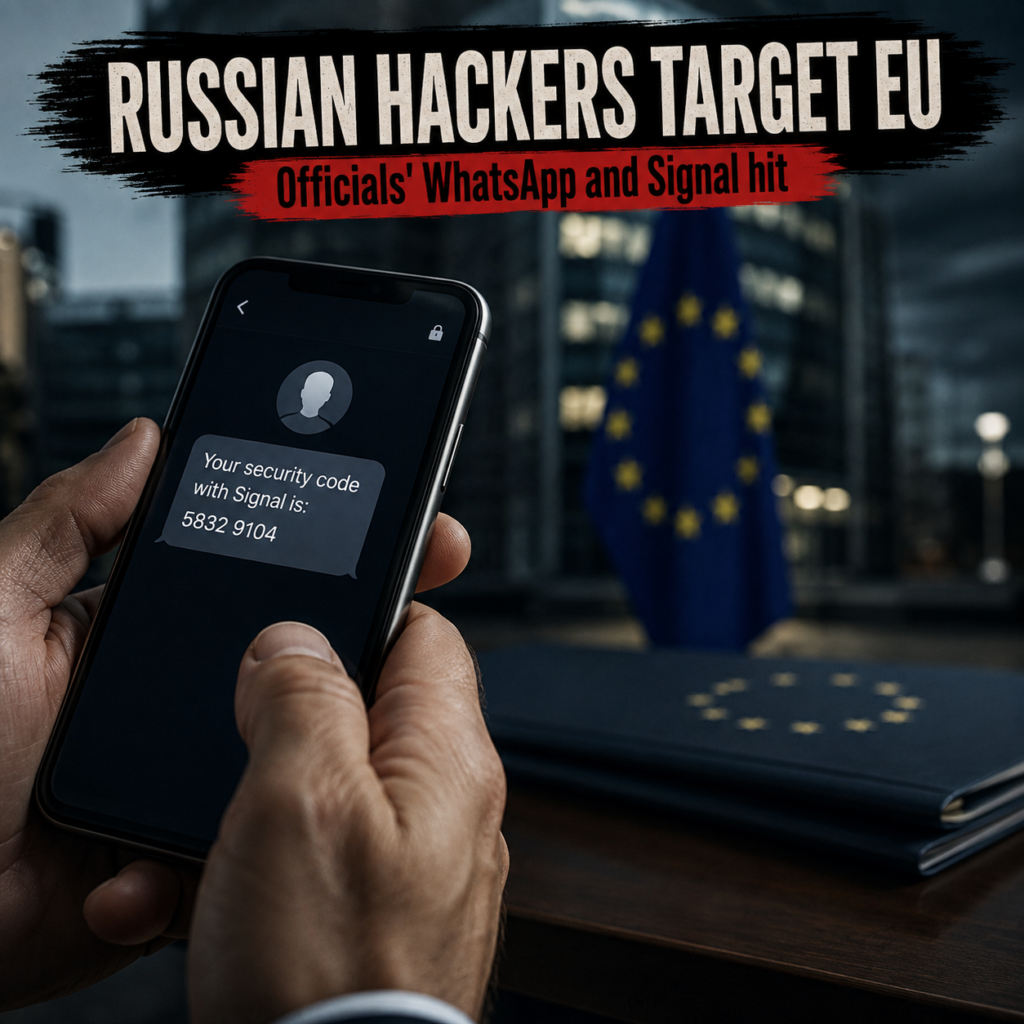
Russian State-Linked Hackers Target WhatsApp and Signal Accounts of Senior EU Officials
Russian state and state-linked hacking groups are increasingly targeting the protected messaging accounts of European officials, diplomats and military personnel. An internal presentation by a European cybersecurity body has now acknowledged that state-sponsored actors attempted to take over WhatsApp and Signal accounts belonging to senior EU officials. The presentation itself does not publicly attribute every individual incident to a specific country, but European intelligence services have already linked almost identical campaigns against the same messaging platforms to Russia.Dutch and Portuguese intelligence agencies warned on 12 March 2026 that Russian state-linked operators were conducting a campaign aimed at compromising WhatsApp and Signal accounts used by officials, diplomats, military personnel and other individuals of intelligence interest to Moscow. The methods closely resemble those now described within EU institutions: highly personalised messages, attempts to obtain verification codes, impersonation of technical support and the use of current official topics to persuade a specific target to perform an action that gives the attacker access.The new information therefore matters as more than another warning about phishing. It shows how Russian cyberespionage is increasingly shifting away from attacks against large government networks toward specific individuals involved in decision-making inside the European Union.
Two Killed and Nine Injured After Driver Deliberately Rams People Outside Caen Station
A car was deliberately driven into a group of people near the railway station in Caen, northwestern France, on the evening of 26 August 2026. Two people have died and nine others were injured, with several victims remaining in critical condition. French authorities have confirmed that investigators believe the driver intentionally targeted people rather than losing control of the vehicle, turning what initially appeared to be a serious road incident into a homicide investigation involving the deliberate use of a car as a weapon.Police detained the 26-year-old suspected driver after he fled the scene. He was located in Ouistreham, around 20 kilometres from Caen, and taken into custody while investigators began reconstructing the events that preceded the attack. The working theory is that a confrontation took place near an establishment in the station district shortly before the driver entered the vehicle and intentionally accelerated toward a group of people outside.Despite the deliberate nature of the attack and the number of casualties, French authorities are not currently treating the incident as terrorism. Investigators have so far found no publicly confirmed political, religious or ideological motive. That distinction is important: deliberately driving a vehicle into people establishes intentional violence, but it does not automatically make an incident a terrorist attack.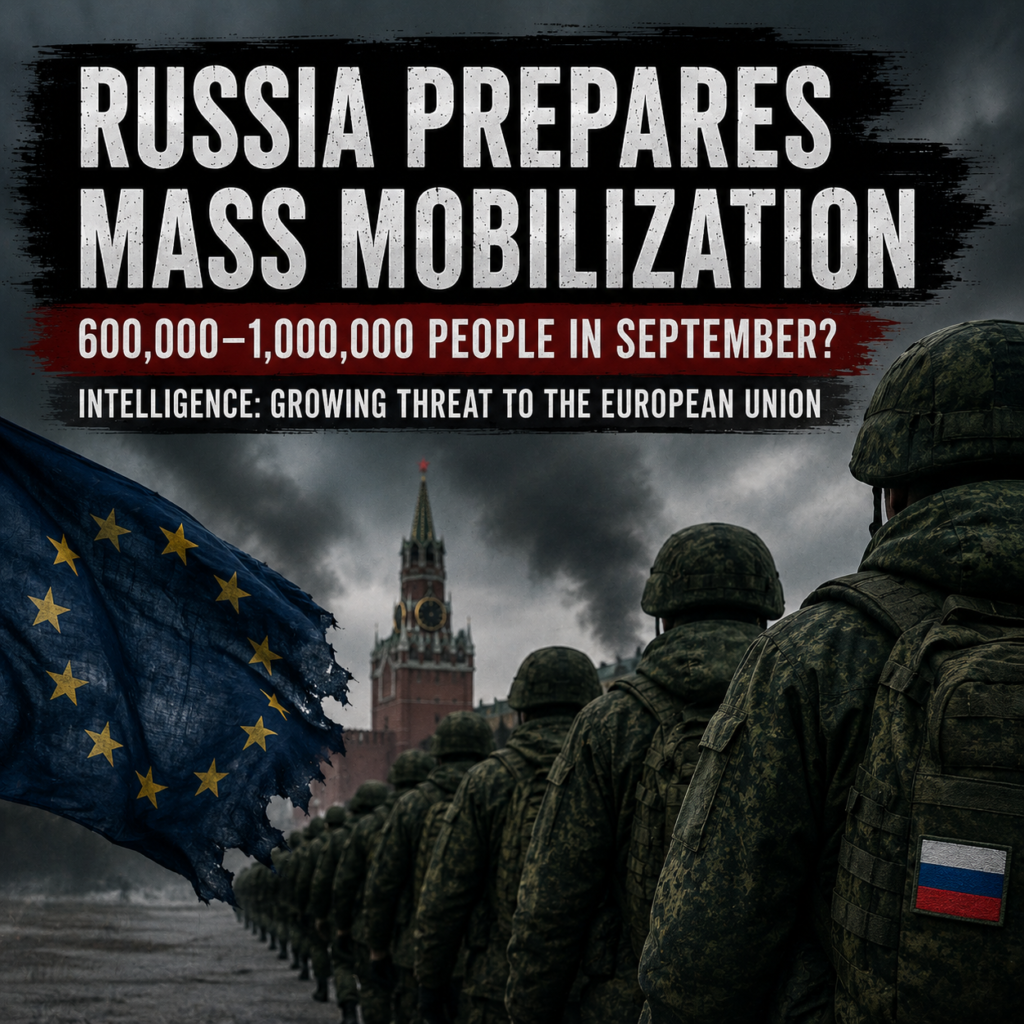
Russia Prepares for Possible Mass Mobilization as Europe Assesses a Growing Long-Term Military Threat
Western intelligence services are monitoring preparations inside Russia for a possible new large-scale mobilization after the State Duma elections scheduled for 18–20 September 2026. Mobilization-readiness checks have reportedly been conducted in several Russian regions, including Kaliningrad, the heavily militarized Russian territory located directly between Poland and Lithuania. These exercises are intended to test how quickly authorities could receive, accommodate, equip and arm large numbers of additional personnel if the Kremlin decides to launch another major call-up.The exact scale remains uncertain. Publicly available intelligence assessments do not yet confirm that Moscow has formally decided to mobilize between 600,000 and one million people in September. Ukrainian officials have spoken more concretely about an initial mobilization of around 300,000 personnel after the elections, with the possibility of further recruitment pushing the figure toward 500,000. Higher scenarios approaching 600,000 or even one million belong to broader military assessments of what Russia might eventually require if it intends not merely to replace losses in Ukraine but to create a much larger strategic reserve and expand its armed forces for a prolonged confrontation with Europe.For the European Union, the importance of such preparations goes far beyond the number of Russian soldiers who could be sent to Ukraine.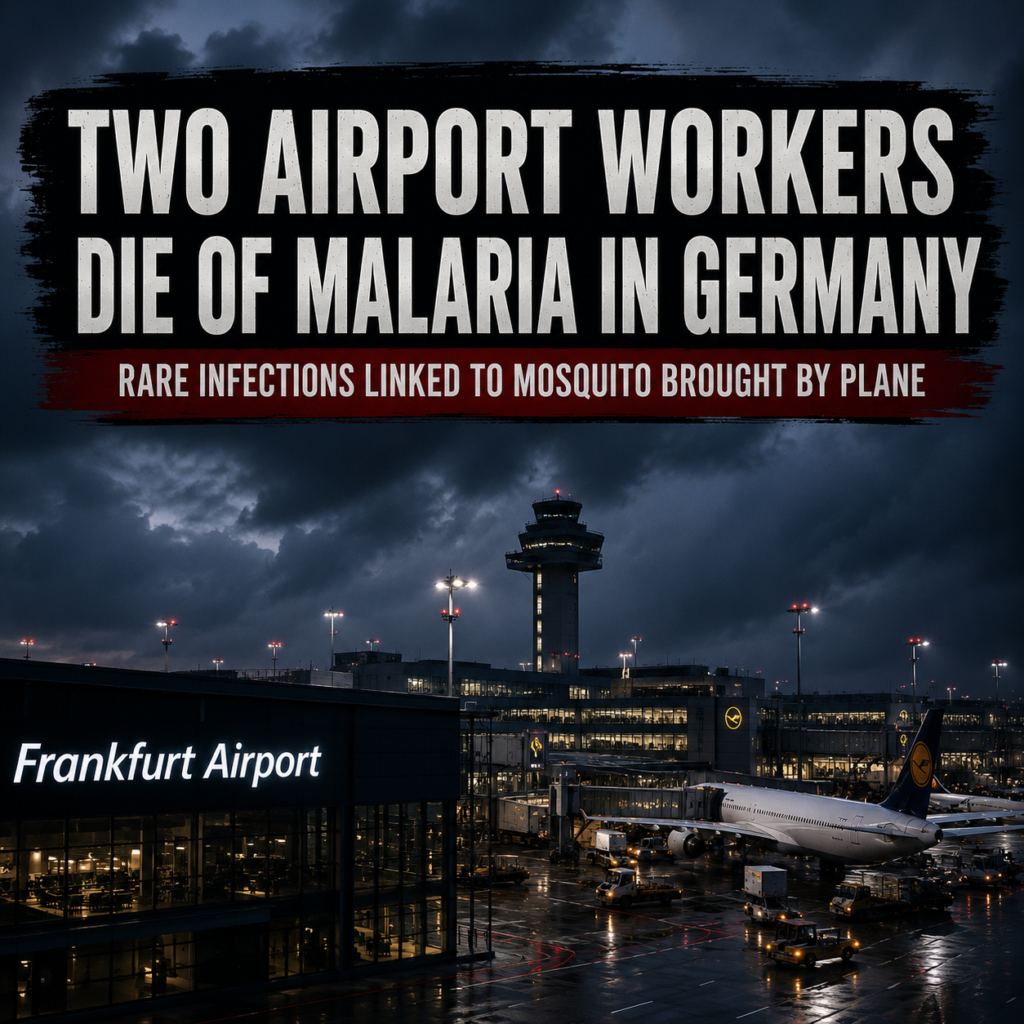
Two Frankfurt Airport Employees Die After Contracting Rare Airport Malaria in Germany
Two employees at Frankfurt Airport have died after contracting malaria in an exceptionally rare cluster of infections linked to their workplace. Six airport employees were infected despite having no recent travel history to countries where malaria is endemic. The first death occurred in early July 2026 and the second in August, while the other four infected employees received treatment and are recovering. German health authorities believe the most likely explanation is that an infected Anopheles mosquito was accidentally transported to Frankfurt aboard an aircraft.The cases involve malaria tropica, caused by Plasmodium falciparum, the most dangerous form of the disease. The first four known employees developed symptoms between 4 and 6 July 2026. What makes the outbreak particularly unusual is that those affected had not travelled to malaria-risk regions before becoming ill. Germany’s Robert Koch Institute describes such infections as “airport malaria,” an extremely rare phenomenon in which an infected mosquito is transported by aircraft or luggage and then bites someone at the airport or nearby.Frankfurt Airport operator Fraport has informed employees about the incidents and installed mosquito traps around the airport. Captured mosquitoes are being examined, with genetic analysis being used to determine their species and possible geographic origin.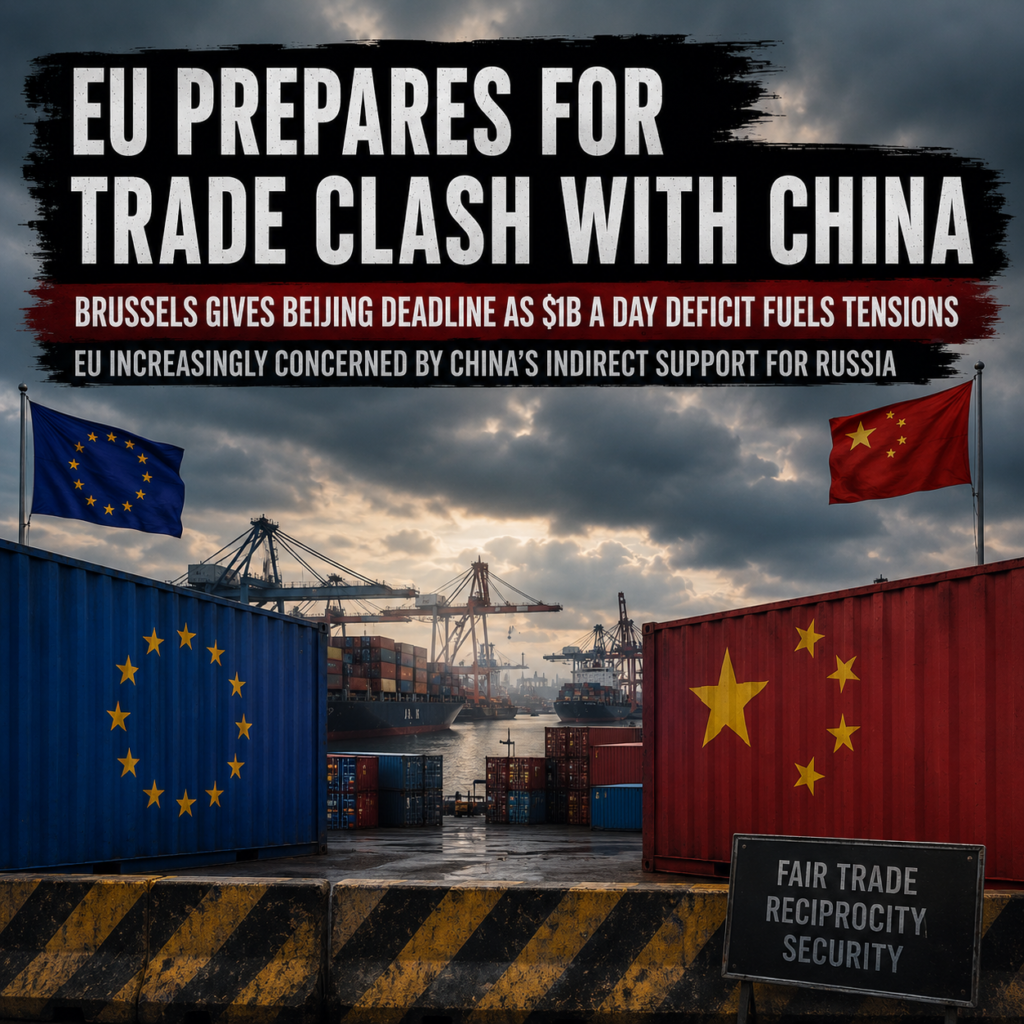
EU Prepares for a Tougher Trade Conflict With China as Economic and Security Tensions Converge
The European Union is preparing for a significantly tougher phase in its economic relationship with China. In 2025, the EU’s goods trade deficit with China amounted to roughly $1 billion per day, and Brussels is increasingly unwilling to treat that imbalance as an acceptable price for access to the Chinese market. European officials have given Beijing until October 2026 to demonstrate concrete progress in correcting structural distortions that encourage Chinese exports while limiting demand for European products.The dispute is no longer purely about trade. Across the EU, concern is growing that China’s continuing economic relationship with Russia is indirectly helping Moscow sustain its military and industrial capacity. European officials have repeatedly raised the issue of dual-use goods, microelectronics, industrial machinery and other components reaching Russia through Chinese companies or commercial networks. Beijing rejects accusations that it supports Russia’s war effort and continues to describe its position as neutral, but for Brussels the China relationship is increasingly becoming both an economic and a strategic security issue.That changes the way Europe now views Chinese exports. The debate is no longer limited to cheap electric vehicles, solar panels, batteries or industrial machinery.
Italy Requests €8 Billion in EU Defense Loans as Rome Confronts Growing Security Risks
Italy is moving toward additional defense borrowing not simply because of pressure from Brussels or because of new European spending mechanisms. In Rome, there is a growing recognition that the main security threat is coming from Europe’s eastern direction, above all from Russia, and that the consequences of any major escalation would not be limited to Poland, the Baltic states or NATO’s northeastern flank. For Italy, the issue increasingly concerns the security of the entire European Union, including its transport routes, energy infrastructure, industrial capacity and Europe’s ability to defend itself without relying entirely on outside support. That broader assessment helps explain why Giorgia Meloni’s government, despite disagreements inside the ruling coalition, ultimately decided to use the SAFE mechanism and move from political declarations about rearmament to real multi-billion-euro financing.On 26 August 2026, the Italian government formally requested €8 billion in loans under the European Union’s SAFE defense financing programme. Italy could potentially receive up to €14.9 billion, meaning Rome has chosen for now to use only part of the amount available to it. The decision reflects both the growing urgency of European defense planning and the political difficulty of committing to the full sum while Italy is already managing one of the largest public debt burdens in Europe.The request was politically sensitive inside the governing coalition.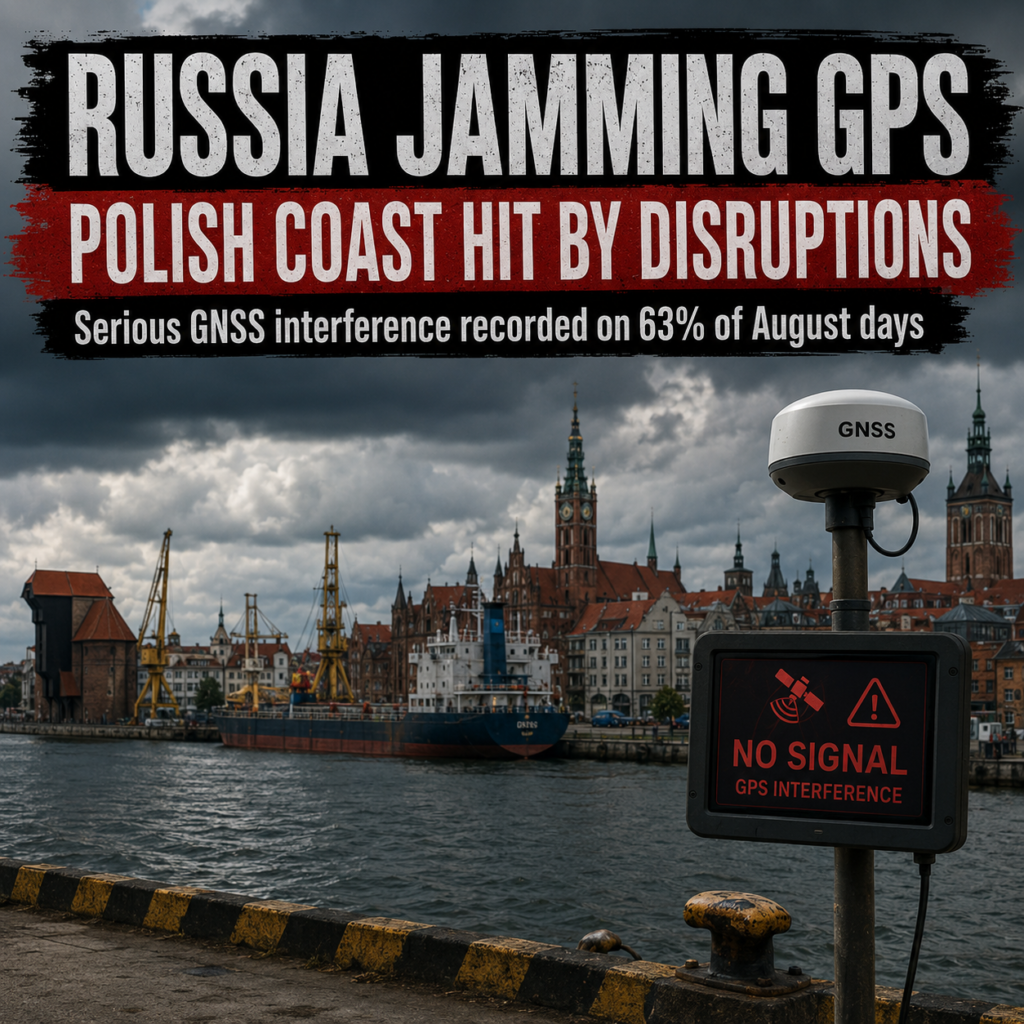
Russia Intensifies GPS Interference Along Poland’s Coast as Navigation Disruptions Spread Across August
Serious deliberate interference with satellite navigation has intensified sharply along Poland’s Baltic coast. Poland’s National Institute of Telecommunications reports that major GNSS disruptions around Gdańsk, Sopot and Gdynia were recorded on roughly 63% of the first 19 days of August. The situation was even worse in May and June, when prolonged interference affecting several satellite-navigation bands was detected during roughly 70% of days in each month. The institute says the scale and persistence of the problem increased significantly during 2026.Polish specialists link the interference to electronic-warfare activity in the Baltic region, with technical investigations pointing primarily toward Russia’s Kaliningrad region. Research using radio-source localisation methods has repeatedly placed powerful GNSS interference sources on the Kaliningrad coast, with measurements taken on different dates converging on the same general area.The consequences extend well beyond military systems. Smartphones can display incorrect positions, navigation applications can fail, drones can lose stable positioning, and disruptions can affect ships, urban transport services and other systems dependent on satellite coordinates. For Poland’s coast, GNSS interference is increasingly becoming a permanent infrastructure and security problem rather than an occasional technical malfunction.