Search results

Personalized Cancer Vaccines Are Moving Closer to Real Medicine Through New Clinical Trials
Personalized cancer vaccines are rapidly moving from an experimental concept toward a technology that could become part of real-world cancer treatment. Unlike traditional vaccines designed to prevent infections, these therapies are created for people who already have cancer and are tailored to the unique genetic features of each patient’s tumor. Researchers analyze tumor cells, identify mutations that make the cancer distinguishable to the immune system, and then design a vaccine intended to help immune cells recognize and attack those specific targets.The progress is particularly significant because researchers are now testing these vaccines in increasingly advanced clinical settings rather than limiting them to laboratory experiments. On July 30, 2026, the first patient in the United Kingdom received a bespoke lung cancer vaccine as part of the NEOVACC clinical trial. At the same time, late-stage research involving more than a thousand people with localized melanoma has produced encouraging results for a personalized mRNA cancer vaccine used together with immunotherapy. These developments suggest that the field is gradually moving toward a point where individualized cancer vaccines could become a practical component of modern oncology.Personalized cancer vaccines are fundamentally different from conventional preventive vaccines.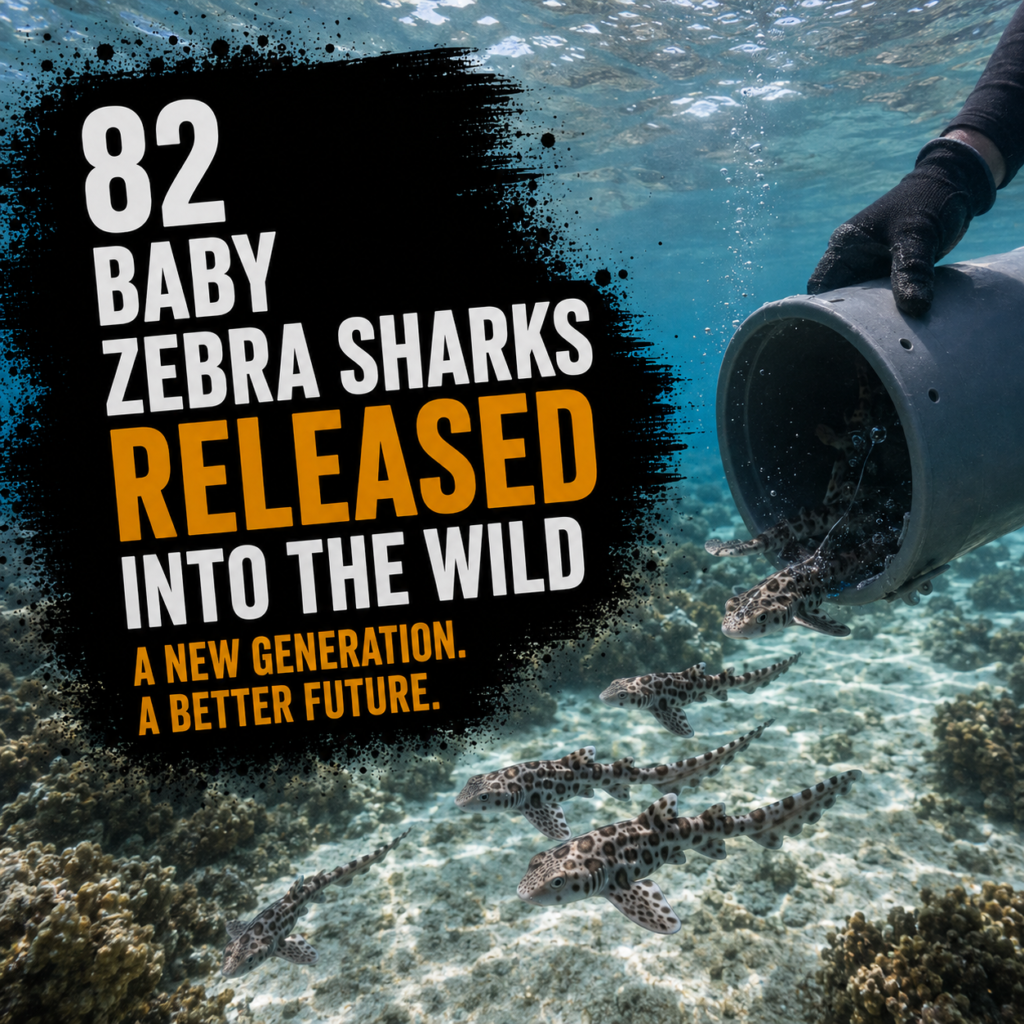
82 Baby Zebra Sharks Released Into the Wild, Giving a Rare Species a New Chance
On August 24, 2026, an international conservation programme announced an important development for zebra shark conservation: 82 young sharks raised under specialist care were released into protected waters around the Raja Ampat archipelago in Indonesia. It is one of the most unusual marine wildlife recovery projects of its kind, because this approach has rarely been used with sharks on such a scale. The young animals were raised from eggs collected from sharks living in aquariums in different countries and were gradually prepared for life in the ocean. Before release, specialists closely monitored their development, health and ability to find food independently. After being moved into the sea, the animals continue to be tracked with special tags so researchers can understand how they adapt to natural conditions and how successful the return of captive-raised sharks to the wild will be.For the species itself, the programme could be extremely important. The zebra shark, also known as the Indo-Pacific leopard shark, once had a much wider distribution across tropical waters of the Indian and western Pacific oceans. However, overfishing and other pressures on marine ecosystems caused major declines in some local populations. In the Raja Ampat region, specialists had previously estimated that only several dozen adult animals remained.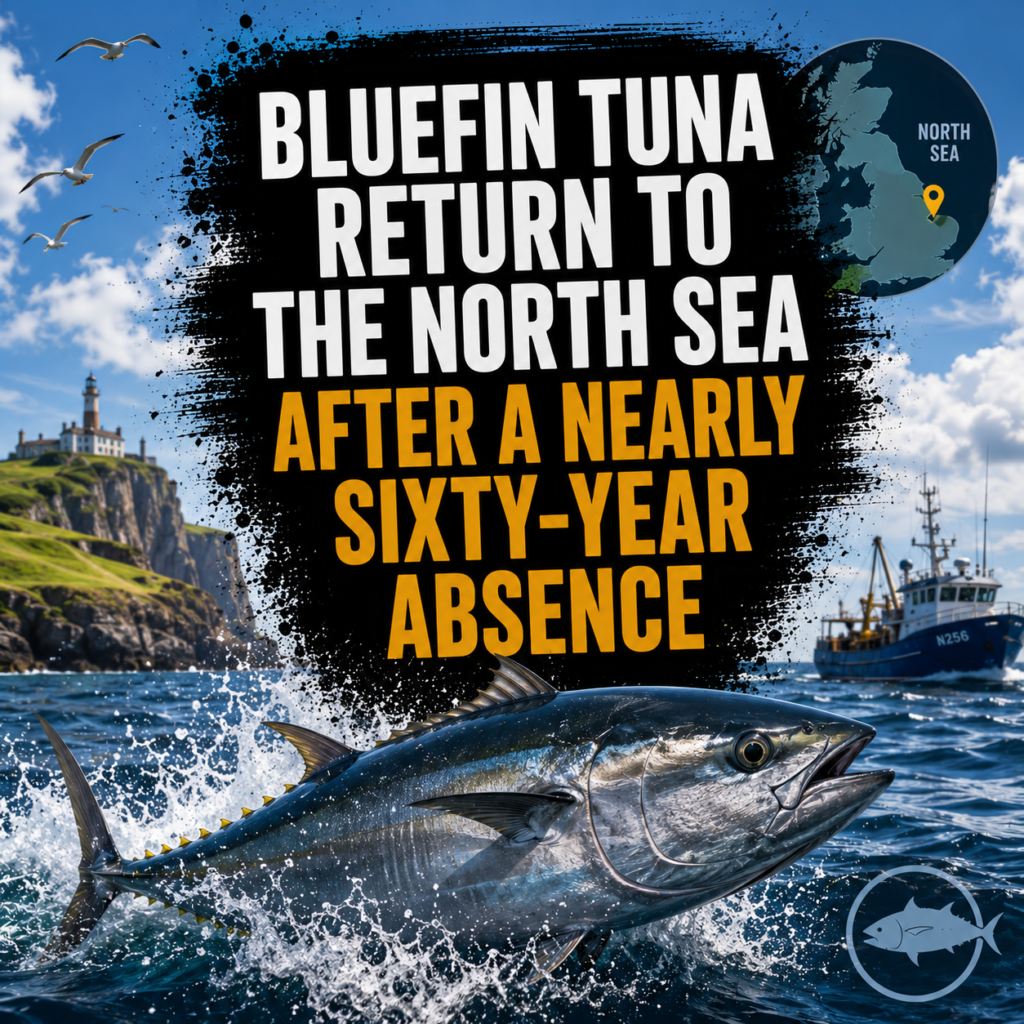
Bluefin Tuna Return to the North Sea After a Nearly Sixty-Year Absence
In August 2026, an event took place off the northeast coast of England that specialists describe as an important sign of marine ecosystem recovery. Atlantic bluefin tuna have once again begun appearing regularly in the North Sea, and researchers have successfully attached satellite tags to several of these enormous fish near the Yorkshire coast. Particularly significant is the fact that tuna have appeared near Whitby and Scarborough roughly six decades after they had almost disappeared from the region. In the middle of the twentieth century, these waters were known for large schools of tuna, but intensive fishing and declining herring stocks deprived the predators of their traditional food source. Now the situation is changing, and the return of one of the region’s largest predators may indicate significant changes in the condition of the North Sea ecosystem.Researchers have already recorded several large bluefin tuna off the northeast coast of England, while two fish caught near Whitby in August 2026 weighed around 338 kilograms and slightly less, respectively. Specialists from the University of Exeter were able to attach tracking tags to several tuna to determine where they come from, where they travel and whether they return to these waters every year. This information is particularly important because it is not yet clear whether the fish appearing along the British coast belong to the same population or whether different groups arrive from the Atlantic.
Clean Transport Is Already Saving Human Lives by Reducing Air Pollution in European Cities
In European cities, transport is gradually ceasing to be one of the main sources of air pollution. Electric cars, electric buses, trams, metros, trains and bicycles are becoming part of everyday urban life, replacing journeys made by vehicles powered by internal combustion engines. This change is important not only because it reduces greenhouse gas emissions. Air pollution is directly associated with respiratory and cardiovascular diseases, meaning that fewer exhaust fumes can reduce people’s exposure to harmful pollutants. The effect is especially noticeable where electric public transport replaces large numbers of diesel buses and cars on streets with heavy traffic.The connection between transportation and human health is becoming increasingly clear as cities gain the ability to reduce pollution directly at its source. An electric bus produces no exhaust fumes at a stop where passengers gather every day, while an electric car does not create a local stream of exhaust beside a pavement or residential building. Even when emissions associated with electricity generation are taken into account, switching to cleaner transport can substantially reduce pollution in populated areas. Clean mobility is therefore gradually becoming not only a climate policy but also an important tool for protecting public health.One of the most dangerous consequences of conventional road transport is air pollution caused by fine particles.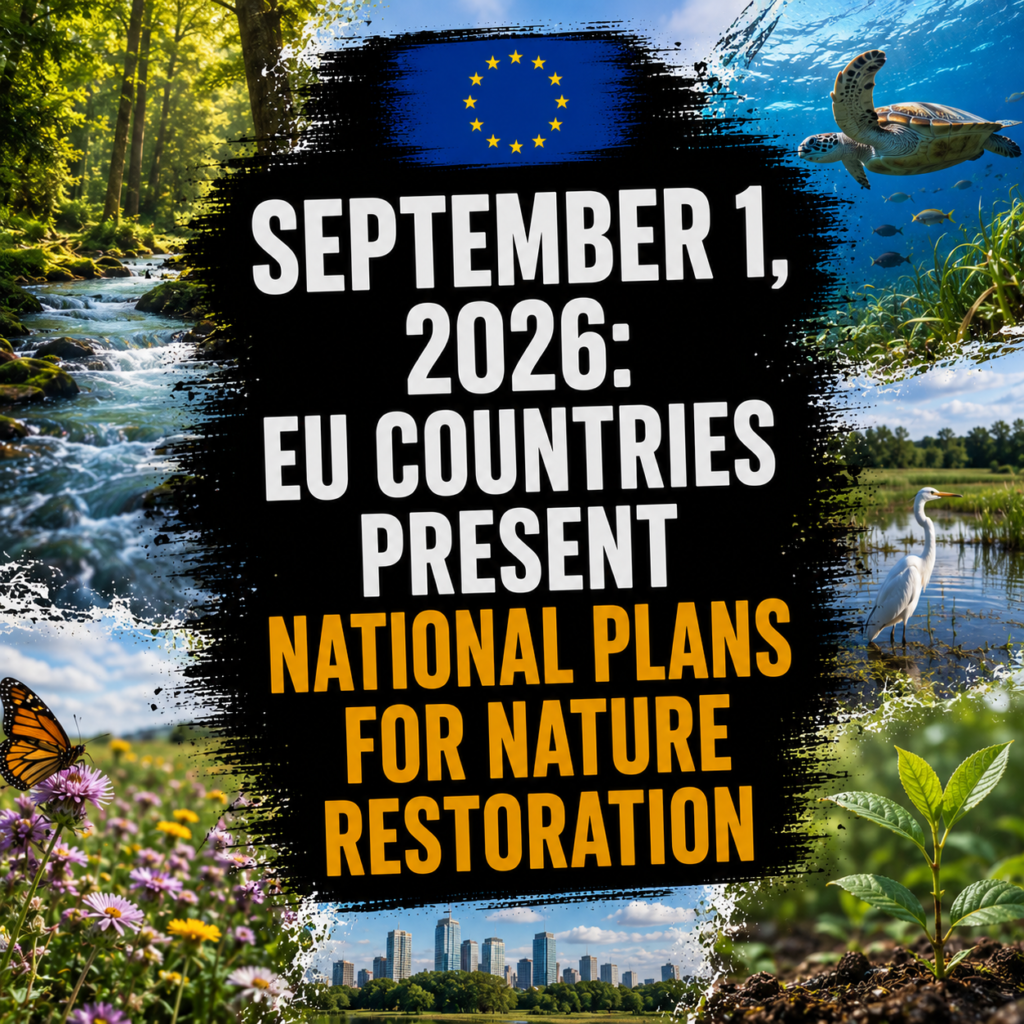
EU Countries Begin Presenting National Nature Restoration Plans on September 1, 2026
September 1, 2026 marks an important date for the European Union as countries move into a new stage of implementing Europe’s nature restoration policy. Member states are presenting draft national plans to the European Commission outlining which ecosystems they intend to restore, where restoration work will take place and what measures will be used to return lost ecological functions to damaged natural areas. The initiative covers forests, rivers, wetlands, agricultural landscapes, marine ecosystems, urban areas and habitats for endangered species. The first stage is intended to demonstrate how seriously each country is prepared to move from simply protecting the nature that remains toward actively restoring ecosystems that have already been degraded.These documents are not yet final national programmes. After receiving the drafts, the European Commission will assess them, and countries will be able to revise their proposals in response to feedback. Final national restoration plans are expected to be prepared around September 2027. At the same time, restoration work itself does not necessarily have to wait for the final approval of the documents, as individual projects and conservation measures can already begin. September 1, 2026 therefore represents not an endpoint but the beginning of a new stage in which broad European goals gradually have to become concrete changes across individual countries.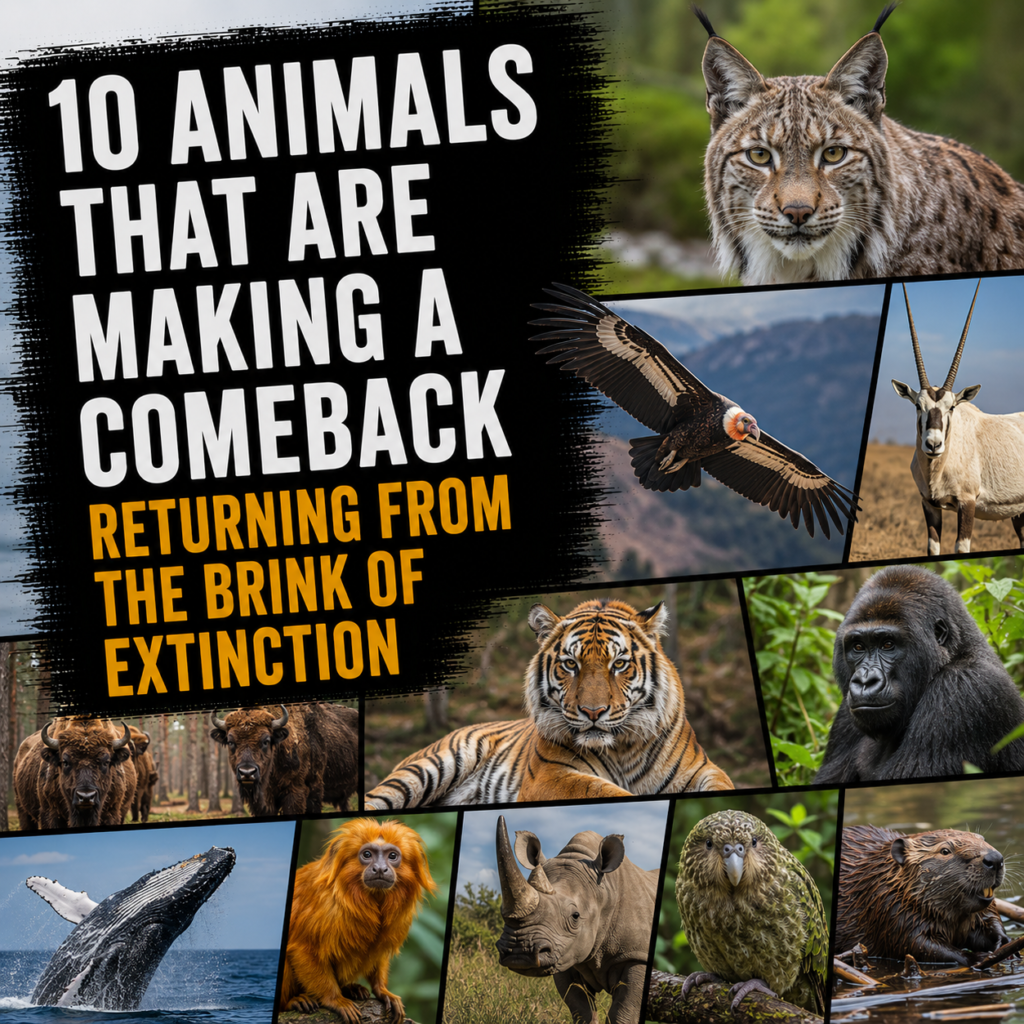
10 Animals That Have Returned From the Brink of Extinction Thanks to Years of Conservation
Just a few decades ago, the future of many animal species appeared almost decided: their populations were declining rapidly, natural habitats were disappearing, while poaching, pollution and human activity continued to increase pressure on the last surviving groups. Yet the history of conservation contains many cases in which the situation changed dramatically. Through the creation of protected areas, restoration of forests and grasslands, anti-poaching efforts, captive breeding and the reintroduction of animals into the wild, some species have managed to increase their numbers significantly. For some, recovery has taken several decades, while for others it is still underway, but their stories demonstrate that extinction is not always an inevitable ending.At the same time, none of these examples should be considered a final victory. Many recovering species continue to face serious threats and still require long-term protection. Population growth can begin from extremely low numbers, meaning that even a dramatic increase does not necessarily make a species completely safe. Nevertheless, these stories provide researchers and conservation organisations with valuable information about which measures can work. From the return of large predators to the recovery of rare birds and marine mammals, these ten species demonstrate how dramatically the future of wildlife can change when nature is given room to recover.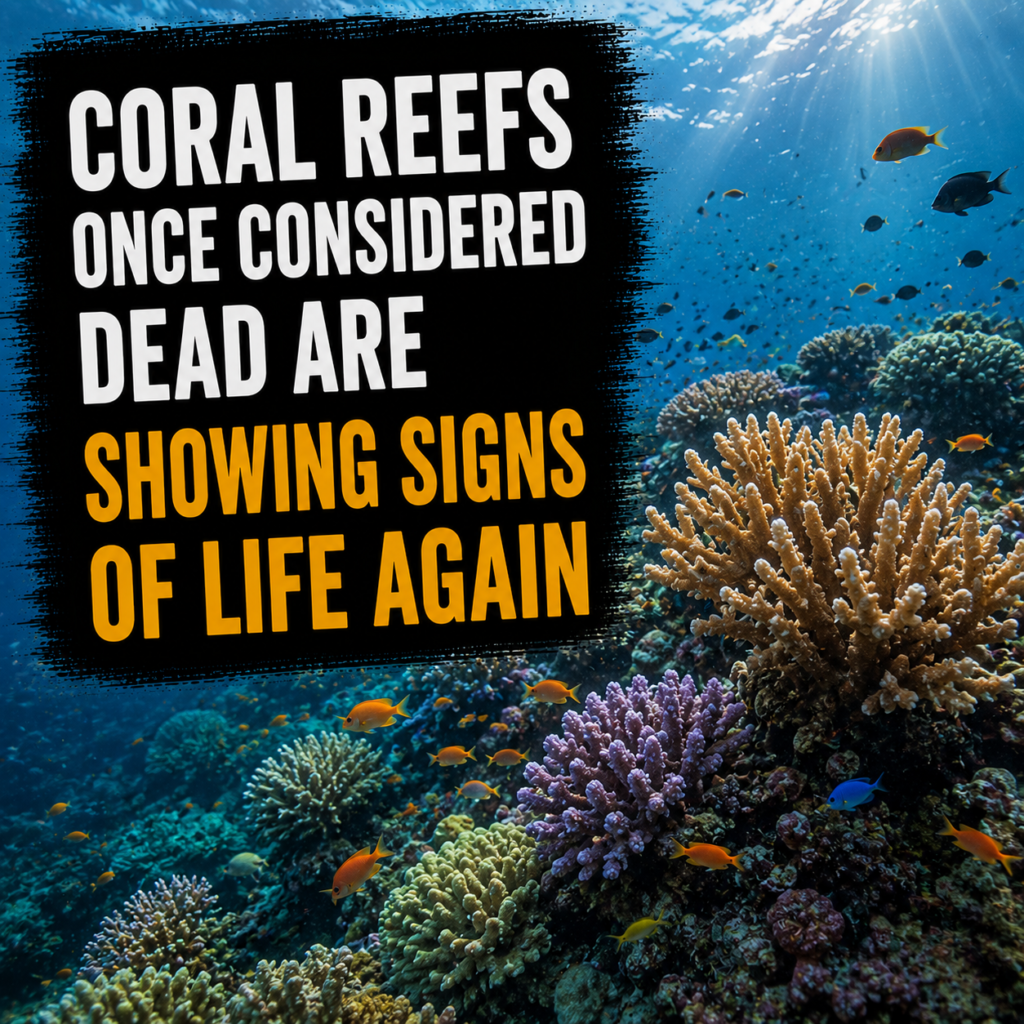
Coral Reefs Once Considered Dead Are Showing Signs of Life Again
Some coral reefs that were recently considered almost dead because of rising ocean temperatures, pollution and ecosystem degradation are now showing remarkable signs of recovery. In several marine regions, researchers are observing the return of living corals, fish, marine invertebrates and other organisms after periods when reefs appeared empty and largely devoid of their former diversity. What has become particularly important is evidence that recovery can occur even after severe damage when the main sources of continuous pressure are reduced. Cleaner water, nearby populations of resilient corals and sufficient numbers of fish that help maintain the ecosystem can create conditions in which a reef gradually begins to regain the life it has lost.Scientists stress that coral reef recovery does not mean an immediate return to its original condition. A damaged reef may require years or even decades to rebuild its complex structure and support a large number of species. However, observations from recent years show that even heavily degraded areas can sometimes retain the ability to recover naturally. Where corals begin growing again, they create shelter for fish and invertebrates, while the ecosystem gradually becomes more stable. These cases offer hope that some reefs once considered lost may still be brought back to life through effective protection and reduced human pressure.Coral reefs are among the most complex and biologically rich ecosystems on the planet.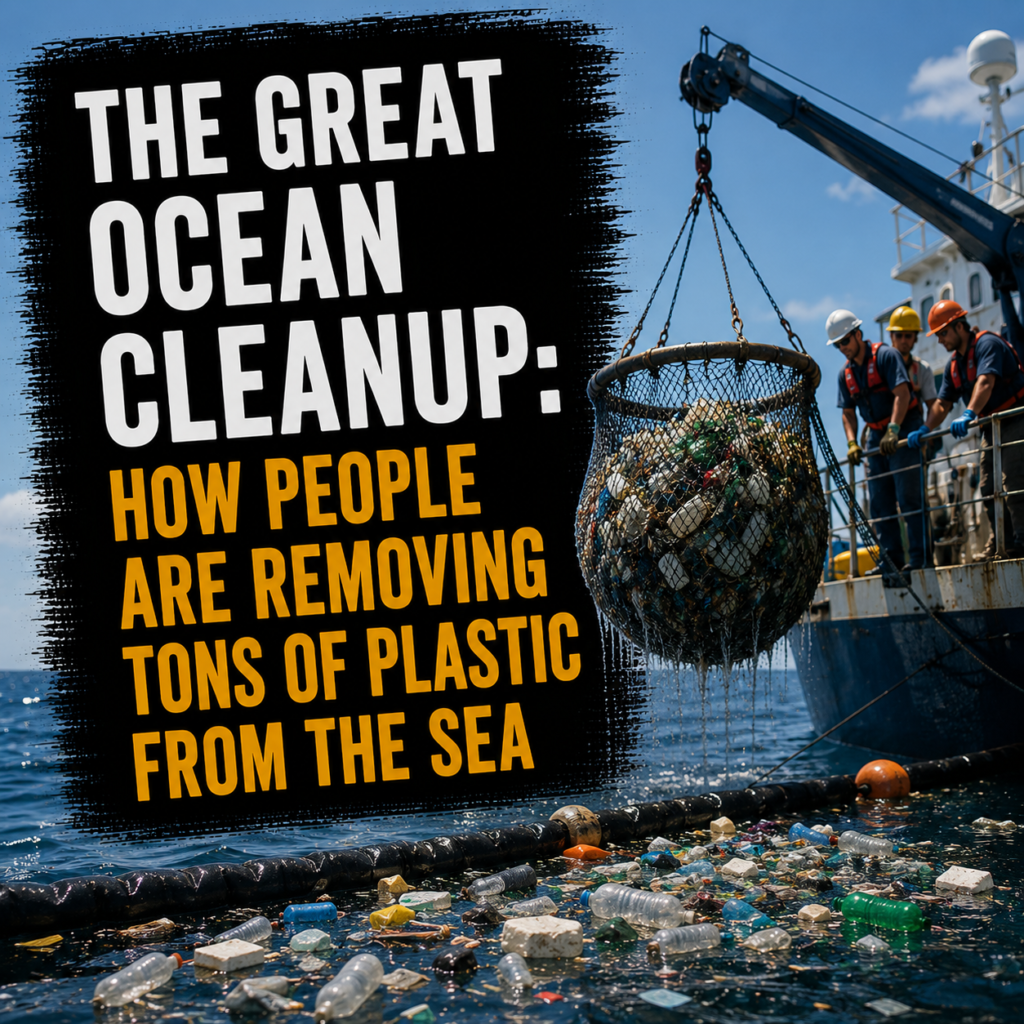
The Great Ocean Cleanup: How People Are Removing Tons of Plastic From the Sea
Plastic in the ocean has long since stopped being a problem limited to individual beaches or a few polluted bays. It moves with ocean currents, accumulates in enormous concentrations in the open sea, is carried from rivers toward coastlines and gradually breaks down into increasingly smaller pieces. In recent years, people have become more active not only in preventing new waste from entering the water but also in removing plastic that has already accumulated there. Beach cleanups, specialised vessels, floating collection systems, river barriers and technologies for identifying heavily polluted areas are all being used to tackle the problem. The scale of these operations is gradually increasing, along with the amount of waste that can be removed from marine environments.In 2026, international teams continued large-scale cleanups along coastlines and in the ocean, bringing together thousands of volunteers, researchers, ship crews and local environmental organisations. One global campaign held on June 13 and 14 brought together 46 cleanup operations in 17 countries and collected more than 30 tonnes of waste. Over five years, the initiative has helped remove more than 163 tonnes of rubbish from coastal and marine ecosystems. At the same time, specialised ocean systems are working with much larger concentrations of plastic in open water, where waste has to be located across enormous areas of ocean.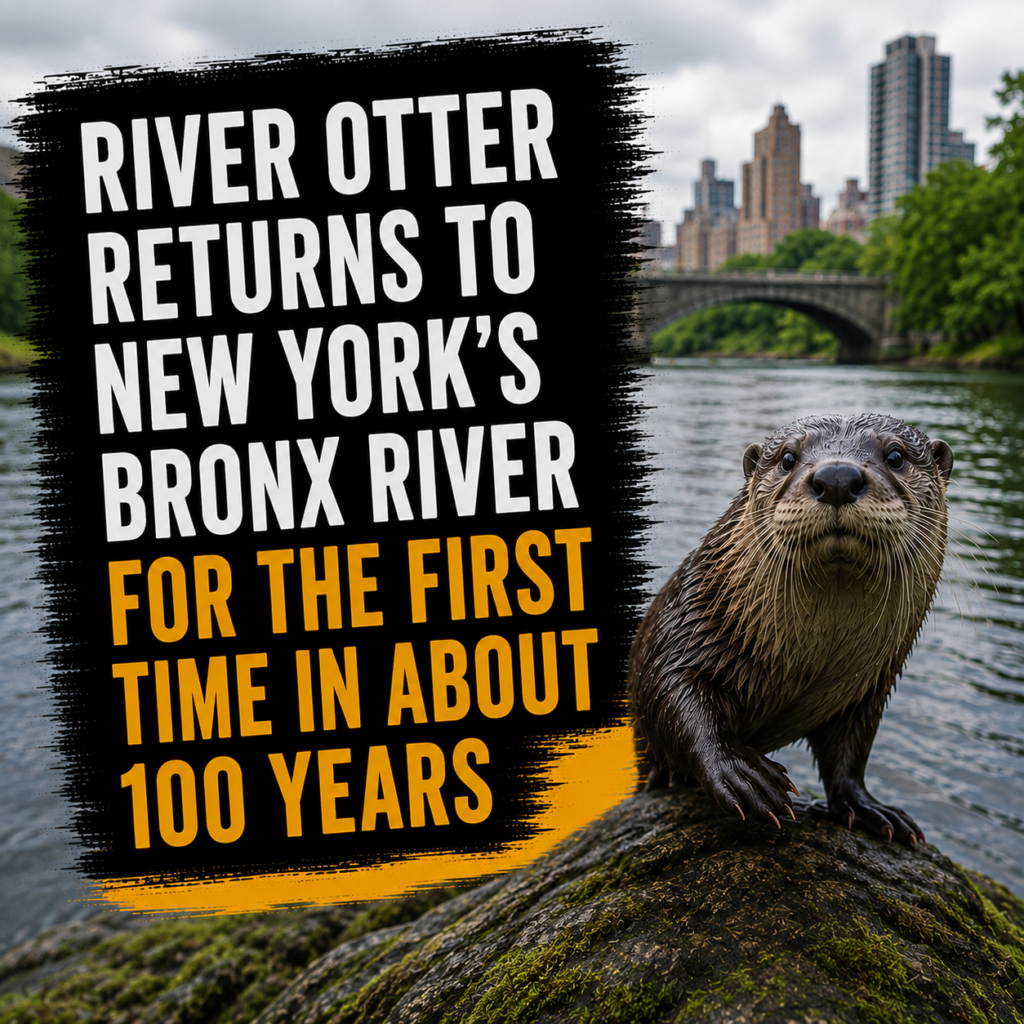
River Otter Returns to New York’s Bronx River for the First Time in About a Century
A North American river otter has been documented in New York’s Bronx River for the first time in roughly a century. A photograph of the animal was captured on June 23, 2026, by an automatic camera installed by a local wildlife researcher as part of ongoing monitoring efforts. The discovery was an important moment for environmentalists because the Bronx River was once considered one of the most heavily polluted waterways in the region. River otters disappeared from this part of New York during the early twentieth century amid severe water pollution, habitat destruction and intensive trapping. The animal’s return now suggests that decades of restoration have brought the river to a condition capable of supporting species that had disappeared from the ecosystem generations ago.At the same time, specialists stress that a single photograph does not prove that a permanent otter population has been established in the river. It remains unclear whether the animal lives nearby or was simply moving through the waterway. Nevertheless, its appearance is significant because river otters depend on relatively clean water, abundant fish and aquatic organisms, as well as suitable areas for shelter and movement along the shoreline. The return of an otter can therefore serve as a valuable indicator of how dramatically the river has changed following decades of environmental restoration.