
Search results
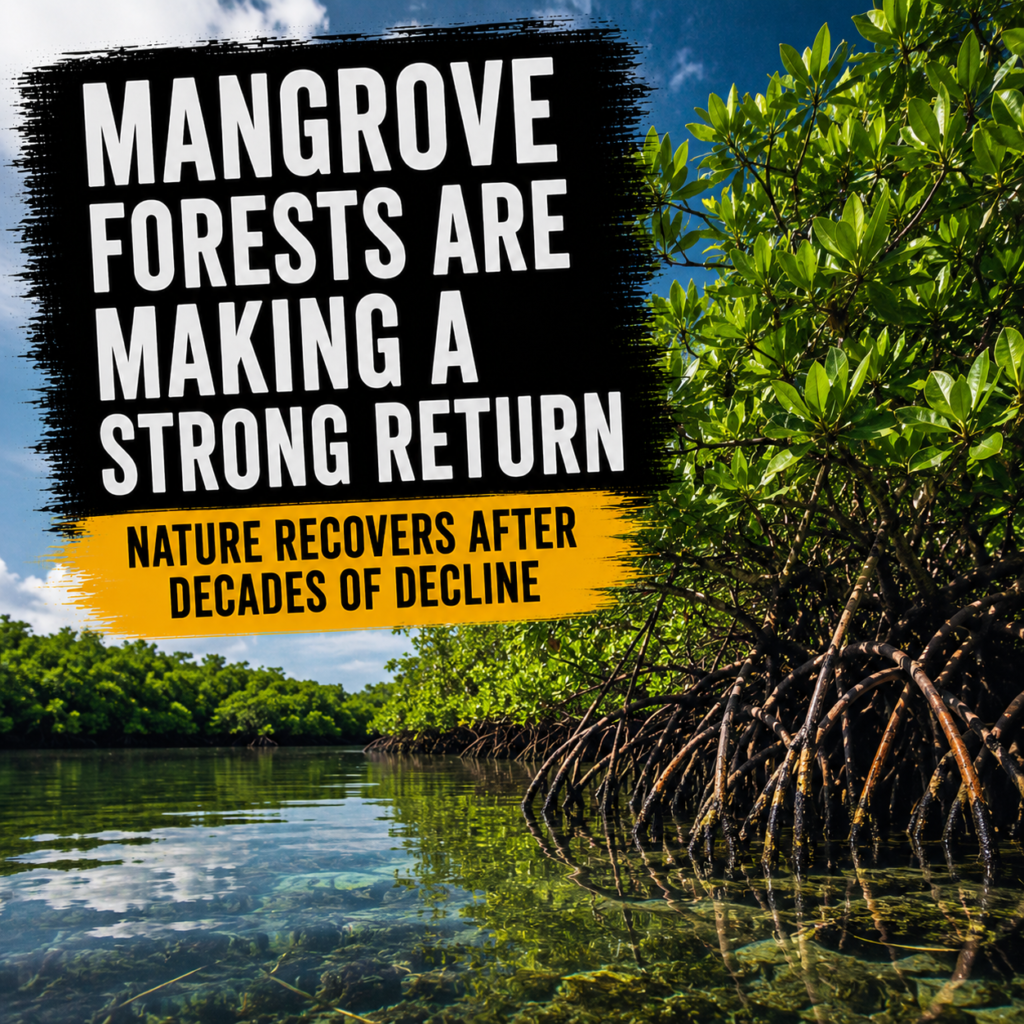
Mangrove Forests Around the World Are Beginning to Recover After Decades of Large-Scale Loss
After decades of deforestation, coastal development and the conversion of natural areas, mangrove forests in many regions of the world are beginning to show clear signs of recovery. Satellite observations covering several decades indicate that since around 2010, the global area of mangroves has stopped declining at the same pace and has begun to increase gradually in a number of regions. Natural regeneration and expansion have partially compensated for losses recorded during previous decades. This is particularly important for coastal ecosystems because mangrove forests protect shorelines from storms and erosion, provide shelter for marine organisms and store significant amounts of carbon in their vegetation and soils.The positive trend does not mean that the destruction of mangrove forests has been completely stopped. Conditions remain different across regions, and some areas continue to lose valuable coastal habitats because of pollution, deforestation, construction, aquaculture, changing coastlines and extreme weather events. However, recent observations provide an important reason for cautious optimism: mangrove ecosystems appear capable of recovering more effectively than previously assumed, particularly when direct destruction is reduced and natural conditions allow plants to spread and establish themselves.Mangrove forests were long considered one of the fastest-disappearing ecosystems on the planet.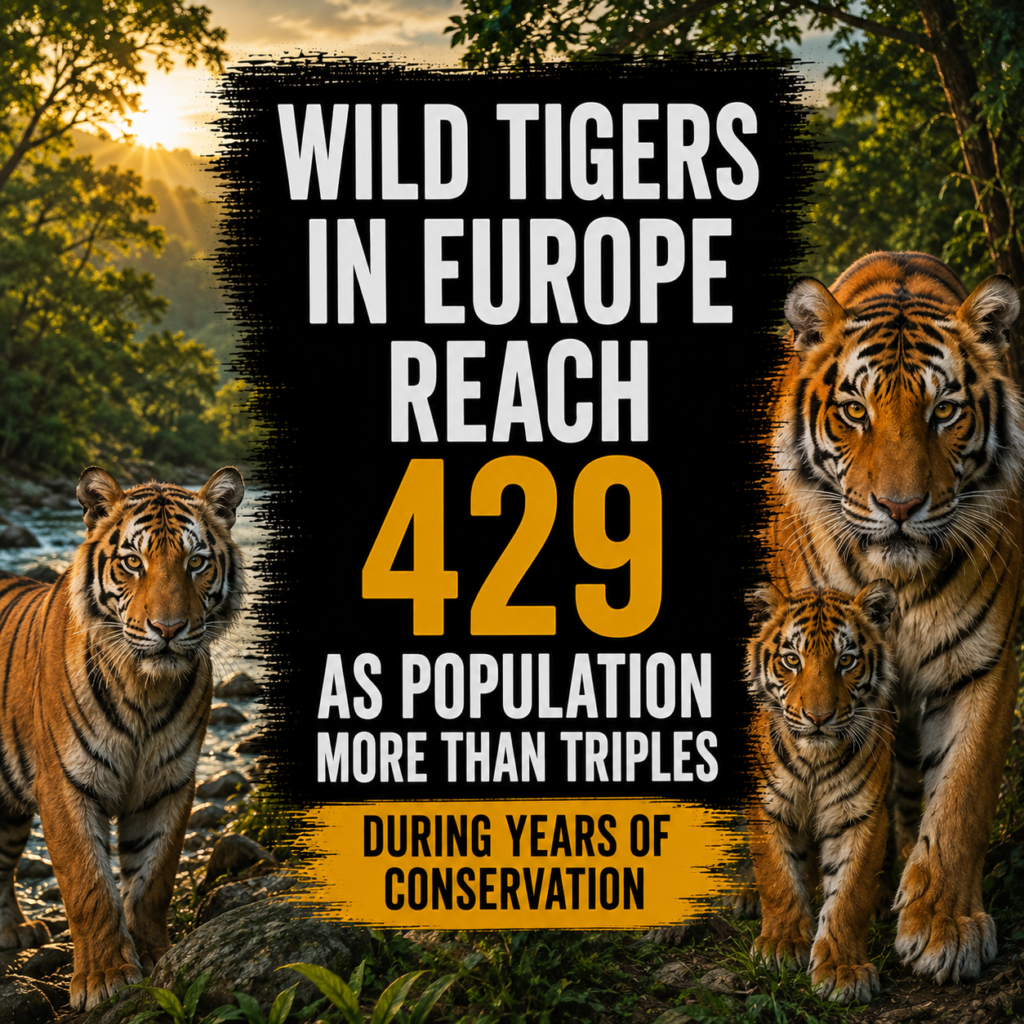
Wild Tigers in Nepal Reach 429 as Population More Than Triples During Years of Conservation
The population of wild Bengal tigers in Nepal has reached a record 429 animals, according to a new national count presented on July 29, 2026. For the country, this is one of the most significant results of wildlife conservation efforts in recent decades. In 2010, Nepal’s wild tiger population stood at 121 animals, while by 2026 the figure had increased almost fourfold. Compared with the first national survey in 2009, which also recorded 121 animals, the increase is equally remarkable. However, the growth has taken place over roughly sixteen years rather than ten, reflecting a long period of consistent work to protect the species, restore habitats and combat poaching.The latest figures show that the recovery is taking place across several protected areas, although the pace differs from one location to another. The largest number of tigers was recorded in Chitwan National Park, where 145 animals were counted together with surrounding areas. Bardiya is home to 112 tigers, Parsa has 71, Banke has 51 and Shuklaphanta has 50. Bardiya was the only major exception, with its population declining compared with the previous survey. Overall, however, Nepal represents a rare example of how systematic conservation efforts can transform the situation of one of the world’s most iconic endangered predators.The current result continues a steady increase that has been observed in Nepal since regular national surveys began.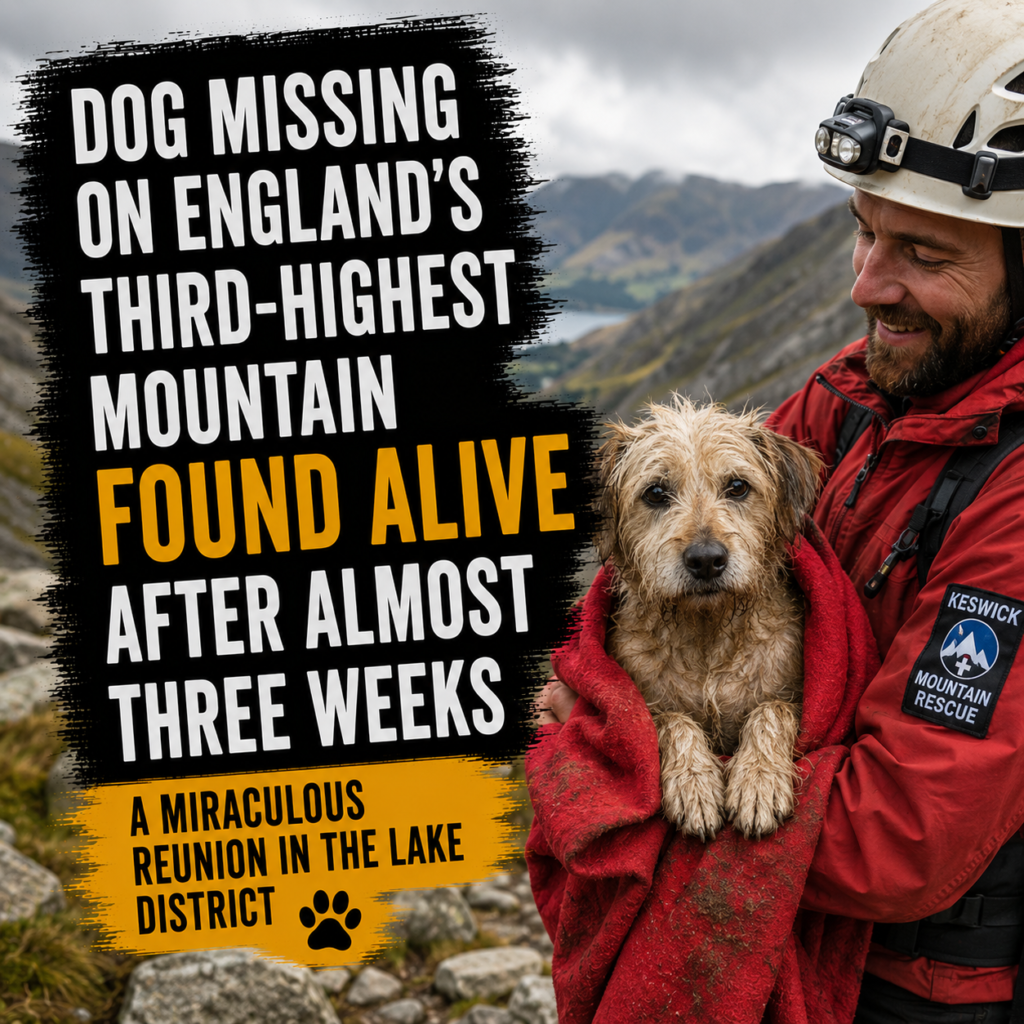
Dog Missing on England’s Third-Highest Mountain Found Alive After Almost Three Weeks
The story of a small dog named Teddy ended with a happy reunion after almost three weeks spent in difficult conditions on the slopes of Helvellyn in England’s Lake District. The dog disappeared on August 2 during a walk with his owner on the mountain, which is considered the third-highest peak in England. Despite searches and numerous attempts to locate the animal, Teddy remained missing for a long time. The situation became increasingly worrying because Helvellyn’s terrain includes steep slopes, rocky areas and deep ravines. However, the search team continued checking the area, and on August 21 one of the volunteers heard barking coming from a difficult-to-reach section of Dry Gill.Teddy was eventually found alive, but he was trapped in a dangerous part of the ravine and could not escape on his own. After discovering him, the volunteers called Keswick Mountain Rescue, a professional team specialising in rescue operations in mountainous terrain. Seven rescuers spent around three and a half hours reaching the dog and safely getting him out of the difficult area. Although Teddy had clearly lost weight during his time in the mountains, no serious injuries were found. He was given a small amount of food before being carefully secured inside a backpack and carried down to a meeting point with his owner.Teddy disappeared on August 2 during a walk on Helvellyn, one of the Lake District’s best-known mountain routes.
This Summer, Scotland Was Transformed by a Golden Sea of Millions of Blooming Sunflowers
This summer, one corner of Scotland was transformed into an unusual golden landscape as a huge sunflower field came into bloom at Balgone Estate in East Lothian. Around 14 acres of land, equal to approximately 5.7 hectares, were covered with bright yellow flowers, creating an impressive “sea” of colour among the green Scottish landscape. The bloom became part of the annual Sunflower Trail held at the estate near North Berwick. In 2026, the trail was open from August 7 to August 23, giving visitors the opportunity to walk between rows of tall plants, take photographs and pick flowers themselves. Local reports described the field as containing around one million flowering plants, although the exact number depends on planting density and the particular area of the field.For Scotland, such a landscape looks particularly unusual. The region is more commonly associated with green hills, stone buildings, heather-covered moorlands and a cool Atlantic climate than with enormous fields of sunflowers. However, Balgone Estate has been turning part of its land into a seasonal floral attraction for several years. The project first appeared in 2023 and gradually became an annual event, attracting people who want to spend time outdoors, experience the scale of the flowering field and take photographs among the plants. In 2026, the field reached 14 acres, transforming an ordinary agricultural area into one of East Lothian’s most noticeable summer natural attractions.
Woman Lived in a Rented Home for More Than 20 Years and Unexpectedly Received It as a Gift
The story of Jane Seyner from Melbourne became an example of how unusual the result of a long-term relationship between a tenant and a property owner can be. For more than two decades, she lived in a small two-bedroom house in St Albans in Melbourne’s northwest and consistently paid her rent. When Jane first saw the house, she was particularly attracted to the garden, although the property was barely developed at the time. Over the years, she gradually transformed it into a welcoming green space, planting flowers and other plants and caring for the house as though it were her own. Her landlord, John Perrett, noticed her attitude and eventually became more than simply the owner of the property; he became someone she knew and trusted personally.The unusual part of the story began after Perrett’s health deteriorated. The man, who had worked as a pharmacist, businessman and philanthropist, moved into an aged-care facility while continuing to stay in contact with Jane. At one point, he called her and asked her to speak with his lawyer, then told her that he intended to leave the house to her. Jane initially thought she had misunderstood him because she had never expected such a decision. But it was true: after Perrett died in September 2020, the property passed to the woman who had lived there for more than two decades. For Jane, the gift was not simply an unexpected act of generosity but an opportunity to remain in the home she knew and avoid the need to continue paying rent.
The Great Barrier Reef Shows Signs of Recovery After Widespread Coral Bleaching
The Great Barrier Reef off the coast of Australia is showing early signs of recovery after a severe period of mass coral bleaching, cyclones and elevated ocean temperatures. New observations indicate that in the northern and central parts of the reef, average live hard coral cover has increased again after a sharp decline recorded in 2025. The most noticeable change occurred in the north, where coral cover rose from around 30 percent to 35.1 percent. In the central region, the figure increased from 28.6 percent to 31.6 percent. These changes cannot yet be described as a full recovery of the entire ecosystem, but they give scientists reason to believe that a natural recovery process has begun following one of the most stressful periods for the reef.The positive trend is particularly important after the events of 2024, when the Great Barrier Reef experienced widespread mass bleaching that affected all three main monitoring regions. High ocean temperatures caused significant coral mortality, while the impacts were intensified by cyclones, flooding and outbreaks of coral-eating crown-of-thorns starfish. In 2025, average coral cover fell sharply across all three regions. However, new data show that parts of the reef have retained the ability to recover, particularly where environmental conditions have been more favourable. This means that even after severe damage, natural communities can begin returning to a more stable condition.
“Snow Fairy” from Hokkaido Captivates the World with Its Unusual Appearance and Tiny Size
On the Japanese island of Hokkaido lives a small bird that nature lovers have affectionately nicknamed the “Snow Fairy.” The bird is the Shima-enaga, a regional form of the long-tailed tit known for its almost completely white head, tiny bill, round dark eyes and remarkably fluffy body. It looks especially striking during winter, when it fluffs up its feathers and becomes a tiny white ball with a long tail. This combination of miniature size and unusual appearance has made the Shima-enaga one of the most popular birds among wildlife photographers and bird enthusiasts. There is, of course, no official scientific title declaring it the “cutest bird in the world,” but the informal nickname reflects just how extraordinary its appearance can seem.The Shima-enaga is found on Hokkaido, where it can be observed in forests, parks and other suitable natural areas. An adult bird measures around 13–14 centimetres in length, although a significant part of that measurement comes from its tail. It weighs only about eight grams, making it smaller than many familiar urban birds. Unlike long-tailed tits found in other parts of Japan, the Hokkaido form lacks the characteristic dark stripe around the eyes, giving its face an almost completely white appearance. This feature is largely responsible for the nickname “Snow Fairy.”The Shima-enaga belongs to the long-tailed tit species, which is widely distributed across Europe and Asia.
Startups Are Turning Tree Planting into a Digital Experience, Letting People Buy and Track Their Own Trees
For a long time, planting a tree was seen as an action whose results a person could hardly follow. Once a seedling was placed in the ground, its future depended on weather, soil conditions, maintenance and many other factors. New environmental apps and digital platforms are changing this model by turning forest support into something people can follow through their smartphones. Users can choose a tree or a planting project, learn its species and location, receive photographs, certificates or a personal digital profile, and then track the development of their contribution. These services are becoming particularly popular in Europe, where interest in forest restoration and biodiversity is increasingly becoming part of everyday digital culture.Some platforms offer people the opportunity to become the owner of a specific tree, while others operate through adoption or by financing a planting project. There are also services that allow users to create an entire virtual forest made up of projects they have supported. This approach combines ecology, technology and personal participation: instead of simply transferring money to an environmental initiative, people can see where their tree is located, what species it is, how the project is developing and what environmental impact their contribution may create. At the same time, the services emphasise the importance of long-term forest management, because planting is only the first stage of restoring an ecosystem.
Pollinators Are Receiving More Attention Across Europe as Cities and Farms Create Flower Strips
Bees, bumblebees, butterflies, hoverflies and other pollinators are gradually becoming one of the central focuses of nature conservation across Europe. Their importance goes far beyond protecting individual insect species: the reproduction of many wild plants and the production of numerous agricultural crops depend on pollination. At the same time, European specialists have recorded declines in the abundance and diversity of wild pollinators, linking the problem to the loss of flowering habitats, pesticide use, climate change and the transformation of agricultural landscapes. In response, cities, farmers and conservation organisations are increasingly creating conditions where insects can find food, shelter and places to reproduce.One of the most visible solutions is the creation of flower strips along fields, roads, parks and other areas of land. Instead of being maintained as closely cut grass, these areas are planted with mixtures of flowering plants that can bloom at different times throughout the season. Such areas become corridors where insects can move between different habitats while maintaining access to nectar and pollen. In cities, public parks, school grounds, gardens, green roofs and small patches of wild vegetation can serve a similar purpose. European nature restoration policy is also seeking to reverse the decline of pollinator populations by 2030.