Search results
Five of Europe’s Most Beautiful Cities That Look Like They Came Straight From a Fairytale
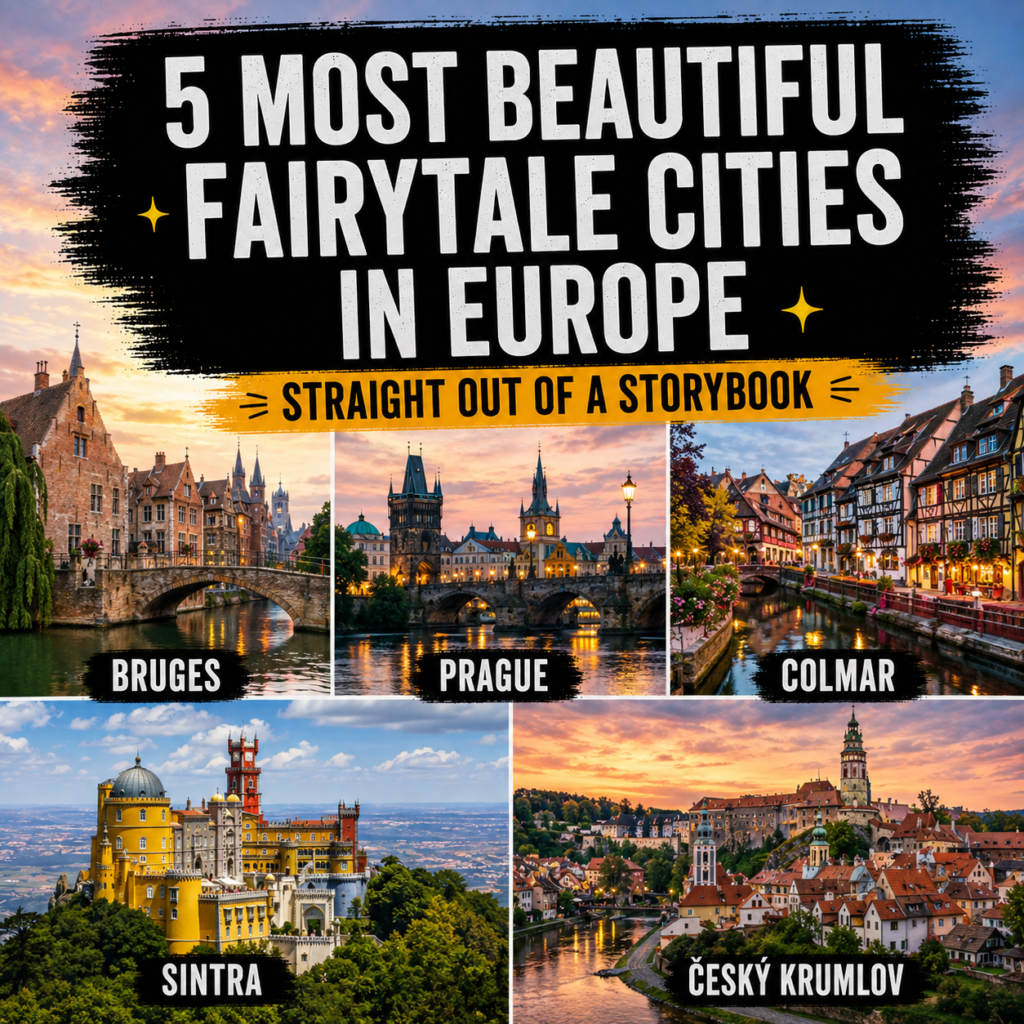
There are cities where history can be felt not only in museums, historic buildings or monuments, but in the atmosphere of the streets themselves. Narrow lanes, medieval façades, towers, bridges, canals and old squares can create the impression that ordinary reality has briefly given way to another world. Europe is especially rich in places like these because many of its cities have preserved historic centres, architecture from different periods and details that could never be recreated in a modern tourist complex. This is why some European destinations look so extraordinary that they could easily serve as settings for a fantasy film.The feeling of being inside a fairytale is created differently in every city. In some places, it comes from canals and reflections of historic houses in the water, while elsewhere it is created by castles, Gothic towers, colourful façades, flower-covered balconies or dramatic mountain landscapes. Sometimes all it takes is turning away from the main tourist street to find yourself in an almost medieval neighbourhood. Among Europe’s many destinations, Bruges, Prague, Colmar, Sintra and Český Krumlov stand out particularly strongly. Each has its own personality, yet all five can create the feeling of stepping into another era.Bruges in Belgium is often described as one of Europe’s most fairytale-like cities, and the reason becomes obvious during the first walk through its historic centre.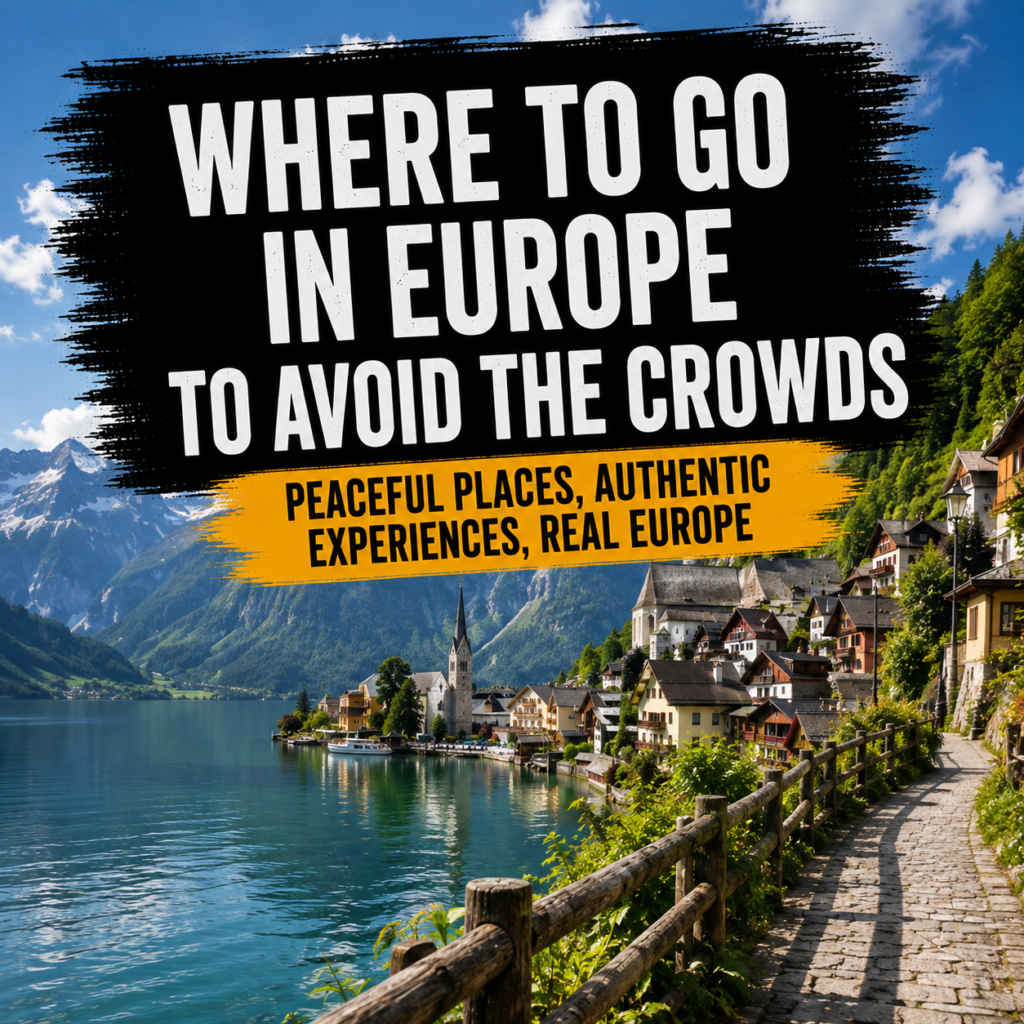
Where to Travel in Europe to Escape the Crowds and Discover a Quieter Side of the Continent
Europe remains one of the most popular travel regions in the world, but not every trip has to involve huge queues, overcrowded squares and streets where it is difficult to take a photograph without dozens of other tourists in the background. The best-known destinations can certainly be impressive, but their popularity can sometimes change the entire feeling of a journey. Instead of taking a relaxed walk, travellers may have to watch the time, search for an available table, book attractions well in advance and constantly adapt to the flow of people. For those looking for a different experience, there are countries where beautiful cities, mountains, coastlines and historic sites can be enjoyed without spending the entire holiday in the most heavily visited tourist areas.A trip without crowds does not mean that travellers have to search for completely unknown places or avoid popular countries altogether. A much more effective approach is to choose a country where tourism is distributed unevenly and then travel beyond the main attractions. In some places, it is enough to replace a famous resort with a nearby region, choose a smaller historic city instead of a major capital or travel during late spring or early autumn rather than during the busiest summer months.
The Best European Countries for Solo Travel: Where to Go for Safety, Experiences and Freedom
Travelling alone has long since stopped being an option reserved only for experienced tourists who are comfortable handling every organisational detail themselves and do not mind being in an unfamiliar country without company. Europe is particularly well suited to this type of travel because of the relatively short distances between countries, well-developed public transport, numerous walkable cities and the huge variety of experiences available across a relatively compact region. A single trip can combine several completely different destinations, while travelling without companions makes it possible to change the route almost whenever you want. This freedom of choice is one of the main reasons why independent travel continues to attract more people.At the same time, choosing the right country for a first solo trip can make a significant difference. Some travellers value a peaceful atmosphere and a strong sense of safety, others want plenty of opportunities to meet new people, while some prefer beautiful natural routes, museums, restaurants and lively city life. Portugal, Spain, the Czech Republic, Slovenia, Austria and Iceland are particularly suitable for different types of independent holidays. They share developed infrastructure, numerous tourist opportunities and the ability to organise a trip independently, but the experience in each country can be completely different.Portugal remains one of the most versatile choices for independent travel in Europe.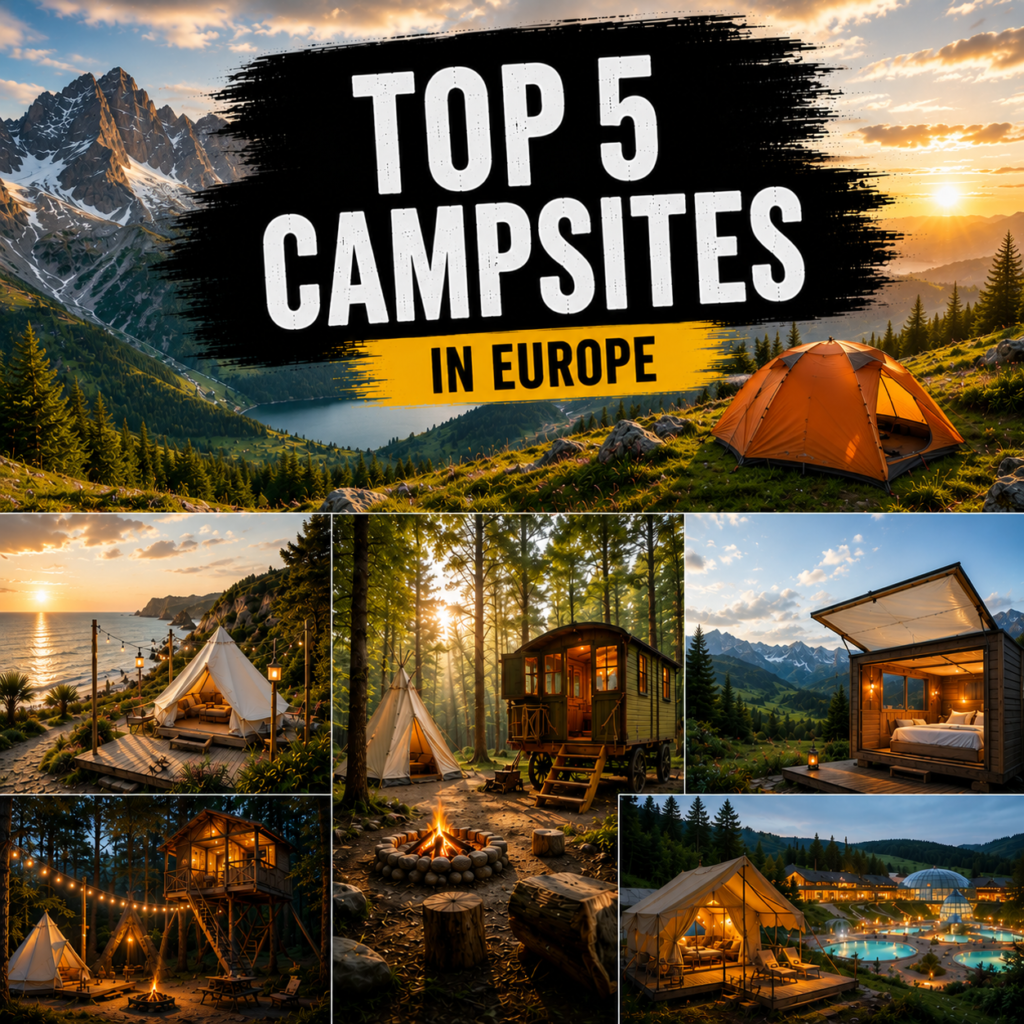
Five Unusual Campsites in Europe Where Staying in Nature Becomes a Journey Itself
Camping in Europe has long since stopped being associated exclusively with a tent, a folding chair and a small patch of ground next to a car. Across the continent, there are places where spending the night becomes an important part of the journey itself. Travellers can wake up surrounded by Alpine peaks, spend a night in a forest, stay close to the ocean or choose an unusual type of accommodation that combines direct contact with nature and a comfortable living environment. These campsites are particularly appealing to people who want to change the traditional holiday routine and spend several days outside a large hotel, surrounded by landscapes rather than concrete and busy streets.The most interesting options are those where the campsite reflects the character of the region. In one place, the main attraction is mountains and glaciers, in another it is the ocean and beaches, while elsewhere it is dense woodland and silence. Some destinations go even further, offering unusual accommodation that makes an ordinary overnight stay feel like a small adventure. Modern European camping can therefore suit very different travellers. Some people want a real tent and minimal facilities, others prefer a safari tent with a proper bed, while some would rather sleep in a small wooden structure designed around the night sky. Choosing a campsite is therefore not only about facilities, but also about what surrounds it.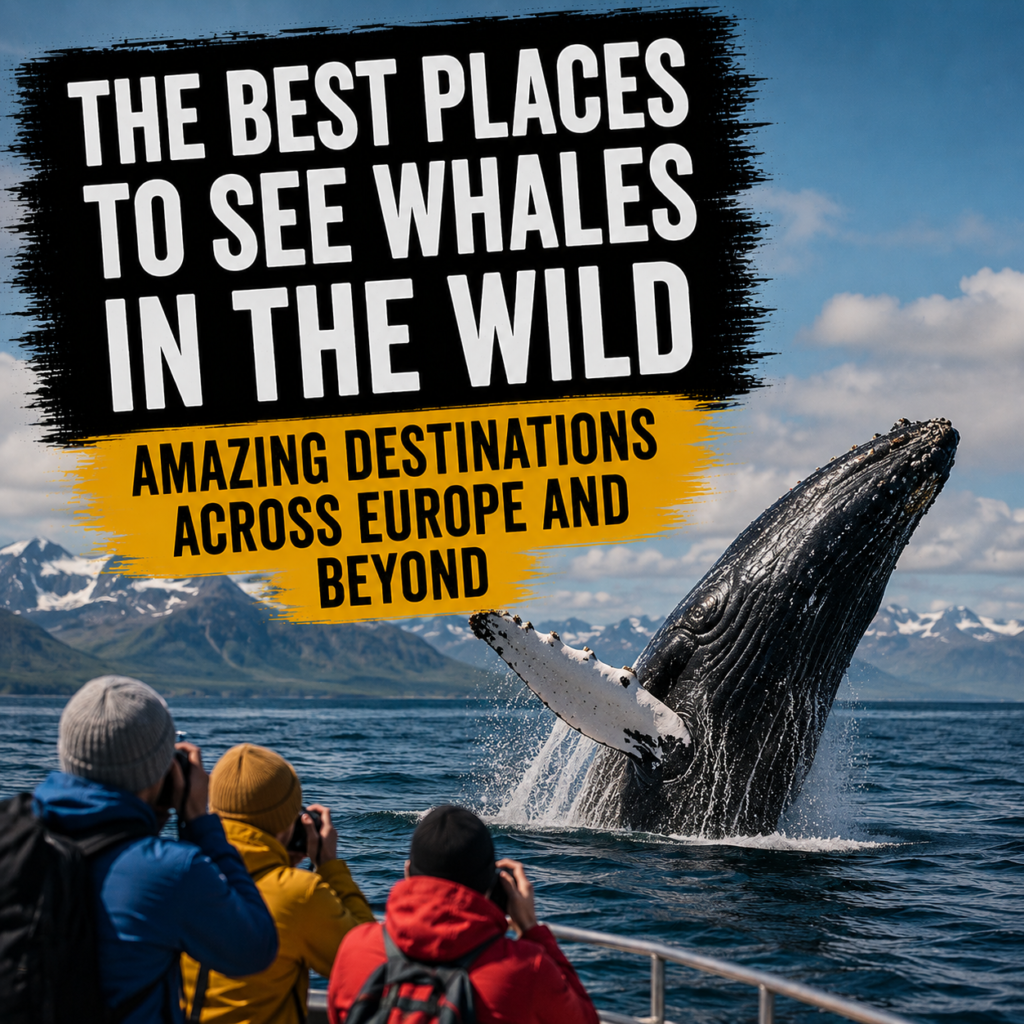
The Best Places in Europe and Beyond to See Whales in Their Natural Habitat
Whale watching has long evolved from a rare adventure for researchers into one of the most impressive forms of wildlife tourism. In different parts of the world, travellers can head out to sea and observe humpback whales, blue whales, gray whales, sperm whales and other species directly in their natural environment. These journeys allow people to see animals without enclosures or barriers, as they surface, release powerful spouts of water, dive beneath the waves or appear surprisingly close to a boat. The best destinations are usually located where whale migration routes and feeding grounds pass relatively close to the coastline.Europe also offers many opportunities for these experiences. Norway, Iceland, Portugal, Spain and the United Kingdom are known for locations where large marine mammals can be encountered during particular periods of the year. Each region has its own characteristics: some are especially suitable for humpback whales, others for orcas and sperm whales, while certain areas offer the possibility of encountering several species during the same trip. Tour operators are increasingly focusing on responsible whale watching, keeping boats at safe distances and avoiding actions that could interfere with the natural behaviour of the animals.One of the best-known European destinations is Iceland. Thanks to its location between the northern Atlantic and rich feeding grounds, the waters surrounding the island attract a large variety of marine mammals.
The Carpathian Mountains: Where They Are, Why You Should Visit and When to Plan Your Trip
The Carpathian Mountains stretch in a vast arc across Central and Eastern Europe and cover parts of several countries, making it impossible to describe the Carpathians as a single tourist destination. The mountain system extends through the Czech Republic, Slovakia, Poland, Hungary, Ukraine, Romania and Serbia, while its individual regions differ considerably from one another. In some areas, travellers encounter high peaks, rocky ridges and mountain lakes, while others are dominated by dense forests, wide valleys, waterfalls and small settlements. Because of this diversity, a trip to the Carpathians can look completely different depending on the country and particular route chosen.The main appeal of the Carpathians is the combination of accessibility and a feeling of genuine wilderness. Visitors can spend several days in the mountains, embark on a full hiking expedition or choose an easy route for relaxed walks without giving up access to familiar tourist infrastructure. Different parts of the region contain national parks, ski resorts, historic cities, castles and traditional villages. The Carpathians are also one of Europe’s most important natural regions, with large forest areas and populations of brown bears, wolves, lynx, deer and numerous bird species. This makes the mountains suitable both for active travellers and for those simply looking to replace the urban environment with nature.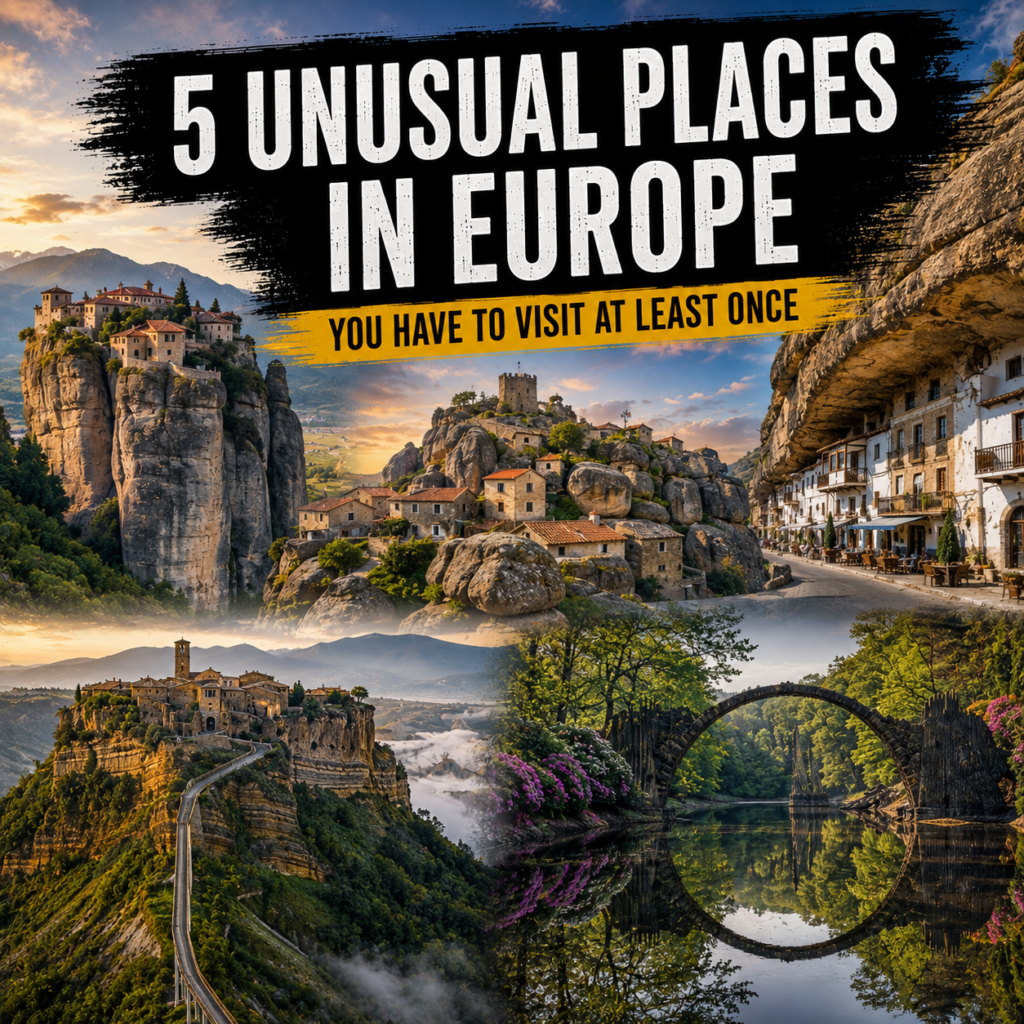
Five Unusual Places in Europe That Are Worth Visiting at Least Once in Your Life
Europe has long been considered one of the world’s most explored tourist regions, yet even here there are places capable of surprising travellers at first sight. Beyond famous capitals, popular beaches and classic historical routes, there are villages built directly beneath enormous rocks, monasteries perched on almost vertical stone pillars, towns that seem to merge with the surrounding landscape, and historic parks with architecture that creates almost fantastical optical effects. These destinations are especially appealing to travellers who want something more than a standard collection of attractions and would rather experience the feeling of discovering somewhere that cannot easily be confused with any other place.These locations are scattered across different countries and differ not only in appearance but also in the stories behind their creation. In some places, nature shaped the unusual landscape, while in others people spent centuries adapting homes and monasteries to the surrounding rocks. Elsewhere, architects deliberately created landscape ensembles that eventually became inseparable from their natural surroundings. Many of these locations are accessible for independent travellers and can easily become part of a larger European itinerary. For anyone looking to add something genuinely unusual to a European trip, these destinations can provide impressions very different from an ordinary walk through the centre of a popular city.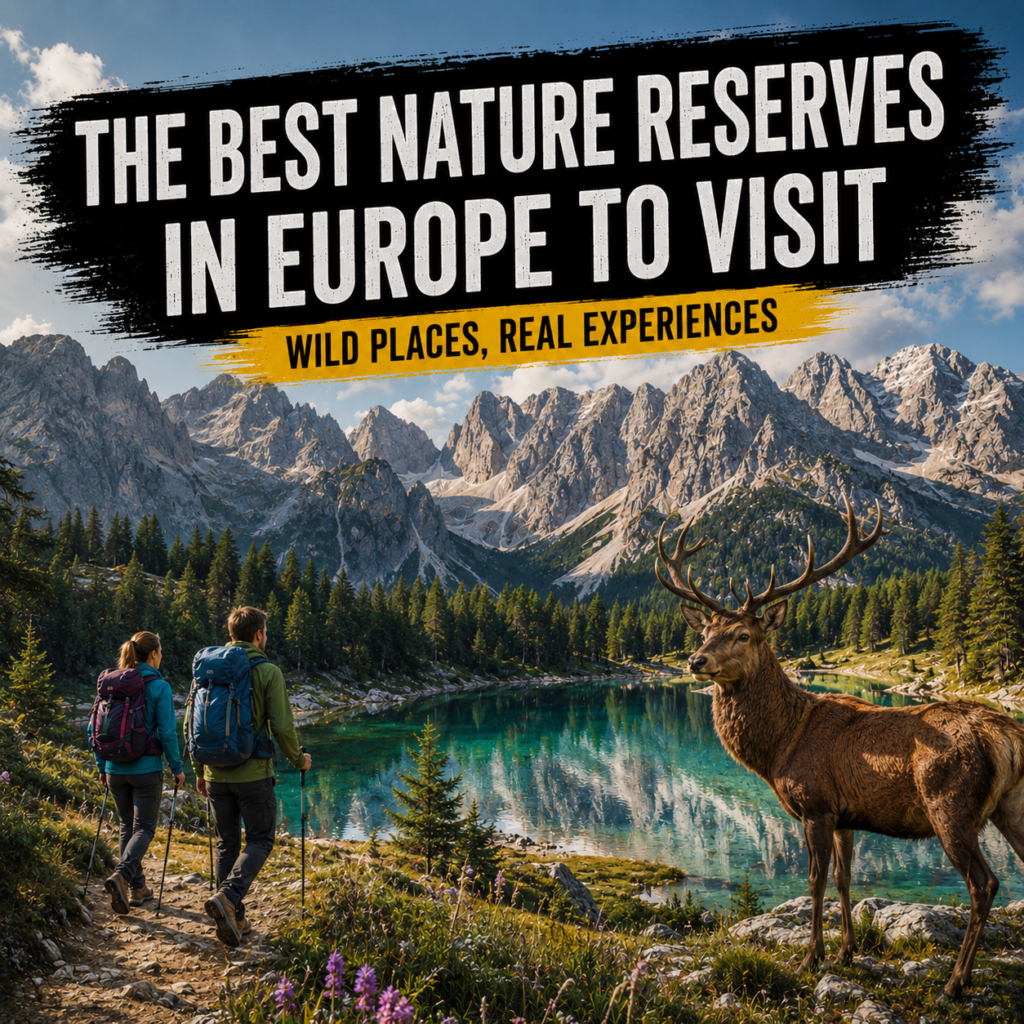
The Best Nature Reserves in Europe That Are Worth Visiting for Wildlife and Landscapes
Europe may seem like a continent dominated by dense urban areas, historic capitals and popular seaside resorts, but beyond the major tourist centres there are enormous numbers of protected natural areas. Here travellers can discover Alpine peaks, deep gorges, vast wetlands, ancient forests, karst lakes and unusual rock formations. Many of these places are relatively close to well-known cities, making it possible to combine a visit to a nature reserve or national park with a traditional European city trip. At the same time, every protected area has its own character and requires visitors to adopt a calmer and more respectful approach to the surrounding environment.The most fascinating destinations are often places where beautiful landscapes coexist with natural habitats for rare animals. Gran Paradiso in Italy protects Alpine ecosystems and is historically connected with the conservation of Alpine ibex, while Spain’s Doñana is famous for its wetlands and important bird migration routes. Germany’s Saxon Switzerland offers sandstone cliffs, gorges and forests, while Slovenia’s Triglav National Park presents another side of Europe with high mountain valleys, lakes and the Julian Alps. These destinations allow travellers to experience the continent not through architecture and museums, but through landscapes, wildlife and natural processes.One of the most impressive protected areas is Gran Paradiso National Park in Italy, located across the regions of Valle d’Aosta and Piedmont.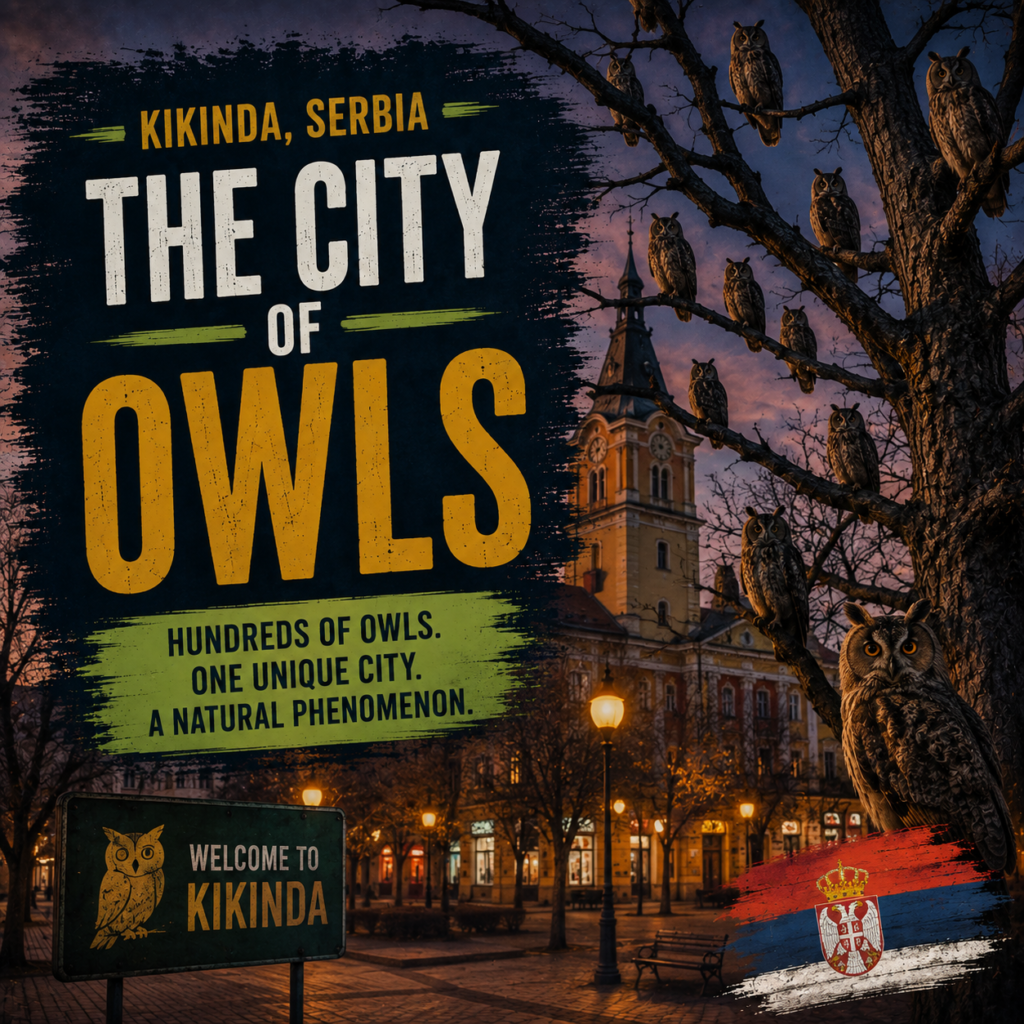
Why Serbia’s Kikinda Became the City Where Hundreds of Owls Arrive Every Winter
In northern Serbia, in the Banat region, lies the town of Kikinda, which has become famous for a natural phenomenon unlike almost any traditional European attraction. There is no need to travel deep into a forest, climb into the mountains or search for rare wildlife inside a protected nature reserve. During the colder months, long-eared owls gather directly in the urban environment. They settle in trees near the central square, surrounded by houses, streets and everyday city life. For someone visiting Kikinda for the first time, the sight can feel almost unreal: all it takes is looking up into the dense tree crowns to discover dozens of birds spending the day only a few metres above passing pedestrians.Kikinda has long been considered one of the most remarkable wintering locations for long-eared owls in the world. In December 2009, 734 birds were recorded gathering in the town, a number that became one of Kikinda’s most distinctive records. The owls use the central part of the town as a winter roosting area from approximately November until April, turning a natural phenomenon into an important part of the town’s identity.The story of Kikinda is particularly interesting because the relationship between the town and its wildlife developed naturally. The owls were not brought here intentionally and are not part of an artificial park or zoo. They chose the trees of the town as their winter resting place.