Search results
How to Restore Your Sleep Schedule After Stress and Return Your Body to Its Natural Rhythm
After a period of intense stress, sleep is often one of the first things to change. A person may take a long time to fall asleep, wake repeatedly during the night, wake up too early, or feel unusually sleepy throughout the day. Even when the stressful situation itself has ended, the nervous system does not always immediately return to its previous state. The body may remain in a state of heightened alertness, making it harder to relax in the evening while gradually shifting the usual sleep schedule. As a result, it can feel as though the internal clock has stopped working properly, although the problem may involve not only the schedule itself but also accumulated tension.Restoring a sleep routine after stress usually requires more than one perfect night. The most effective approach is to gradually give the body clear and repeated signals: a consistent wake-up time, enough light during the first part of the day, moderate physical activity, a calmer evening and an environment that makes the transition from wakefulness to sleep easier. At the same time, it is important to consider not only the clock but also the person's overall state. Trying to force sleep at a specific hour can create additional anxiety, making the process of recovery even more difficult.After a stressful period, it is particularly useful to establish a consistent wake-up time.
Dietary Fiber: Why Is Everyone Talking About It and Why Does Your Body Need It Every Day
Dietary fiber has become one of the most discussed components of a healthy diet, although it is certainly not a new discovery. It is frequently mentioned in connection with digestion, appetite control, blood sugar and cholesterol levels, gut health and even overall wellbeing. At the same time, many people still think of fiber mainly as a remedy for constipation or associate it exclusively with vegetables. In reality, fiber is a much broader group of dietary components that the human body processes differently from proteins, fats and carbohydrates. This is precisely why fiber can influence the way the digestive system functions and affect several metabolic processes, even though it is not a significant source of energy in the conventional sense.Interest in fiber is also linked to the fact that modern diets often contain much less of it than would be desirable for balanced nutrition. Many familiar foods undergo processing that removes some of their naturally occurring dietary fiber: whole grains are replaced with refined products, fruit is replaced with juice, and vegetables may appear on the plate only occasionally. As a result, a person can consume enough calories while still getting too little of certain important components of food. Fiber is particularly interesting because its effects extend far beyond simply making a person feel full after eating.
How to Build a Simple Skincare Routine With the Fewest Products Possible
A good skincare routine does not have to include a bathroom shelf filled with bottles, jars, acids, serums and complicated combinations of active ingredients. For many people, the most effective approach is actually much simpler: understand what the skin needs, identify the few products that can provide that support, and use them consistently. A basic routine can help maintain the skin barrier, reduce unnecessary irritation and make everyday care easier to follow. The goal is not to use as many products as possible, but to create a routine that fits naturally into your life and addresses your actual skin concerns without overwhelming the skin with unnecessary ingredients.Minimal skincare is also useful when the skin has become sensitive, dry or unpredictable after periods of experimenting with different products. When too many active ingredients are introduced at once, it becomes difficult to understand what is helping and what may be causing irritation. A simpler routine gives the skin time to adjust and makes it much easier to notice changes. It also saves time and money, because every product has a clear purpose rather than simply being another step added to an already complicated routine.The foundation of a minimal skincare routine is cleansing, moisturizing and protecting the skin from ultraviolet radiation. These three steps cover the most basic daily needs for many people, although the exact products should depend on skin type, lifestyle and individual concerns.
Daily Walking: What Changes Can Happen in Your Body After One Month of Regular Walks
Walking may seem like one of the simplest forms of physical activity, which is why many people underestimate its effect on the body. You do not need a gym membership, special equipment, or a complicated training program to go for a walk. At the same time, regular movement can gradually influence the cardiovascular system, muscles, joints, and nervous system. Even if a person starts with a moderate number of steps and does not aim for athletic results, the body receives more movement than it would with a predominantly sedentary lifestyle. The most important factor is not one long walk, but consistency and a gradual increase in activity without trying to change your routine too quickly.One month is not enough to completely transform physical fitness, but regular walking can produce noticeable changes in how you feel. Everyday activities may become easier, climbing stairs may require less effort, and spending more time on your feet may feel less tiring. Regular walking can also support cardiovascular health, increase daily energy expenditure, and have a positive effect on mood. However, the results depend on your starting level of activity, walking pace, duration, sleep, nutrition, and overall health. Because of this, the same walking routine can produce very different experiences and results for different people.If you start walking every day after a period of very little physical activity, the first noticeable change is usually not related to appearance but to how your body feels.
How to Support Your Immune System During Cold Season Without Extremes or Unnecessary Restrictions
As the cold season begins, many people start looking for ways to strengthen their immune system: they buy vitamin supplements, change their diet, spend more time indoors and return to habits they may have neglected. At the same time, there are many myths surrounding immunity. There is no single food or supplement that can instantly make the body resistant to every infection. The immune system is a complex network of organs, cells and biological processes, and its normal functioning depends on several factors at once. That is why it is much more useful to support the body consistently and comprehensively rather than searching for a miracle solution.Cold weather itself does not mean that a person will inevitably become ill, but the conditions in which we live change during the colder months. We tend to spend more time indoors, move less, get less sunlight and sometimes ventilate our homes less frequently. Lack of sleep, stress, an unbalanced diet and a sharp reduction in physical activity can add to the burden. For this reason, preparing the body for the cold season should begin not with a handful of pills, but with basic daily habits that help maintain the normal functioning of the immune system.One of the most important factors is adequate sleep. While we sleep, the body has an opportunity to recover from daily demands, and many processes involved in regulating the immune response continue during periods of rest.
Autumn Vegetables: Which Vitamins They Contain and Why the Body Needs Them
As autumn arrives, our diet naturally begins to change: light summer salads and fresh berries are gradually replaced by heartier meals, baked vegetables, soups and warm side dishes. However, autumn does not mean that the choice of nutritious foods becomes smaller. On the contrary, this season offers many vegetables that store well, remain available for several months and provide plenty of vitamins, minerals, fiber and other beneficial compounds. Pumpkin, carrots, beets, cabbage, broccoli, Brussels sprouts, sweet potatoes and leafy greens can make the diet more varied and help support the body during seasonal changes.At the same time, it is important not to view any individual vegetable as a universal solution for fatigue, colds or vitamin deficiencies. The body needs a varied diet that combines vegetables, fruits, sources of protein, whole grains, healthy fats and other foods. Autumn vegetables are valuable precisely as part of this overall diet. Their benefits are linked not only to individual vitamins but also to fiber, plant compounds and the variety of colors they add to the plate. The more diverse the diet, the wider the range of nutrients the body receives.One of the most recognizable autumn foods is pumpkin. Its bright orange color is primarily associated with carotenoids, including beta-carotene. In the body, some beta-carotene can be converted into vitamin A, which is involved in maintaining normal vision, healthy skin and proper immune function.
What Happens to the Body When We Regularly Get Too Little Sleep
Lack of sleep is often treated as something temporary that can simply be compensated for later, especially when work, studies, family responsibilities or everyday stress leave little time for rest. However, sleep is not just a period when the body stops being active. During sleep, the brain processes information, the nervous system recovers, muscles and tissues repair themselves, and many important hormones are regulated. When a person regularly sleeps less than they need, these processes do not have enough time to work properly. The consequences may not always appear immediately, which makes chronic sleep deprivation especially easy to underestimate.Even a few nights of insufficient sleep can affect concentration, mood, reaction speed and physical performance. If the problem becomes a regular part of life, the effects can become more noticeable and involve almost every major system of the body. This does not mean that one late night will automatically cause serious health problems, but persistent sleep deprivation is a different situation. The body can temporarily adapt to reduced sleep, yet this adaptation does not mean that it no longer needs adequate recovery.One of the first areas affected by insufficient sleep is the brain. When we do not sleep enough, it becomes harder to concentrate, remember information and maintain attention for long periods. The brain may process information more slowly, while simple decisions can require noticeably more effort.
Autumn Skincare: What to Change in Your Routine After Summer Ends
After the summer months, skin often looks and feels different: on the one hand, there may be a pleasant tan, while on the other, dryness, sensitivity, uneven tone, small breakouts, or a feeling of tightness can appear. Exposure to sunlight, high temperatures, sweat, seawater, chlorinated pool water, and frequent use of lightweight products can gradually affect the skin barrier. That is why, as autumn begins, your usual skincare routine may genuinely need some adjustments. This does not mean completely replacing your entire collection of products or buying dozens of new ones. It is much more important to assess the current condition of your skin and gradually restore adequate hydration, comfort, and protection.Autumn skincare should primarily become gentler and more focused on recovery. After summer, the skin may need not more active ingredients, but rather a temporary break from overly aggressive treatments. At the same time, many people return to products containing retinol, acids, and other active ingredients in autumn because they can help address texture, pigmentation, and breakouts. However, these products should be introduced gradually, especially if the skin has become sensitive. The main goal during this transition is not to correct every consequence of summer immediately, but to create conditions in which the skin can recover and adapt calmly to changes in temperature and humidity.After summer, the first thing worth reconsidering is cleansing.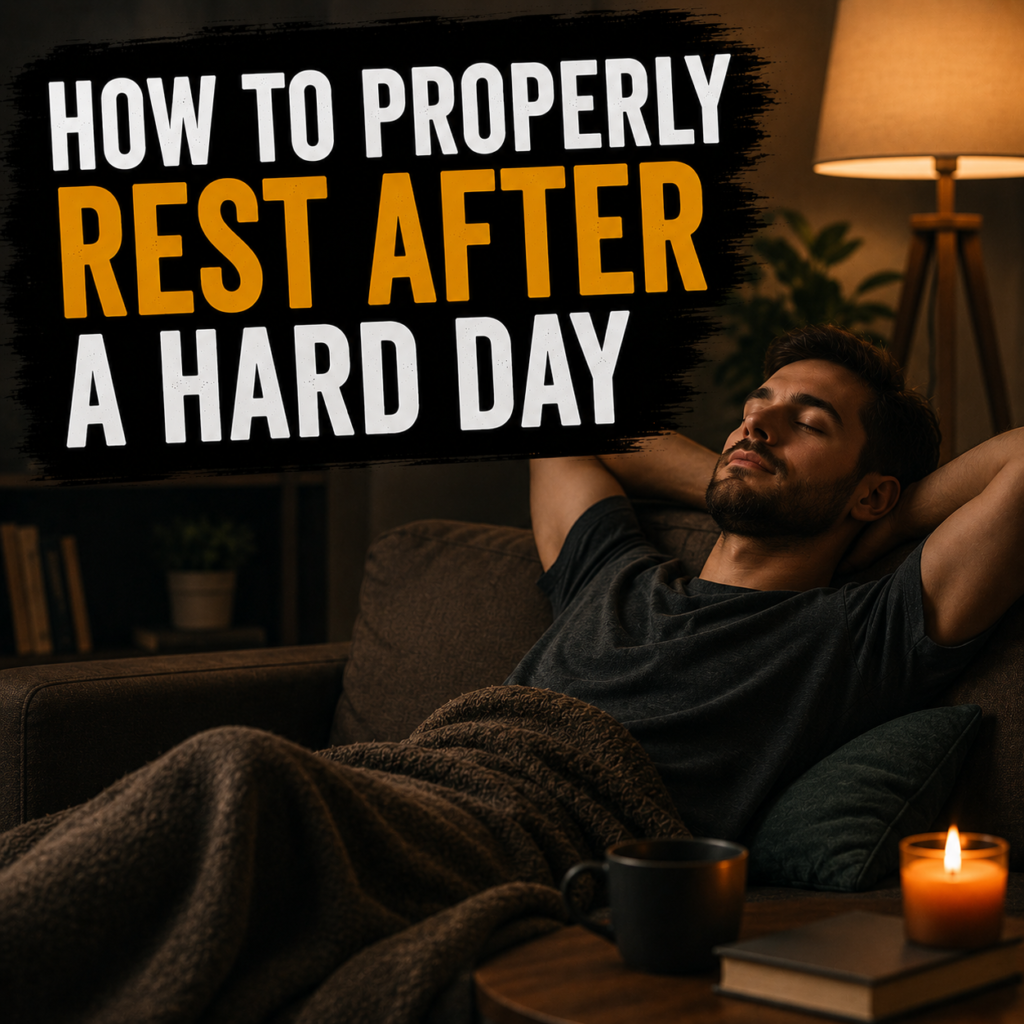
How to Properly Rest After a Hard Day So You Can Actually Recover
After a difficult day, many people want nothing more than to finally get home, lie down on the couch, pick up their phone and spend several hours doing absolutely nothing. At first glance, that seems like the perfect form of rest, especially when the day has been filled with work, meetings, household responsibilities, travel or physical exertion. Yet sometimes a person goes to bed after such an evening not feeling restored, but completely drained. The mind continues replaying conversations from work, the body remains tense, and endless scrolling through news or videos only adds more stimulation. As a result, free time passes, but the feeling of recovery never really arrives. Genuine rest works a little differently: it should gradually help a person move out of a state of constant pressure and regain a sense of control over their own time.It is also important to understand that there is no universal way to rest. After a physically demanding day, the body may need quiet, sleep and gentle recovery, while after several hours of intense mental work, it may be more helpful to change activities, go outside, take a short walk or do something completely unrelated to work. A good evening does not necessarily have to be completely passive. Sometimes a short walk can restore you better than several hours of lying still, while after an exhausting day a person may genuinely need silence and an early night. The main principle is that rest should not become another form of pressure under a different name.