Search results
Vitamin B Deficiency: Why It Can Cause Anaemia and What to Do About It
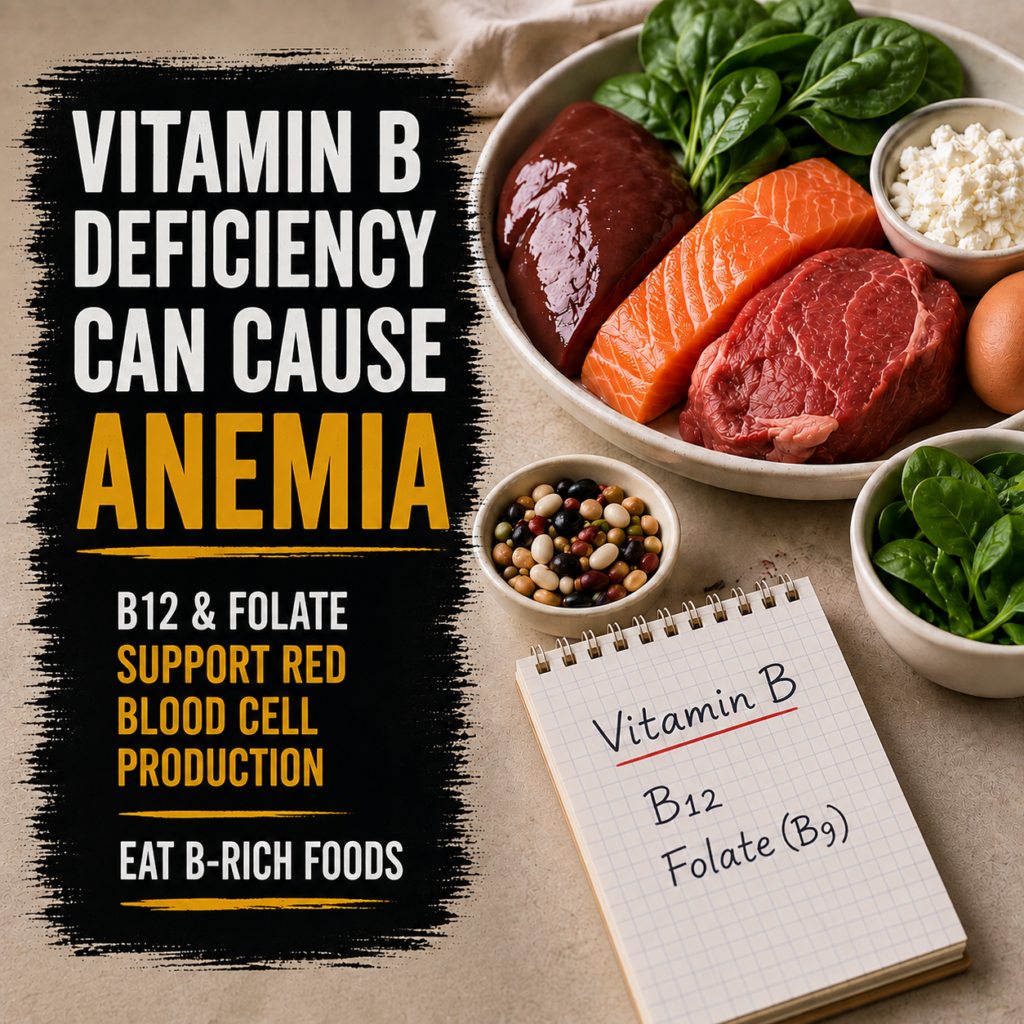
Anaemia is often associated primarily with iron deficiency, but a drop in haemoglobin can have another important cause: a lack of certain B vitamins. Vitamin B12 and folate, also known as vitamin B9, are particularly important because they are required for normal cell division and the production of red blood cells in the bone marrow. When the body does not receive enough of these nutrients, blood-cell production can become impaired, and newly formed red blood cells may become unusually large and functionally abnormal. As a result, tissues receive less oxygen, and a person may experience persistent tiredness, weakness, dizziness, shortness of breath and reduced ability to cope with everyday physical activity.The problem is that vitamin-related anaemia can develop gradually and remain unnoticed for a long time. Symptoms may be relatively nonspecific and easily attributed to stress, lack of sleep or a demanding schedule. Vitamin B12 deficiency is particularly important because it can affect not only blood formation but also the nervous system. The cause is not always poor nutrition. A person may consume enough B12-containing foods but still develop a deficiency because the vitamin is not being absorbed properly due to digestive disorders, certain medications or autoimmune conditions. This means that simply increasing the amount of B12 in the diet is not always enough.Vitamin B12 and folate participate in biological processes that are essential for the formation of new cells.
Vitamin D3 in Northern Regions: Why Year-Round Intake May Be Important
Vitamin D3 is often viewed as a supplement that only needs to be taken during the colder months. However, for people living in northern regions, the situation is more complicated. The body obtains vitamin D not only from food and supplements but also produces it in the skin when exposed to ultraviolet radiation. The higher the latitude, the fewer periods of the year there are when sunlight provides enough UVB radiation for efficient vitamin D production. During autumn and winter, the situation becomes particularly noticeable because the sun remains low in the sky, daylight hours become shorter and most of the body is covered by clothing. As a result, a person can spend time outdoors regularly and still receive insufficient UVB exposure for adequate vitamin D production.The idea of taking D3 throughout the year does not mean that everyone living in the north needs the same high dose. Individual requirements depend on age, diet, lifestyle, skin pigmentation, time spent outdoors and other factors. For people who receive little vitamin D through sunlight, maintaining an adequate intake through diet and supplements can therefore be important. However, regular preventive supplementation and taking large doses without medical guidance are very different things, and more is not necessarily better.Vitamin D3, also known as cholecalciferol, is particularly important for normal calcium and phosphorus metabolism.
Why Hair Splits and How to Prevent Split Ends
Split ends are not a sign that the hair has suddenly become unhealthy from the inside. In most cases, they begin with damage to the hair’s outer protective layer, after which the fibre becomes drier, weaker and more likely to split at the end. Because the tips are the oldest part of the hair, they are exposed to years of washing, brushing, heat styling, colouring, sunlight, friction from clothing and other everyday stress. Over time, individual strands can split at the ends and eventually begin breaking higher up the length.Completely preventing split ends is difficult, particularly for long, fine, bleached or chemically treated hair. However, the amount of damage can be significantly reduced by changing several everyday habits. The most important principle is not trying to “heal” a section of hair that has already split, but protecting new growth and reducing further damage to the existing length. Conditioning, gentle handling of wet hair, moderate use of heat, protection from environmental exposure and regular trimming can make a noticeable difference. Consistency usually matters more than expensive products, because repeated mechanical and chemical stress is what gradually weakens the hair fibre.Hair is made primarily of keratin, and the visible length of the hair shaft is not living tissue in the same way as skin. Once the protective structure has been seriously damaged, the body cannot rebuild that section of the hair in the way it repairs living tissue.
Cellulite: Which Methods Actually Help Make the Skin Look Smoother
Cellulite remains one of the most common skin concerns affecting people of different ages and body types. The uneven texture most often appears on the thighs, buttocks and abdomen and can be visible even in people who have a healthy weight and exercise regularly. Its appearance is influenced by the structure of connective tissue, the distribution of body fat, skin elasticity, hormonal factors and genetics. This is why completely eliminating cellulite with a single cream or treatment is generally unrealistic.At the same time, some methods have been studied much more extensively than popular home remedies. Certain professional treatments can noticeably reduce the appearance of dimpling, particularly when they target not only the surface of the skin but also the connective structures underneath it. Skincare products may improve the overall appearance of the skin, while physical activity can help make tissues look firmer and more toned. However, different methods work through different mechanisms, and the results depend on individual characteristics and the severity of cellulite.One of the more extensively studied options is acoustic wave therapy. During the treatment, mechanical waves are applied to the affected area and pass through the soft tissues. This type of stimulation may influence the structure of connective tissue and processes taking place in the subcutaneous layer.
Baking Soda at Home: Five Useful Properties That Make It a Versatile Household Helper
Baking soda may seem like an ordinary kitchen ingredient: a small packet that usually sits on a shelf and is mainly used for baking. However, behind this familiar white powder is a surprisingly versatile substance — sodium bicarbonate. Thanks to its chemical properties, baking soda can be used in cooking, help reduce certain unpleasant odours, act as a mild abrasive and be included in some household cleaning methods. This combination of properties has made it a popular household product for decades.At the same time, there are many claims about baking soda that go far beyond its proven uses. It is sometimes presented as a remedy for almost everything, including various health conditions and supposed “detox” treatments, but such recommendations should not automatically be considered safe. Baking soda is a familiar ingredient when used normally in cooking, but consuming large amounts can cause dangerous changes in the body’s electrolyte and acid-base balance. It is therefore more sensible to view baking soda primarily as a versatile kitchen and household product rather than a universal health remedy.One of the main properties of baking soda is its ability to react with acids. This is precisely why it is used in baking: when it comes into contact with an acidic ingredient, it produces carbon dioxide. The resulting bubbles help dough and batter become lighter and more porous.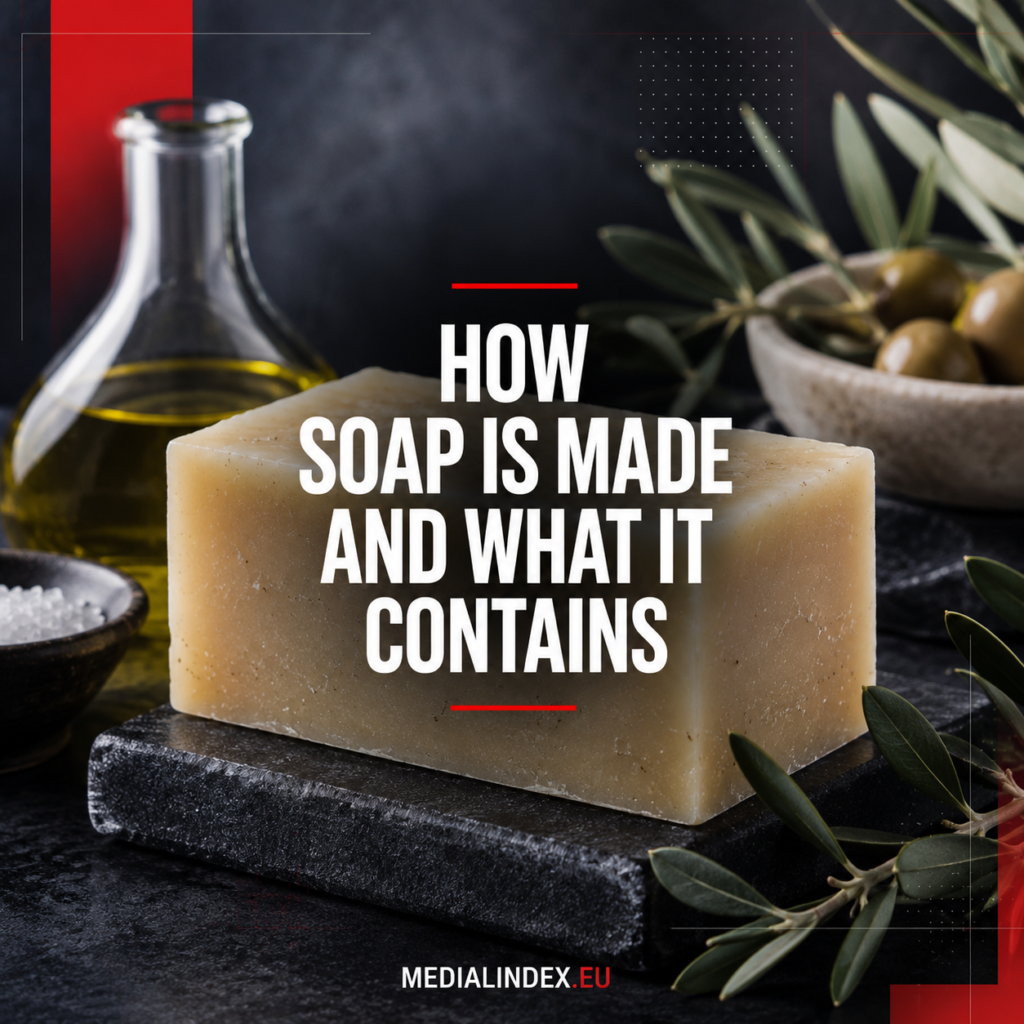
We use soap every day without giving much thought to what is actually behind an ordinary bar. But before it reaches our bathroom, oils, fats and alkali go through a real chemical transformation. These ingredients combine, change their structure and gradually become a product capable of cleansing the skin and creating foam. So why is one soap hard, another creamy, and another completely liquid? The answer depends on what it is made from and how it is produced.
Soap may seem like one of the simplest everyday products, but its production is based on a genuine chemical reaction. Traditional soap is made from fats or vegetable oils and an alkali. This process is called saponification: fats contain fatty acids, and when they react with an alkali, they are transformed into salts of fatty acids — the basic components of soap.A wide variety of oils and fats can be used in production, including olive, coconut, palm and sunflower oils, as well as animal fats. Each type of raw material affects the properties of the finished product. Some oils help create a harder bar, others produce a richer and creamier lather, while others influence how mild or conditioning the soap feels on the skin.During production, manufacturers first calculate the precise ratio of oils and alkali. The ingredients are then mixed under controlled conditions, triggering the chemical reaction. The mixture gradually thickens and turns into a soap base. Depending on the production method, it may be heated, purified or left for a certain period to allow the reaction to finish and the soap to cure.
A New Drug for Autoimmune Anaemia Could Change the Approach to Treating a Rare Disease
A new treatment option has emerged in the United States for warm autoimmune haemolytic anaemia, a rare condition in which the immune system attacks and destroys the body’s own red blood cells. The FDA has approved IMAAVY, or nipocalimab-aahu, for adults and patients aged 12 and older who are receiving or have previously received corticosteroid treatment.Warm autoimmune haemolytic anaemia develops when the immune system mistakenly produces antibodies that attack red blood cells. These cells are responsible for transporting oxygen throughout the body, so their accelerated destruction can lead to lower haemoglobin levels and anaemia. Possible symptoms include persistent fatigue, weakness, shortness of breath, dizziness, a rapid heartbeat, pale skin and reduced ability to tolerate physical activity. In some cases, the condition can become severe and require urgent medical attention.Until recently, treatment has largely relied on corticosteroids, while other methods of modifying or suppressing the immune system may be used when the response is insufficient. However, these approaches do not always provide long-term disease control, and prolonged use of some treatments can be associated with significant side effects.The new drug, IMAAVY, works in a more targeted way. Its mechanism involves blocking the FcRn receptor, which plays a role in maintaining the level of IgG antibodies in the blood.
New Blood Test Could Transform the Early Detection of Alzheimer’s Disease
The diagnosis of Alzheimer’s disease is gradually changing. What once required expensive PET scans or the analysis of cerebrospinal fluid is increasingly moving towards a simple blood test. At the centre of this new generation of research is the biomarker p-tau217, which is associated with pathological changes characteristic of Alzheimer’s disease.In August 2026, the FDA cleared the Elecsys pTau217 blood test, developed by Roche in collaboration with Eli Lilly. The test is intended for people aged 55 and over who show signs or symptoms of cognitive decline and is designed to help clinicians assess the likelihood of Alzheimer’s-related amyloid pathology. The test had already received a CE mark for use in Europe earlier in May 2026.The main advantage of this approach is accessibility. A blood test could make the diagnostic pathway less invasive and easier to access than PET scans or cerebrospinal fluid testing, while also helping doctors identify which patients may need further evaluation. However, the test is not intended to provide a diagnosis on its own. Its results must be interpreted alongside symptoms, medical history and other clinical information.Interest in p-tau217 goes beyond the diagnosis of existing cognitive impairment. Blood-based biomarkers are being studied as a way to detect biological changes associated with Alzheimer’s disease earlier in its development, potentially opening the door to earlier assessment and intervention.
Peptides: What They Are Used For, Their Different Types and Why Everyone Is Talking About Them
Peptides have become one of the most discussed ingredients in health, sports and the beauty industry. They are added to skincare products, used in certain medical treatments and studied across a wide range of biotechnology fields. However, despite their growing popularity, the word “peptides” is often used very broadly. In reality, it refers to a large group of compounds with very different functions.Peptides are short chains of amino acids. Amino acids are the building blocks of proteins, while peptides can play a role in cellular communication and the regulation of various processes in the body. Their effects depend on their specific structure: one peptide may be involved in nervous system activity, another may influence hormonal processes, while a third may be used in cosmetic formulations.In skincare, signalling peptides are particularly popular. They are used in cosmetic products designed to support processes associated with skin firmness and overall appearance. Some peptides are included in anti-ageing formulations, where they are intended to support the production of components of the extracellular matrix, including collagen. However, the results depend not only on the peptide itself, but also on its concentration, formula stability and ability to reach the relevant layers of the skin.Another group includes carrier peptides. These can help deliver or bind certain substances.